
Is gun violence an emergency or a political strategy for Trump? | Opinion
Editor’s note: Welcome to Double Take, a conversation from opinion writers Melinda Henneberger and David Mastio tackling news with differing perspectives and respectful debate.
DAVID: Chicago crime has been in the news a lot lately, not for bank robberies, domestic violence or drive-by shootings, but for a political tussle between the state Democrats and the man of questionable judgment who inhabits The White House, but I think we should dwell on the facts about violence in Chicago to start, not the political tussle..
Things there are not OK or normal. They are an emergency so urgent that at times during the war in Iraq, Chicago had more gun violence than a terrorism-roiled Baghdad. Yes, crime is down but last weekend, six people were killed and 27 hurt in gun battles that disproportionately afflicted predominantly Black parts of the city.
And that butcher’s bill is no aberration. Earlier this month, the toll on one weekend was five dead and 34 shot. Donald Trump is not wrong that something needs to be done.
One reason for Trump’s shocking level of support from minorities is that they know this fact from personal experience. A little over 1 in 10 Americans is Black, but African Americans make up 60% of those murdered every year — overwhelmingly teen boys and young men. If suburban white kids were dying like this, there would be no more urgent national priority than stopping the bloodshed.
MELINDA: I’m not going to argue with you over whether there is too much gun violence in America, because of course there is, in Chicago and Kansas City and in blood red rural America, too, for that matter; gun deaths by suicide have been up every year for the last six years.
On Wednesday, little kids praying on their first day of school were shot dead in a church in Minneapolis. When Minnesota lawmakers were shot you said since they already have relatively strict gun laws in that state, no gun law legislation would have prevented what happened. Not true elsewhere on the planet. But is the answer to too many guns and not enough humanity calling in the Guard? No.
DAVID: There seems to be video and other evidence that the killer in Minneapolis gave many signs online that they were going down a dangerous and violent path. I don’t know yet whether there was enough lead time, but perhaps we could talk about whether red flag laws in Minnesota were implemented aggressively enough.
MELINDA: I’m definitely up for that conversation. But if you are saying that a military takeover of all cities with violent crime, and that’s all cities and many hamlets, too, would somehow reduce gun violence in America, I can’t see how. Trump purports to be able to “end crime” everywhere he sends in the troops, so that seems to be where this is headed. But this is about control.
DAVID: I don’t think the National Guard is the best tool for fighting crime. That’s why you see soldiers in D.C. picking up trash and refreshing landscape mulch around trees and bushes.
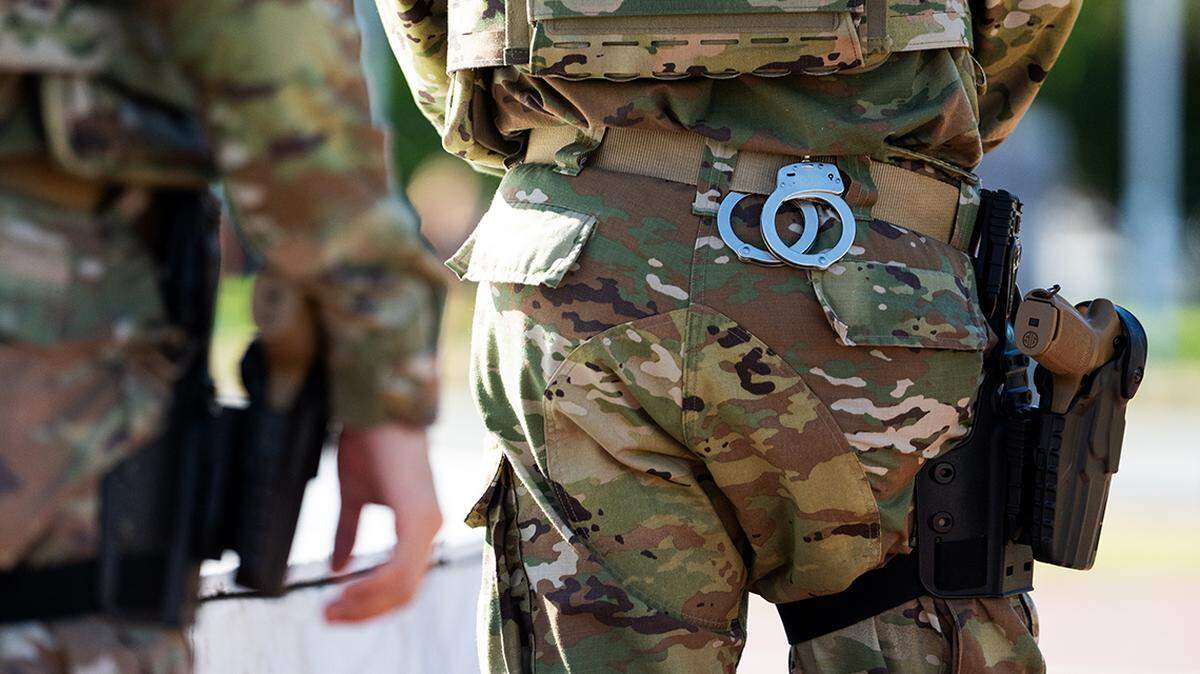
National Guard soldiers aren’t trained to fight crime, but a much bigger armed government presence, whatever its makeup, may have an impact on public safety. The Washington Post noted a 12-day streak without a murder in the city after the National Guard was deployed, though they also found a 16-day streak without boots on the ground.
Twelve days without a murder in Chicago would be a welcome respite there, but I don’t think the practical impact of the National Guard is why Trump is doing this. And I don’t think “control” is either, as you would have it.
I think this is about politics and the midterm elections. Trump is saying that he cares about crime and thinks the predators on our streets are an urgent problem. People don’t care how much Democrats know about the wonkery of fighting crime because they don’t think Democrats care. Trump wants to cement that impression with an indelible picture of him using the most powerful weapon at his disposal to fight crime — the U.S. military.
It doesn’t matter much to him whether there is any practical value at all.
MELINDA: That’s certainly true. But the message isn’t that he cares about cities. It’s that he wants to punish the people who live in them for failing to support him, and show those who do support him how miserable he can make the rest of us. All you have to do is listen to the way he talks about a great city like Chicago to know that what he wants to cement is the already sturdy wall between rural and urban America. Maybe next we can paint it black, like the wall at the border, so no one will even touch it.
I was going to ask who really thinks any of this is about crime busting, but I guess it’s like the seven wars he says he has ended; all you have to do is believe. If he even made an effort to address violent crime, I’d say give him every prize his tiny heart desires. But of course, all those cuts to health care and nutrition assistance will have the opposite effect on public safety.
So will cutting the budget of the Bureau of Alcohol, Tobacco, Firearms and Explosives, which goes after illegal gun traffickers. And in pushing to relax gun regulations even further, he’s only making the “hellholes” he claims to want to clean up hotter.
This story was originally published August 31, 2025 at 6:08 AM with the headline "Is gun violence an emergency or a political strategy for Trump? | Opinion."