
Charting our future: Members reflect on Lexington’s first Civic Assembly | Opinion
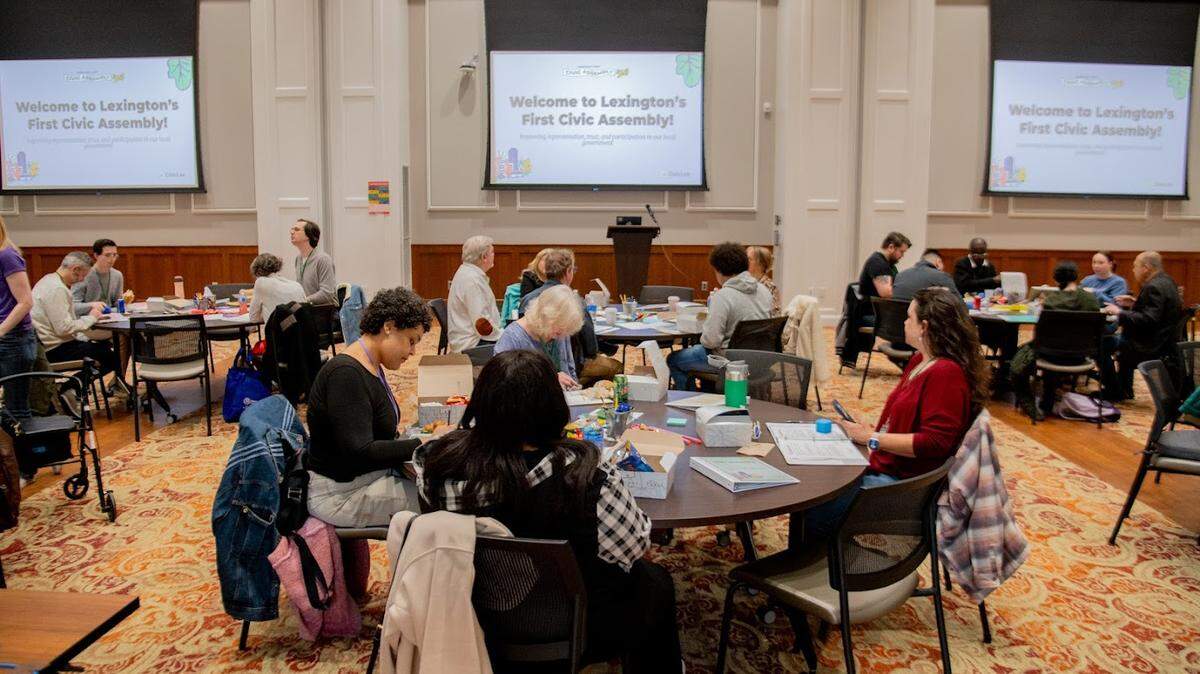
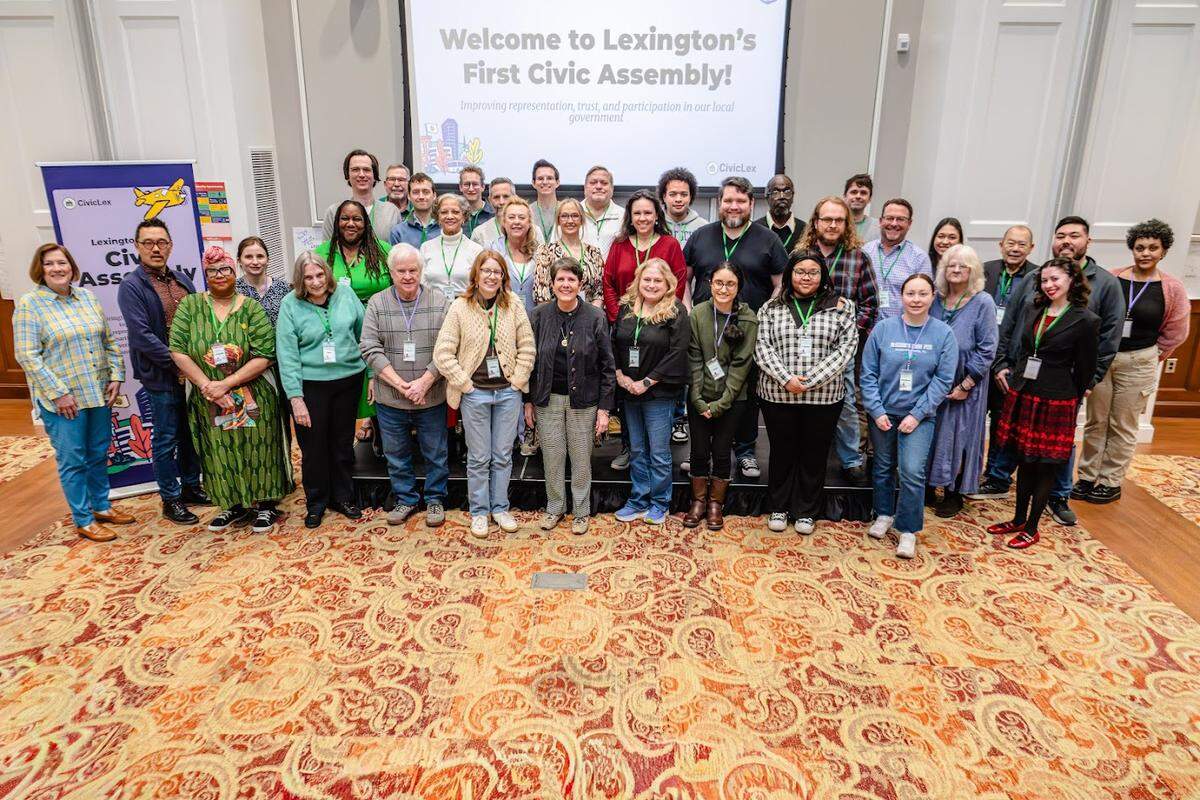
Lexington’s first Civic Assembly has now concluded, with 36 citizens making recommendations on Urban County Council pay and how Lexington’s charter should be reviewed.
Organizers at CivicLex asked five of the 36 randomly selected Assembly members to share their thoughts on the experience, the outcome and what it means for Lexington.
The Herald-Leader is republishing the responses, which you can read in full at Civic Lex. That’s also where you’ll find more details about the Assembly’s recommendations.
‘We came together as one for our voices to be heard’
By Vicki Crump
This CivicLex journey began with 10,000 postcards mailed, resulting in 360 replies and the selection of 36 Lexingtonians. As we reach the conclusion of our journey, I am reflecting on the community we built, the knowledge we gained, and the thoughtful discussions that informed our deliberations and recommendations regarding our two primary goals: 1) providing a recommendation on the appropriate frequency for reviewing the city charter, and 2) discussing the compensation of council members.
The thing that I liked the most about this process was learning about the city government. We learned about the structure of city government and we were provided all the information we needed in order to make a fair recommendation without pressure.
The other thing I truly appreciated about this experience was that CivicLex ensured that citizens could access the experience. Transportation and childcare was available, attorneys were present to make sure our questions were answered in a way that is consistent with the law, and we had the opportunity to meet the Council in person and hear directly from them about their experiences and views. They talked about how important this assembly was to the city of Lexington.
I was inspired by the group deliberations, especially when discussing difficult issues. It was important to be transparent when speaking and open to listen to new or different ideas. Despite having different opinions we came together as one for our voices to be heard.
This group gave me the understanding and opportunity to get involved with local city issues. Coming together, gathering facts, and being educated by CivicLex allowed me to explore, investigate, and become well-informed about the fundamentals of Urban County Government. I learned about the structure of government, the terms council members can serve, and the selection process for the vice mayor, details I found particularly interesting.
This history-making process is the first of its kind in Kentucky. Holding a Civic Assembly is truly meaningful as it provides an opportunity for the community to hear from the Council and for the Council to hear directly from the community.
I want to thank CivicLex and all the volunteers for their support and kindness throughout this process. Their presence and dedication made this event truly special. I also want to thank everyone who participated. Thank you for listening to my story. I appreciate your attention and hope you find value in hearing about this remarkable event.
Our journey has ended. Bonds and friendship have been made. But most importantly, as Lexington’s first Civic Assembly we have come together after many hours of discussion, deliberation, and education with a final agreement and recommendation on compensation for council members and the frequency of Lexington’s Charter review.
‘Everyone in our community is impacted by these issues; everyone should have a say’
By Zofia Z.
As the tide of spring came to Lexington, we assembly members entered into the first stages of deliberation. We had spent several days studying the mandates of Council compensation and charter review in the context of Lexington’s charter. Now, we had two main objectives: vote on whether to change how or how much Lexington’s Council is paid and if new mechanisms for reviewing the city charter should be implemented.
Most of us were in favor of making changes to the processes for both Council compensation and charter review, though with more contention on the former than the latter. The majority, including myself, favored a pay increase to reflect a full-time salary in Lexington, while others believed compensation was adequate as is. I did feel a little awkward discussing this issue, as being a high school student, I lacked much practical experience others had in the workforce. I did gain new perspective when Vicki asked another young assembly member and me if we would be satisfied with making one of our proposed figures as a salary when we enter the workforce. I realized this decision holds important implications for people in my generation who will consider Council as a career. I understood that everyone in our community is impacted by these issues; everyone should have a say.
For those of us in broad agreement, differences lay mainly in the specific details of group proposals. This was particularly true for charter review, where it was near unanimous that a process for regular review should be established, but we were split on what that schedule would be and the composition of a review body. Like with compensation, we compromised and consolidated proposals to achieve a supermajority consensus, which I saw strengthened our ideas.
We also were bound by many legal constraints, particularly state law and the potential challenge from lawsuits. I think this heavily influenced our decision to only change the cap on Council compensation, as that would be best in compliance with existing law, and to include measures of government accountability as recommendations to Council rather than in proposed amendments.
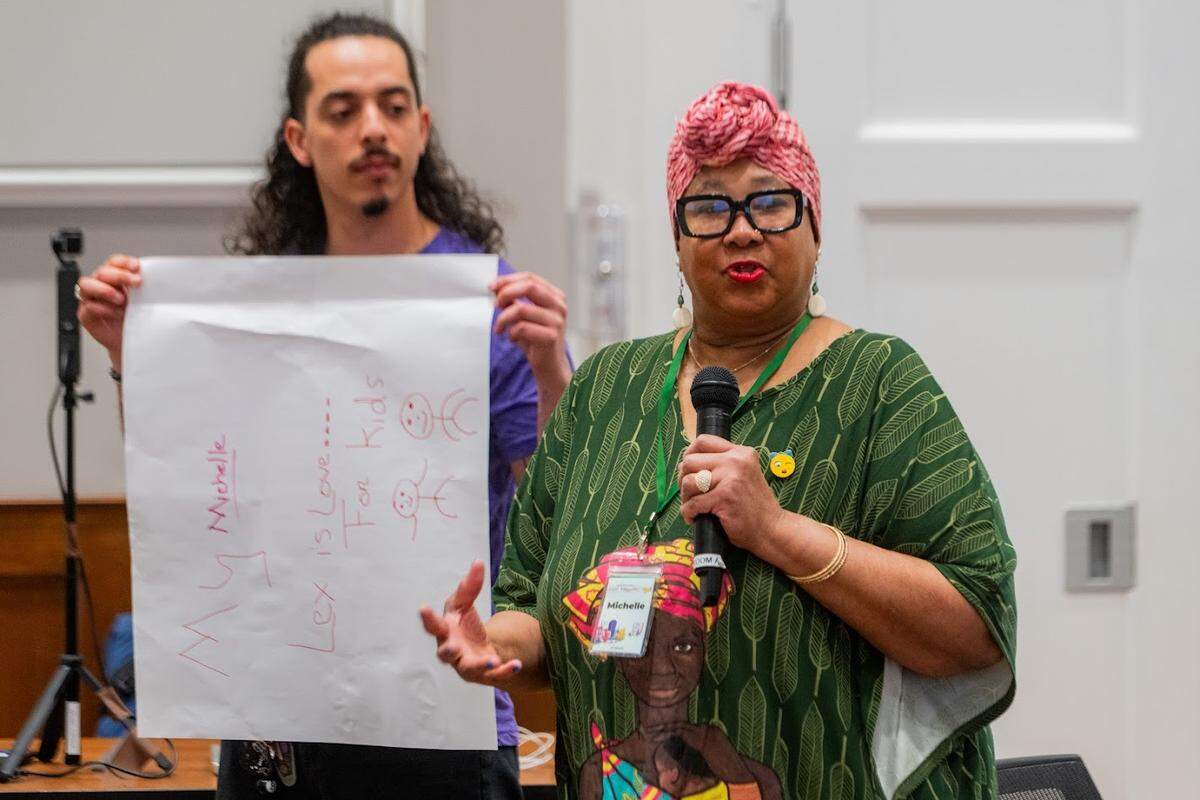
From the Civic Assembly, I was inspired by the keen value of democracy — however difficult or time-consuming it may be — and its importance in ensuring the diverse citizenry of Lexington are heard through everyday people. Some of our proposed amendments, if passed, may even have the potential to set new precedents in our city. The wealth of viewpoints, opinions, public comment, and debate all carefully shaped these recommendations, which when combined with Council and voter decisions, will hopefully produce the best outcomes of efficiency, fairness, transparency, and accountability within our government.
Pay increase is ‘the best way to make our Council more effective’
By Hailey Small
When I was selected for the Civic Assembly to consider Council compensation, I already knew the popular line among council members: “working on Council is a full-time job, and we should earn full-time pay.” I, frankly, heard this argument and rolled my eyes.
Plenty of Lexingtonians – including me and my friends – work full-time jobs and make about the same as council members, who earn about $41,000 per year. Regardless of what some have said over the last several months, $41,000 is full-time pay.
I stand by that statement and, perhaps surprisingly, also voted to increase council member compensation. I’d like to use this space to explain why.
Urban County Council should be made up of average Lexingtonians. Just like the Lexingtonians I met in the assembly, council members should work hard and care deeply about their communities. And, I believe, Council pay should be similar to what the average Lexingtonian earns each year.
According to the Bureau of Labor Statistics, the average annual wage in Lexington is $59,987 per year – the exact annual wage the Civic Assembly suggested for Council.
For council members to move Lexington forward, Urban County Council must be a full-time job. Council members must be involved in their communities, educated on the issues, and in attendance for required meetings. They must attend events and speaking engagements during nights and weekends. Many work more than 50 hours per week. As the role exists now, very few people are willing — or even able — to run for office. In 2024, five of the 12 Council seats ran unopposed.
Increasing compensation will attract more people to run for public office, increasing competition for Council and giving Lexingtonians the freedom to choose council members who take the job seriously.
This pay increase doesn’t come without strings; as an assembly, we also voted to advance a recommendation to mandate publicly viewable attendance and accountability expectations for Council.
Council compensation was a controversial topic in the assembly, but in the end, more than 70% of us agreed that a compensation increase was the best way to make our Council more effective. I hope Council will support our proposal and send these changes to the ballot, and I hope Lexingtonians will vote to increase council pay to the average Lexington annual income – $59,987.
‘We can have different opinions and constructive conversations without dissension’
By Bob Smith
If you have not seen my initial story when we first started, here is a quick recap. I came to Kentucky 14 years ago and still was not on top of the city of Lexington’s charter, how it came to be or the importance of it. My name was pulled out of a hat by demographics in Lexington as part of a 36-person committee to review the Council’s pay and also how often the charter should be reviewed.
The charter was formed in 1974 when Fayette County and the city of Lexington were conjoined to one entity to avoid duplication of services. The only time in the last 50 years the Charter was looked at was in the ‘90s. So we were charged to look at whether this should be reviewed more often, or not at all. It was the thought of most of the members that the charter should be reviewed on at least a more specific time frame. Our recommendation will be presented to the Urban County Council, and if they approve will be headed to the ballot this November.
Regarding Council compensation, that had more differences of opinion. But like all our deliberations, it was calmly discussed and had multiple votes until we came to a supermajority approval of at least 70%. This issue probably took more time and effort to come to a conclusion than the Charter Review question.
I felt every one of the members took their responsibility very seriously, and we grew as a group together and learned we can have different opinions and constructive conversations without dissension. I think it is very important in the future to have public representation to review the charter regularly and get involved in how our city is run. If we don’t want to be part of our city’s decisions and how they are arrived at we don’t have the right to complain when it is not going our way.
Not everything went my way, but I was given the opportunity to give my thoughts and my equal vote on all the decisions made. CivicLex is the nonprofit organization that ran this process and was very supportive and ran it with great integrity and efficiency. I am very glad I decided to participate in this and recommend it in the future.
‘Every member’s voice mattered in a real, impactful way’
By Samuel Tolliver
Having spent nearly all my adult life in Lexington, I’ve seen first-hand what makes this city a special place and why people choose to stay here. Being a part of the first Civic Assembly was confirmation of just how special it is and why I love living here.
From the first meeting it was clear there would be mutual respect and cooperation amongst assembly members to take up the council member compensation and charter review seriously and thoughtfully. CivicLex created a space for this assembly that allowed all questions to be heard in a truly “no stupid questions” environment. Answers were thorough and well researched and if there wasn’t an immediate answer, the entire CivicLex team would make sure they found the answer.
I think one of the most remarkable parts of watching the final proposals take shape was how well disagreement was handled at all turns. Not only was it not uncomfortable for members to share dissenting opinions, but members were encouraged to share them, and all ideas were explored as much as possible. Every member’s voice mattered in a real, impactful way.
Lexington’s diversity and openness are two of its best attributes and those shone throughout the assembly. The teamwork displayed by this group of random citizens is a model for future assemblies to come. In a world that feels so divisive, it was a reminder of how great the people of this city are and what’s possible through collaboration.
It’s exciting to see the finished product and I look forward to seeing how our proposals and experiences are met by the Council and fellow Lexingtonians.
This story was originally published April 8, 2026 at 7:00 AM.