
Judge right on death penalty case
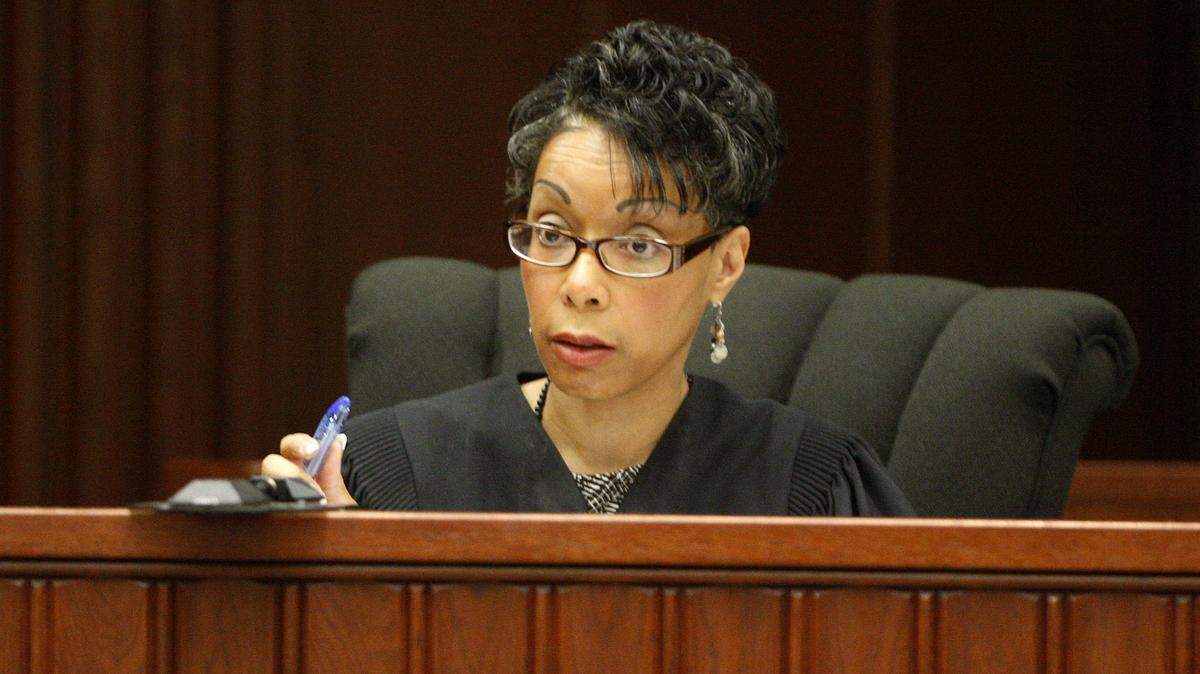
Congratulations to Circuit Judge Pamela Goodwine on striking a blow for common sense and conserving public resources.
Her order last week excluding the death penalty as a sentencing option in a case before her has been hailed and condemned as a stand against the death penalty.
While Goodwine, whose own mother was murdered, has stated she's opposed to the death penalty, that wasn't the basis for her order.
She knows that's not her job, that eliminating the death penalty can only be done through legislation.
It is her job, though, to decide whether it's appropriate to seek the death penalty.
Her carefully written order noted that the facts of the case — a single murder related to a dispute over drugs and money — "are not unique." But, she writes, "not one time in this Commonwealth has a death sentence been recommended by a jury and upheld on appeal in a case involving actual or suspected drug trafficking."
Goodwine has presided over more death penalty cases than any judge in Kentucky. Her experience and research tell her — and us — that juries in Fayette County, indeed in Kentucky, will only condemn someone to death who has committed the most egregious, horrific crimes. And often not then.
To understand what's at stake, it's important to know that in trials where capital punishment is an option the jury must be what's called "death qualified."
Only those who convince the judge and attorneys they are willing to impose the death penalty can serve. So, more prospective jurors must be called and examined more rigorously, eating up resources of the courts, prosecutors, defense attorneys and those in the jury pool.
Why expend resources and inconvenience prospective jurors, their families and employers when it's obvious a death verdict will never be returned?
Consider some recent trials where the lives lost were much greater.
It took almost two months and 1,350 potential jurors to seat a jury in the trial of Dzhokhar Tsarnaev in the Boston Marathon bombing that resulted in three deaths and at least 250 injured.
For James Holmes, accused of opening fire in a Colorado movie theater, killing 12 and wounding 70 in 2012, it took from Jan. 20 to April 14 this year to seat a jury, from a pool of 9,000, willing to consider the death penalty.
Even after the jury is seated, a capital punishment case takes longer and costs more — calculations range as high as an added $1 million for the entire process — than prosecuting a murder where death isn't a penalty option.
Prosecutors have the discretion to seek the death penalty, or not, depending upon the facts of a case. But, to avoid the appearance of bias or selective prosecution, Fayette County Commonwealth's Attorney Ray Larson seeks it in every case where it's an option, Goodwine wrote.
Despite this, no one has been sentenced to death by a jury in Fayette County since 2000.
That case involved not a drug deal gone bad but bludgeoning a 73-year-old woman to death then dumping her body in her car and setting it on fire.
Goodwine deserves praise for her order saving the judicial system enormous expense by acknowledging what juries have made clear for decades.
This story was originally published May 10, 2015 at 12:00 AM with the headline "Judge right on death penalty case."