
City needs all strategies to fight COVID-19 financial fallout, including more revenue
Formulating the balanced budget required by law for LFUCG’s fiscal year 2021 (FY 2021), which begins July 1, presents challenges not seen since the Great Depression. The severe negative economic impact of COVID-19 has dramatically widened the gap between projected revenues (presently estimated to decrease by $40M) and ongoing expenses for our city. I believe we should consider all possible strategies available to us to close that gap, including raising revenue.
I commend Mayor Gorton and her administration for their hard work and thoughtfulness in producing the Mayor’s proposed budget in an all but impossible and constantly changing set of conditions. That budget combines two strategies to close the revenue gap.
The first strategy cuts city services and programs, and cuts or completely eliminates support for our traditional partners in the non-profit sector. The second strategy uses dollars we have saved over the years in our Economic Contingency Fund (Rainy Day Fund) and in our Budget Stabilization Fund.
Given what we face, both strategies are necessary components of a final budget. I suggest we also consider raising revenue as a third component.
Here are a few facts about the LFUCG budget that lead me to conclude that this third strategy is worth serious consideration.
We have a solid history of lean budgeting. Even in our best years we have been unable to fund all the needs expressed inside and outside of government.
We have been frugal with our resources. Over the years we have placed $35M in our Economic Contingency Fund (Rainy Day Fund) and $11M in our Budget Stabilization Fund.
We have already made cuts in the FY 2020 budget, including a 15% cut in operations, elimination of 49 vacant positions, and a hiring freeze. With additional cuts proposed for FY 2021, lean becomes even leaner.
In the development of every budget we carefully scrutinize all expenditures to ensure that our revenues are well spent.
The community has generally been supportive of our decisions and has generally been pleased with the level of services and support the LFUCG budget provides.
In sum, I believe we have been good stewards of our community’s resources. The present challenges we face are clearly not of our own making.
Here is my understanding of the impact of each of the three strategies available to close the gap.
Budget Cuts: Further budget cuts affect government employees, who are expected to do more with less, with no salary increase. Additional cuts also impose a cost on the entire community through loss of programs, services and support. We all have our favorites. For some it’s public safety, or social services, or paving, or pools, or parks, or the arts, or economic development, The list goes on, but together they add up to what makes ours a great community. Reducing or eliminating any of them impacts people directly. All these services and supports are considered essential to the health and viability of our community or they would not have been included in prior budgets.
Savings: Using savings for ongoing expenses most obviously reduces funds available to deal with crises in the future. Less obviously, it reduces our credit worthiness, which increases our costs for bonding capital projects.
Raising Revenue: Raising revenue imposes a direct cost on all those affected by the increase in a fee or a tax.
To help explain the impact of raising revenue, I offer this example: Increasing the Occupational License Fee (Payroll Tax) and the Net Profits Tax a quarter of one percent (0.25%), from 2.25% to 2.5%, would raise approximately $24M. The current rate of $22.50 for each $1000 earned would increase to $25 per $1000 earned.
Here’s how that 0.25% increase would affect earnings at three different levels:
▪ at $15,000 (full-time, minimum wage), 0.25% adds $38 annually, or $3.16 monthly;
▪ at $58,000 (Area Median Income), O.25% adds $145 annually, or $12.08 monthly;
▪ at $100,000, 0.25% adds $250 annually, or $20.83 monthly.
Income not taxed includes Social Security, Unemployment Insurance, interest and dividends, government benefits.
Revenue can be raised in other ways. This example simply indicates one option, and how much additional tax would have to be assessed to generate roughly $24M.
At this time of crisis we need to consider who is most able to bear the burden imposed by the negative economic impact of COVID-19. I have my own notions about how our budget can preserve and protect the quality of life for all members of our community. I expect we all do. Along with the discussion of cuts and using savings, I favor including discussion of raising revenue. That’s the conversation I would like our community to have. That’s what I would like Urban County Council and our community to consider as Council works through and makes the hard decisions about the final form of the FY 2021 budget.
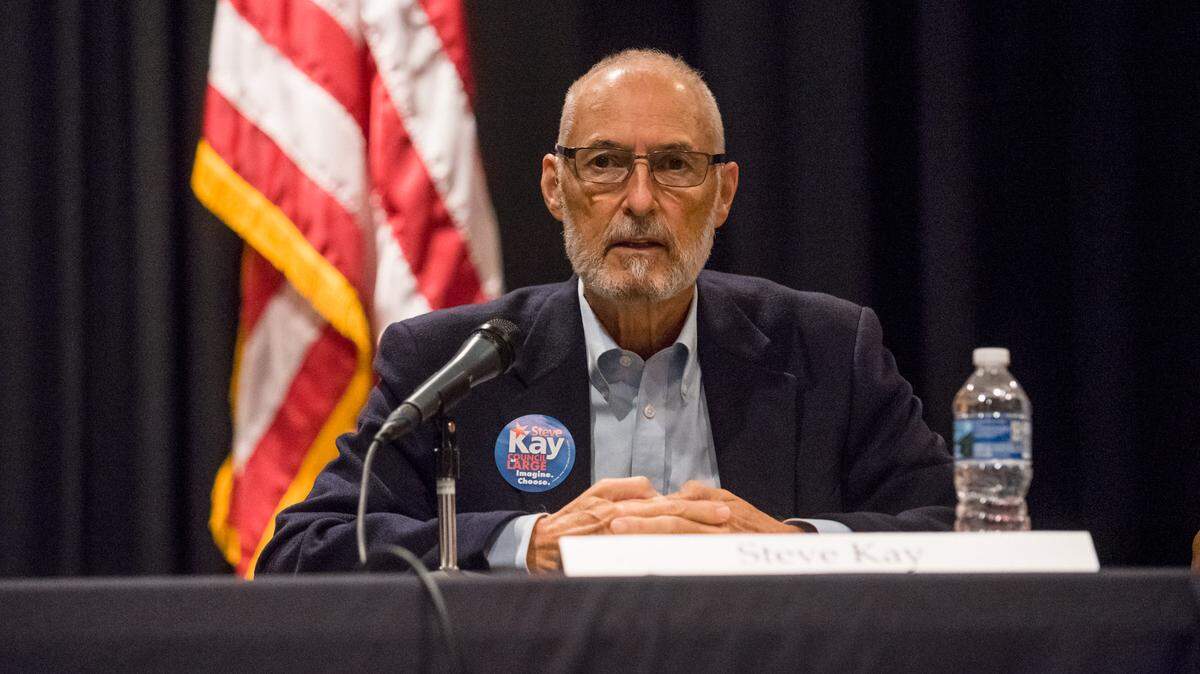
Steve Kay is the Vice-Mayor of Lexington.