
‘This dialogue is vital,’ but talking about race is complicated. Here’s a starting point.
So you want to talk to your black friend/colleague/coworker about race and what’s going on in the world ... but you don’t know where to start. Recently, I created a brief guide for white and non-Black therapists to use with their clients to begin talking about what’s happening in Minnesota and beyond. This dialogue is vital not just for therapists, but for everyone — we can’t end systemic oppression and racism by refusing to talk about them. Here are my suggestions for initiating the conversation:
How do I start?
1. Ask permission to talk about it, and respect their “no.” Racism can be traumatizing and triggering for Black people and people of color to talk about. They may not want to talk about it with you.
2. Do not go into the conversation expecting your friend/colleague/coworker to be your personal racism manual. Do your own research. There is so much more to this than I can fit into one article, but I recommend beginning with “How To Be An Antiracist” by Ibram X. Kendi and “White Fragility” by Robin DiAngelo.
What do I say?
1. “I’ve been thinking about you lately with everything that has been going on in Minnesota and around the nation. Would it be okay if we talked about it? Feel free to say no!”
2. “I’m not going to do this perfectly, but I’m wondering if you want to talk about what’s been going on in the news lately. I know I’m going to make mistakes in this conversation, but I don’t want to pretend this isn’t happening.”
3. “I know that I am white/not of your race and can’t possibly understand what you might be going through. I want you to know that I am open to hearing anything you need to talk about right now.”
4. “I feel awkward saying this, because we’ve never talked about race before. But I want you to know that I’m watching the news, and I’m thinking about you and people who look like you.”
Ack! The dialogue is happening! Now what?
1. Listen. Just listen. And when you make mistakes, apologize and move on.
2. Don’t make them take care of you! You offered to support someone and then they ended up having to hold you while you cry? Not cool. Or kind. Or supportive.
3. Prepare to be shut down. Some people may choose not to talk about it, for a million reasons that have nothing to do with you. However, If you ask five people of color to talk about race and they all shut you down, it might be about you. Read “White Fragility” again.
4. Breathe, because you might be feeling tense or uncomfortable. Own it, sit with it. Have the conversation anyway. Growing is almost always uncomfortable.
5. Validate their experience. You can say, “I hear you. I see you.” When you’re talking with a black or brown person about race, we are not talking about something that is separate from us — we’re talking about our everyday lived experience. It might be private. It might be traumatizing.
6. Say “thank you for telling me.” It’s hard to talk about race. It’s harder to live in a society that systematically oppresses you because of it. Thank that friend/colleague/coworker for allowing you to have a glimpse into their reality. It’s a gift that they did not have to give you.
7. Use your best judgment. Andy in Sales who you met one time at the office Holiday party last year might not have any interest in talking about race with you.
And finally...research, research, research! This is not an outline, it’s an introduction. Conversations are only the beginning.
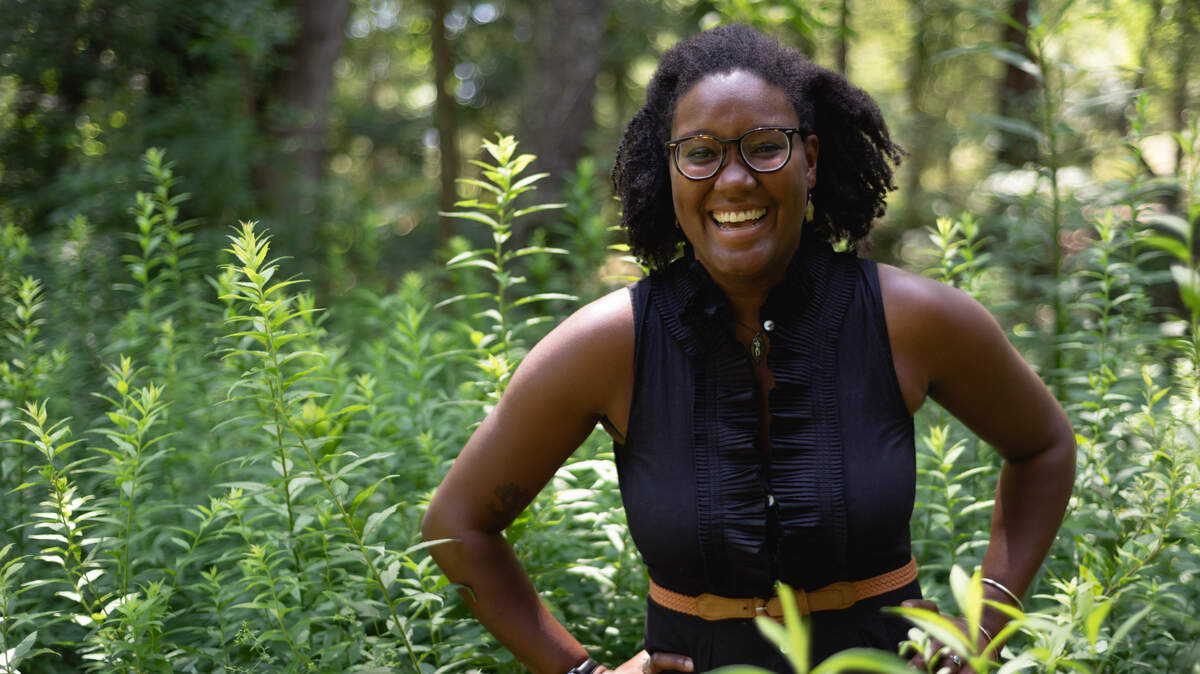
Elizabeth McCorvey, LCSW provides psychotherapy to college students at UNC-Asheville and also does office-based and equine-assisted psychotherapy. She grew up in Lexington, Ky.