
In 1999, I protested against police violence. Today, 21 years of victims’ names too many to count.
I have cried nearly every day for the last three months. Come to think of it I have cried so much over my lifetime I am not sure the genesis of my sorrow or to whom my tears actually belong. I just know racism kills and it hurts. I know when I first came to Lexington as a transfer student to the University of Kentucky in 1994 one of my first actions was to write and submit a letter to the editor following the shooting death of an 18-year old, unarmed Black youth named Tony Sullivan. At the time, I knew Tony Sullivan’s death was caused by Sgt. Phil Vogel of the Lexington Police Department. I remember seeing people take to the streets to express dismay, pain, and anger. New to Lexington, I remember fear overtook me. I remember what I thought of a city that allowed Sgt. Vogel to take life without recourse. I remember what I thought of a community who would condemn the expression of outrage by using racist innuendos over empathy and compassion for merciless death. I was reminded once again of how much racism hurts and how it blinds us to our collective humanity.
In 1999, one of my younger brothers was a candidate for the Harry S. Truman Scholarship. His candidacy for this prestigious award took us to Washington D.C. where he interviewed as a finalist for the state of Kentucky. I still feel the pride I had in him and the excitement we both felt. As his big sister, I accompanied him to our nation’s capitol. He was there to interview for the opportunity to catapult his future. I was there to support him. After he completed his round of interviews, we spent time with some of his friends. They invited us to a march. We had no idea what we would be marching about, but what better way to experience our democracy than to march to the Capitol steps in the name of justice like our forebears.
Once we joined the immense crowd gathering on the protest route, everything changed. We had entered a march against police brutality. We were marching in protest of the murder of another unarmed Black man, 22- year old West African immigrant Amadou Diallo. Diallo was fired upon 41 times and struck 19 times killing him in front of his apartment building in New York City in February 1999. He had no criminal record, but had been profiled as a described serial rapist reported a year prior. Perhaps in an attempt to identify himself, Mr. Diallo reached in his pocket and grabbed his wallet. And just like that, his 22-year old body was riddled with bullets. Just like that he was dead. Just like that his mother lost her child. In spite of such excessive use of force, the NYPD found their officers had followed procedure. And although the officers were indicted, unlike Sgt. Vogel in Lexington in 1994, a jury later returned a verdict of not guilty. And just like that those officers returned to a place Amadou Diallo would never return. They returned home.
In 1999, I stood in front of our nation’s capitol as a protester with tears streaming down my face. I chanted, “No Justice! No Peace!” I remembered 18-year old Tony Sullivan’s name. I held my fist in the air and proclaimed my right to personhood and to be treated as a human being. I held my fist in the air for my brother who stood right next to me. I remember I felt something akin to hope. But here I sit some 21 years later and the names of victims of police brutality are too many to list. And in my work on criminal defense teams, I see the lives of Black youth who just happen to live through their arrests, being shuffled along conveyor belts and lost to a prison system that offers slow death. Twenty-one years later and I can’t stop crying.
I don’t know how many ways to ask this country and its leaders and its privileged to deal honestly with its racist past and present. I don’t know how many ways we demand it stop killing and supporting policies within its structures that deprive and wrest air out of Black lives. All I know is that it hurts and I am tired. And yet, as much as it hurts, I am still willing to write and to speak out and to take action. I am willing to risk hope another day. I am willing to love. I pray we all are. Power to the people with courage.
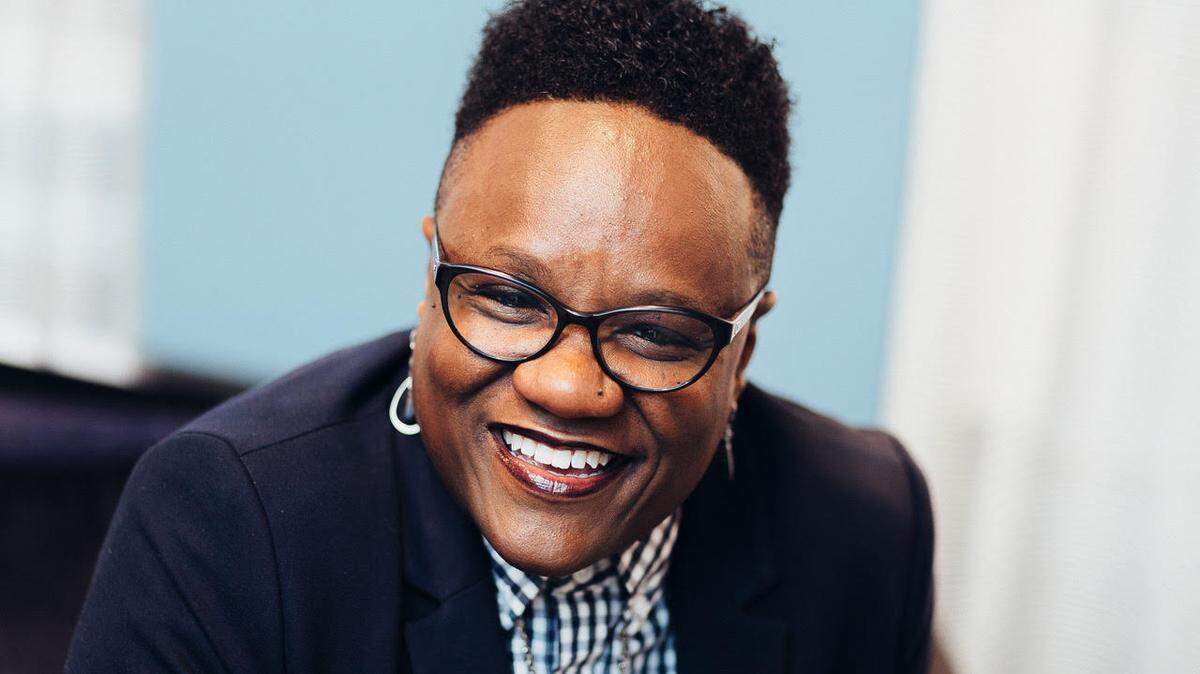
Western Kentucky native, LeTonia Jones is a social justice entrepreneur and writer in search of deeper truths about love and what is required to live fully human and be at peace.