
I knew Adolph Rupp. His concern for Black players is why he didn’t recruit them.
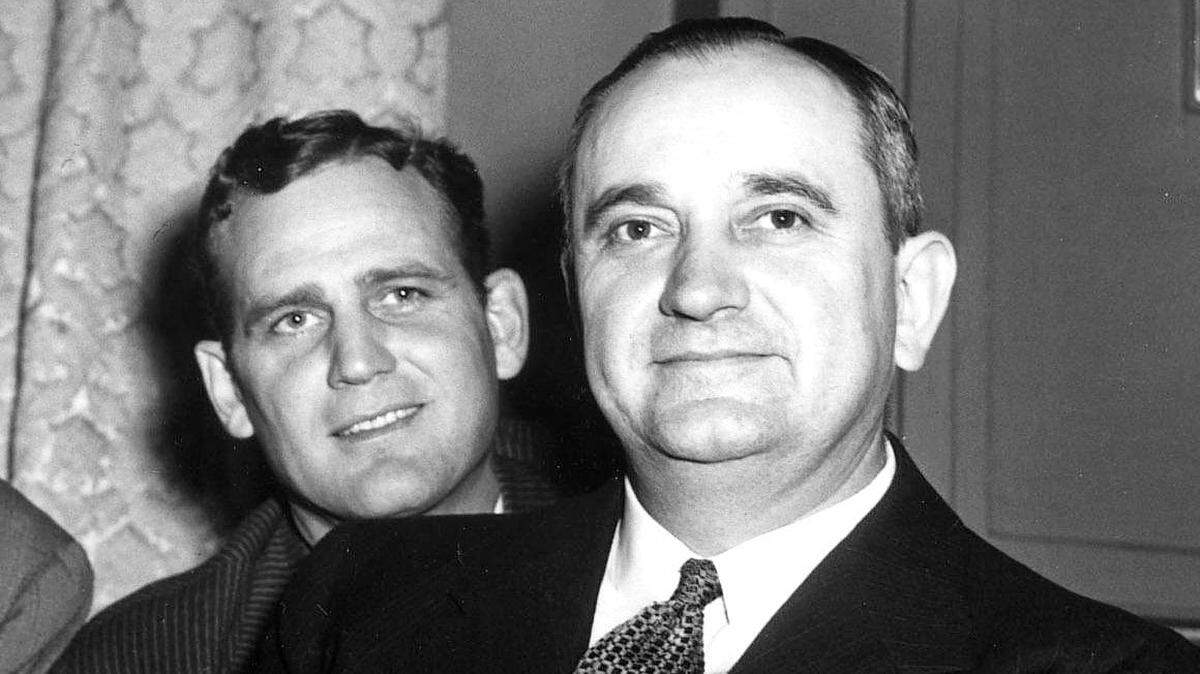
In early fall, 1961, shortly after I transferred to the University of Kentucky as an almost-junior from Western Kentucky (then) State College, I went into the Wildcat Grill to have lunch for the first time. The UK-campus eatery was on Euclid Avenue (now Avenue of Champions) about a half block west of Memorial Coliseum and Stoll Field. I selected three favorites: chili, milk, and chocolate pie.
I found an empty table and started eating and reading a textbook assignment for my next class. Soon I was aware of two people standing beside the table. I looked up into the faces of Adolph Rupp and Harry Lancaster.
I immediately realized why the table had been empty. It was theirs! I mumbled an apology and started to move. Lancaster said, “Wait a minute,” looked at Rupp, and asked if they should let me stay.
Rupp drawled, “Wal, yeah. He’s got pretty good taste in food.” I looked at their trays and saw that they had chili, milk, and chocolate pie. They sat down, asked my name and unnecessarily told me theirs, and started eating.
We chatted as we ate (I mostly listened), and they invited me to sit at their table when I was at the grill. I did so perhaps 10 or so times during the school year, maybe half-a-dozen in their company – every time having the same lunch as I mostly listened.
On a few occasions they were with another university’s coach. I met Wake Forest’s “Bones” McKinney, a coach from an Ohio school I can’t recall, and DePaul’s Ray Meyer.
The only conversation among Rupp, Lancaster, and a visiting coach I recall is Rupp lamenting to Meyer his being unable to recruit talented Kentucky Black players he’d like to have play for him.
Rupp said he just couldn’t submit Black players to the racist-hell-hole environments – segregated hotels and restaurants and racially hostile arena crowds – that existed in those days at the deep-South Southeastern Conference universities and cities.
I recall that he asked Meyer how he might best approach Black prospects, since Meyer’s teams had Black players. I don’t remember Meyer’s answer but do recall Rupp’s continuing to bring up the problem that the deep-South attitudes toward segregation presented in his being able with good conscience to recruit Black players.
The tough old UK head coach seems to me not to have been the racist that some sports-news media later painted him to be and that other scribes seem inclined to continue. The most recent is a Herald-Leader columnist who on the front page of the July 5 issue Opinion section suggested that Rupp Arena be renamed because of Rupp’s alleged racism.
Maybe you had to have been having chili, milk, and chocolate pie for lunch with Coach Rupp on a day almost 60 years ago to have something of a different point of view and to suggest that Rupp Arena’s name is not inappropriate. And there’s always the fact that he’s simply not around to explain the situation that conflicted him, as he did to the now also-late Ray Meyer.
Joseph Burgess is a 1964 University of Kentucky graduate who became a UK basketball fan as a sixth-grader in his western Kentucky hometown in 1951. He is twice-retired from careers in media/public relations (including nine years at a historically Black university) and marketing communications, and in secondary-school teaching.