
Kentucky hog farmers are on the brink of disaster. They need federal help.
Hog farmers in Kentucky and around the country take tremendous pride in a pork production system that is the envy of the world, feeding our communities and driving economic growth. I am proud to be one of those farmers. Sadly, the coronavirus pandemic has caused an unprecedented emergency for the U.S. pork sector, threatening to erase generations of family farms. Fortunately, there is hope to reduce the damage inflicted on our sector by COVID-19, as recently introduced Senate legislation would provide a critical lifeline to pork producers. With the Senate expected to address the next coronavirus aid package later this month, I urge Congress to act quickly. Otherwise thousands of generational family farms will go out of business, leading to economic dislocation throughout rural America and higher consumer prices.
My family has farmed for over 200 years in central Kentucky. Hogs provide about 75 percent of my family’s income. We currently have the seventh, eighth, ninth and tenth generations working together on our family farm to make a living from raising hogs and grain. Our farm is the sole source of income for four households. We are currently facing challenges unlike anything we have faced in our history, with the combination of plummeting pig prices and bottlenecks in the supply chain due to COVID-19. We face a unique challenge since our pigs continue to be born and grow on a daily basis and cannot be held until markets improve or supply is reduced. Our whole family’s future is in grave danger if the economic situation for hog farmers does not improve quickly.
The impacts of COVID-19 have caused hog values to plummet, with collective losses of more than $5 billion anticipated this year for pig farmers. These losses are just for the lost value of hogs that are processed into the food supply. Sadly, farmers face additional staggering costs and a severe emotional toll for the lost value of pigs euthanized due to COVID-related pork processing plant shutdowns and slowdowns that created a lasting bottleneck in the pork supply chain. Since the implementation of the Defense Production Act, which prioritized the continuity of packing plant operations, the situation has improved, but hogs are still backed up on farms with no place to go. Millions of pigs that can’t be harvested and enter the food supply may ultimately be euthanized.
Without prompt government assistance, many generational family pig farms will go bankrupt. This will have significant ramifications for our communities and could lead to consolidation in a farm sector that generates more than 5,980 jobs and $220 million in personal income in Kentucky alone.
Earlier this month, Sens. Jim Inhofe (R-Okla.), Richard Burr (R-N.C.), Joni Ernst (R-Iowa), Chuck Grassley (R-Iowa) and Thom Tillis (R-N.C.) introduced legislation, offering pork producers a critical lifeline, providing compensation for farmers who are forced to euthanize or donate animals that can’t be processed into the food supply as a result of COVID-19, among other provisions. Hog farmers appreciate the tireless efforts of our Senate champions to address this crisis and urge Congress to work together to quickly pass much-needed legislation to stabilize a farm sector teetering on long-term disaster.
Hog farmers in Kentucky desperately need this lifeline to sustain us through this crisis and stabilize a farm sector teetering on long-term disaster. Without immediate action, many generational family farms will be lost forever.
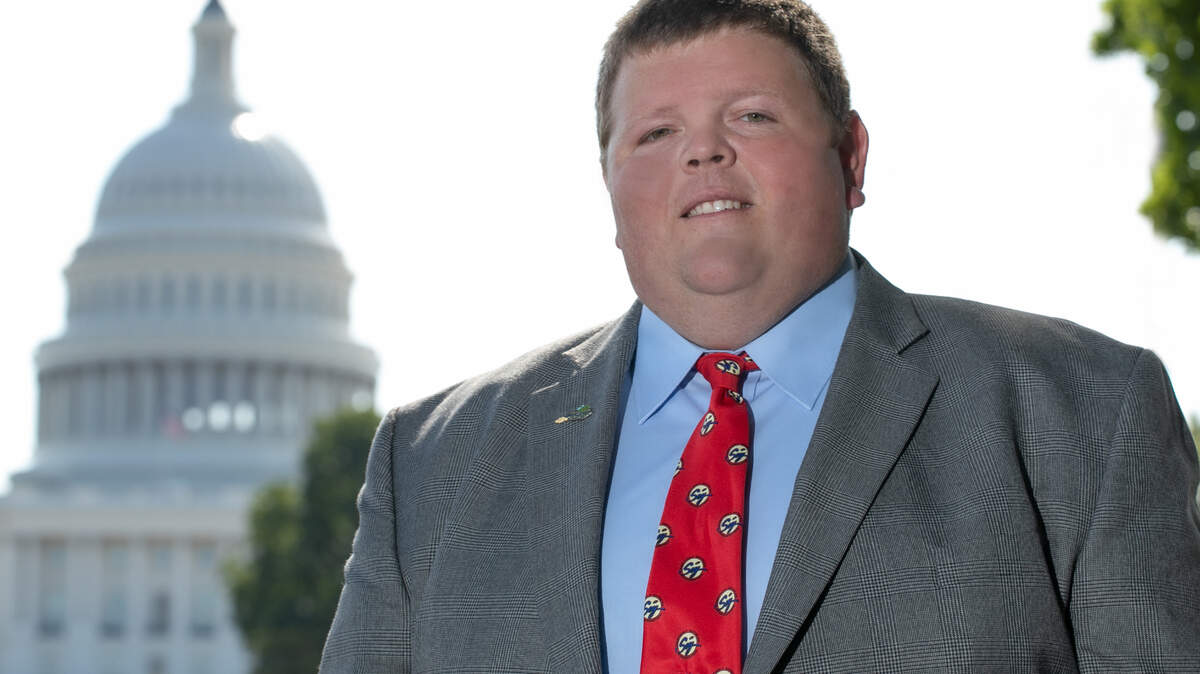
Caleb Ragland is a hog farmer from Magnolia, Ky.