
A state university should not be guilty of demolition by neglect of historic structures
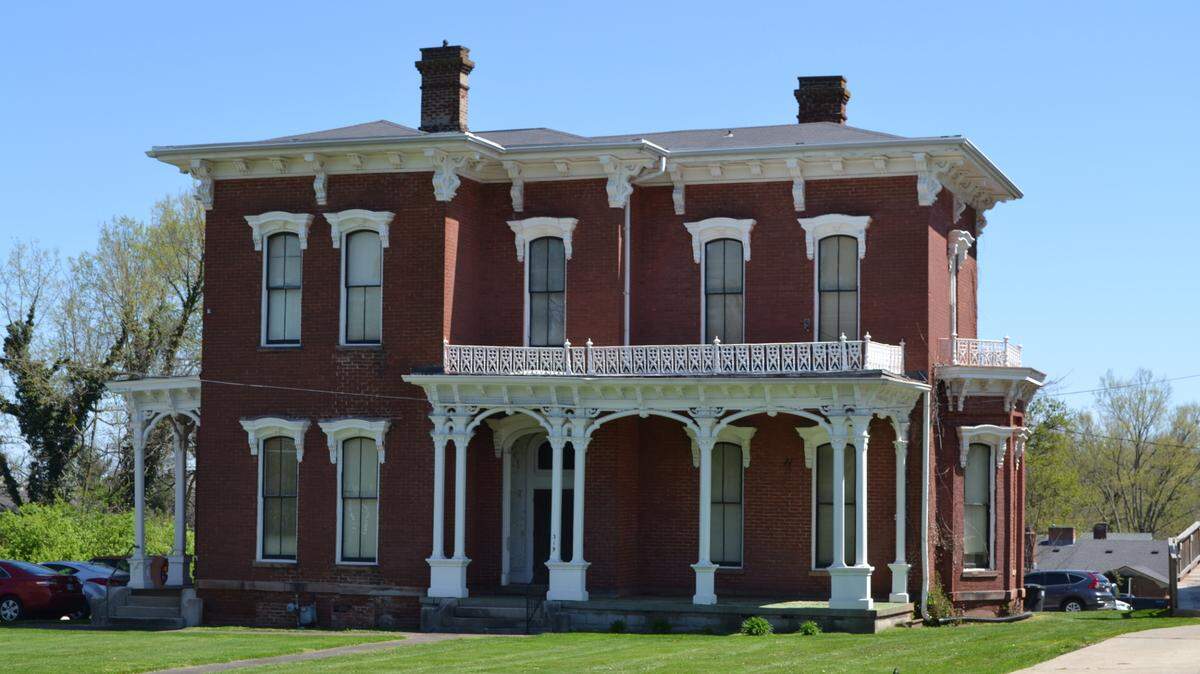
Institutions, in my experience, are not the best stewards of historic buildings. So it comes as no surprise to learn that Eastern Kentucky University (EKU) in Richmond may demolish a house once lauded as one of “Richmond’s best examples of Italianate-style architecture.” And the late 19th-century brick house, with its elaborate hoodmolds, ornamented porches, and cornice decked with brackets, is lovely and worthy of praise. It was also the home of a man who helped found the predecessor to EKU, a short-lived school known as Walters Collegiate Institute.
J. Stone Walker, a financier, investor (railroads, coal mines, real estate - he had fingers in multiple pies across Kentucky), and bank president, had this home built in the late 19th century on Lancaster Avenue. The Italianate style, with low hipped roofs, elongated windows, and cornices fairly dripping with brackets and modillions, was the “trending” residential style of the day.
After the Walker family sold the house, it belonged to the Thomas Collins family. At some point in the 20th century, the house was converted to apartments. Around a decade ago, EKU purchased the house. Three years ago, the university offered the house for sale in a silent auction, but even after a winning bid, refused to carry through with the sale.
The treatment of the house is puzzling and a bit ironic. EKU may trace its official founding back to an act of the legislature in 1906, but it also traces its existence to the Walters Collegiate Institute, from whom it inherited buildings and grounds at very little cost.
Cost, of course, is at the heart of this planned demolition. I understand that EKU’s allocation from the state continues to shrink. Does the university have the money or the need for this historic building? I feel confident in venturing that the answer is an unequivocal NO. But should finances improve, I am sure EKU welcomes the opportunity to have additional green space on which to build in the future.
This planned demolition bears all the hallmarks of being another avoidable case of demolition by neglect. I imagine the roof leaks, the box gutters are rotten, plaster is crumbling, and termites are feasting on old-growth joists and sills. None of that had to happen. Reducing this house to a pile of rubble for the landfill is wasteful, and the lifespan and quality of any new construction will pale in comparison to the departed Walker House.
My co-workers at the Kentucky Heritage Council (KHC) voiced concern about this historic resource a decade ago. But no one can force private owners to do things with their property, or to sell said property to someone who would appreciate and save the building. The KHC has no authority with the university or any property owner; it can no more stop a demolition like this than we can wish away a global pandemic.
The Walker House is listed in the National Register of Historic Places. That does not prevent its demolition. Listing in the NRHP also does not, contrary to popular belief, dictate how you use a house, what colors you paint it, or what sorts of materials you use when you carry out work on the building — unless you are utilizing historic tax credits. It’s unfortunate that the Walker House could not have been purchased by someone who would restore the house using historic tax credits, and instead fell into the lap of an institution that views it as a liability, not an asset.
The fate of the Walker House may not be sealed – a statement issued by EKU states that the university has no immediate plans for the house or the ground upon which it sits. But if the house is indeed deteriorating, a delay will only worsen its condition. I believe the best outcome for this historic dwelling is for EKU to sell the property with deed restrictions stipulating its restoration.
Janie-Rice Brother is an architectural historian. You can read more of her work at www.gardenstogables.com.