
New UK program will help navigate current crises through humanities and social sciences
What can the humanities and social sciences contribute during this time of crisis?
Times of crisis can be disorienting and overwhelming, but they can also be opportunities for creativity and growth. In such moments, the humanities and social sciences are well equipped to amplify community needs. Recognizing that the academy can and must do better in this regard, UK’s College of Arts and Sciences has created the Cooperative for the Humanities and Social Sciences. It promotes partnerships among faculty and graduate students across the university, while facilitating university engagement with local, state, national, and international communities. Why now? Amid the global protests and social movements against systemic racism sparked by the police killings of George Floyd and Breonna Taylor, and the public health and economic devastation caused by mishandling of the pandemic, what contributions might the humanities and social sciences make?
Fields such as history, philosophy, literature, sociology, geography, and anthropology and fine arts can create broader understanding of the human experience and help advance a more just and equitable society. The Cooperative’s programming this year addresses the theme of “Crises and Creating Social Change.” It brings together knowledge and perspectives from community members and UK faculty to generate new understandings and action plans, moving the community forward in constructive and hopeful directions.
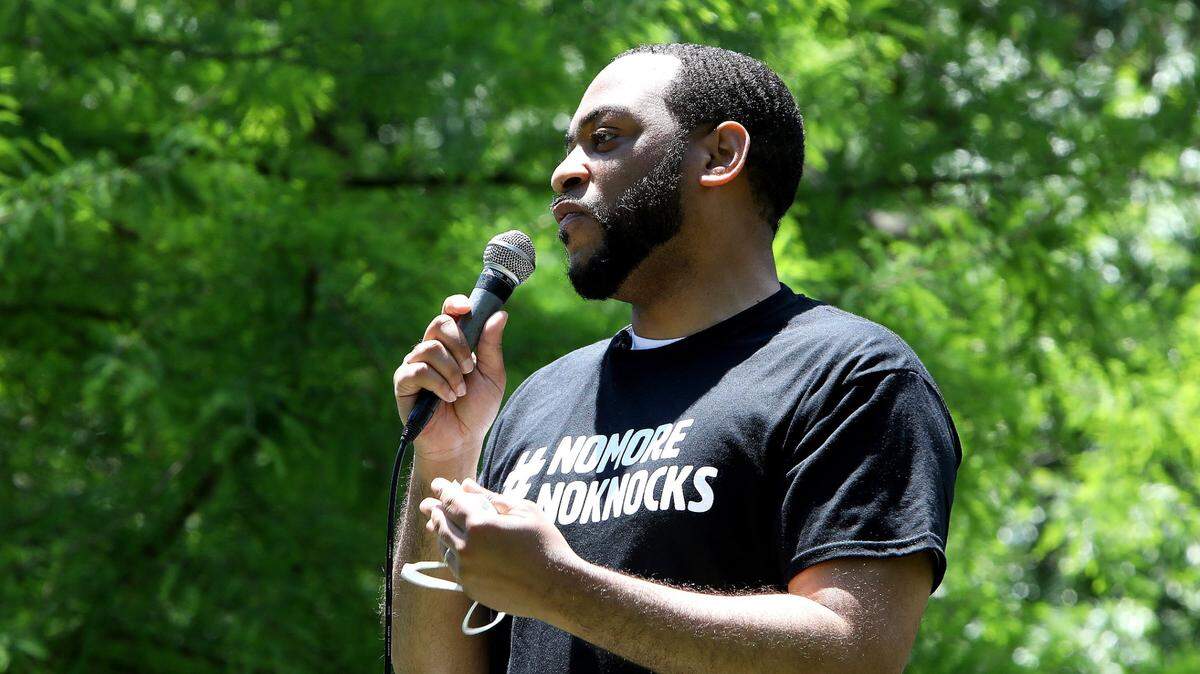
Our first event, “Leadership in a Time of Crisis” on Aug. 27 at 7 p.m. will feature State Representative Charles Booker, president and founder of the new Kentucky-based organization, “Hood to the Holler,” and UK history professor Tracy Campbell, author of “The Year of Peril: America in 1942.” It can be watched at https://chss.as.uky.edu/leadership-time-crisis-.
Humanities help us appreciate current calls for racial justice and address inequities in our nation, in Kentucky, and at UK itself. If, as a nation, we become more knowledgeable about the 400-year history of racial injustice and anti-black racism, we can better understand and initiate broad-based changes that combat systemic racism today. Philosophy enables us think about how our current crisis fits into this history and these geographies, and helps us situate calls for equity, equality, abolition, justice, and freedom. It identifies those rare tipping point moments of global significance in their potential for expanding human freedom. In his eulogy for George Floyd, Reverend Al Sharpton ascribed precisely such significance to this unspeakably tragic moment. CHSS will partner with the Gaines Center for the Humanities in a yearlong project that documents and memorializes victims of racial violence in Kentucky, in conjunction with the Equal Justice Initiative. This endeavor will provide education and support for concrete policies that promote equality.
Social scientists can be enormously helpful in illuminating our experience of the COVID pandemic and drawing attention to profound, asymmetrical or unequal, social impacts of public health crises. During this pandemic, U.S. deaths and economic hardships have been disproportionately borne by people of color and acute burdens have been placed on women’s labor through homeschooling and elder care, while the United Nations has reported increased rates of intimate partner violence around the world during quarantine. Relying on empirical research and data, social scientists are working collaboratively with statisticians and natural scientists to demonstrate the extensive impact of overlapping forms of structural oppression due to race, ethnicity, social class, gender, sexuality, and disability on people’s opportunities and life chances. In Kentucky, the virus’s spread across incarcerated populations, reduced reporting of child abuse and neglect, and high COVID rates among Black and Latinx populations are among the COVID-related inequities that have recently drawn attention. A deeper understanding of these experiences can lead to the development of programs and policies that improve lives.
CHSS (chss.as.uky.edu) invites you to participate in our dialogues and community partnerships.
This columns was signed by the Steering Committee of CHSS: Steve Davis, Herman Farrell, Lee Mandelo, Kristin Monroe, Edward Morris, Natalie Nenadic, Karen Petrone, Anna Smith, Matthew W. Wilson.
This story was originally published August 21, 2020 at 8:35 AM.