
Don’t worry about murder hornets, worry about the bees that pollinate our food
The Asian giant hornet, Vespa mandarinia, has been buzzing about the headlines in the United States, since a dead specimen was found in western Washington state last December. The 2” long insect has been given the nickname ‘murder hornet’ since it can kill a whole beehive colony.
In response to these few sightings, some beekeepers in far off states like Tennessee and Kentucky, have set poisonous traps around their beehives just in case the hornet decides to show up 2000 miles away. Instead of trapping the hornet, these beekeepers have trapped and killed mostly native bees.
Native bees already face enough ecological adversity. We need to protect bee pollinators and wait until we know more about the hornet before taking any action. While the hornet is a bad insect, some entomologists like Whitney Cranshaw of Colorado State University, are saying all the buzz about the hornet is unnecessary.
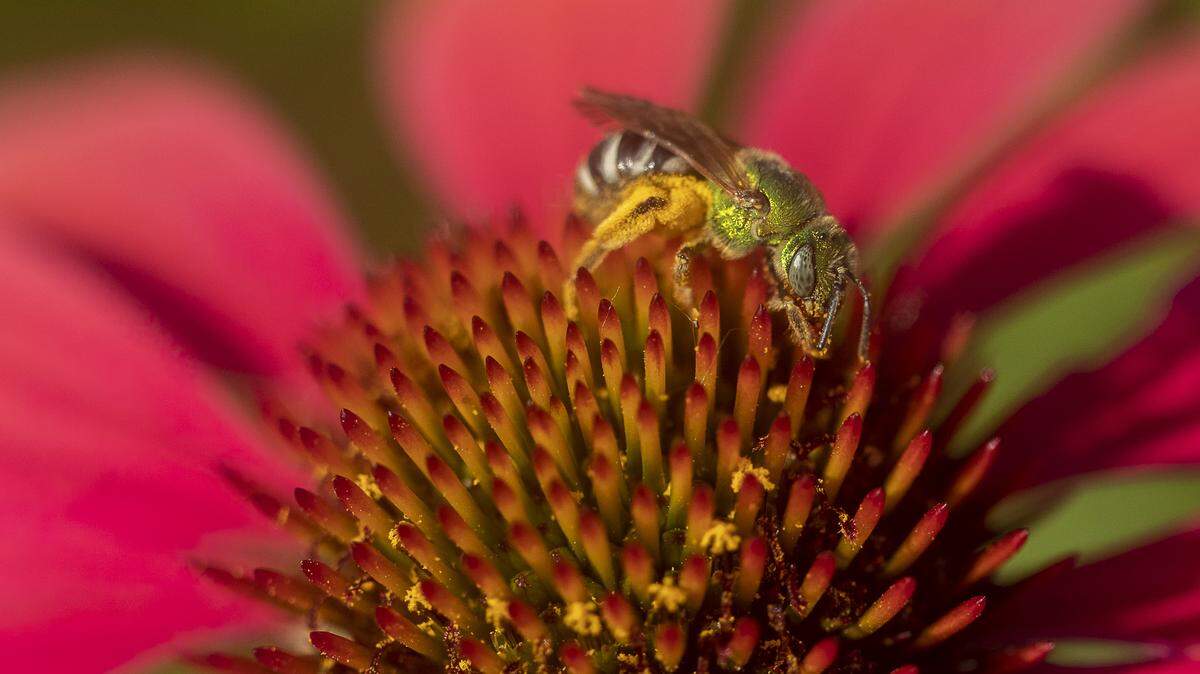
As an ecological landscape designer and environmental educator, I realize most people are unaware of the 4,000 native bee species in North America. Most people recognize honeybees (non-native to the US), bumble bees, and carpenter bees, but not the other 3998 species like the blueberry bee, cuckoo bee, or the orchard mason bee to name a few.
Native bees have it rough already. Roughly 2 percent of insects worldwide are considered pests, and the US alone applies over 1 billion pounds of pesticides each year to battle them. Most of these pesticides are used in agriculture, food production, lawn spraying, mosquito spraying, and pest control in buildings. Almost all pesticides are indiscriminate and poison or kill all insects, including bees, who come in contact with them.
Bees also face viruses and pests of their own like mites. They suffer from habitat loss due to development. Lastly, the overuse of alien ornamental plants and seas of lawn in our landscapes has created a land void of pollen and nectar, robbing them of the nutrition they need. We need our native bees to pollinate our food, plant medicine, and flowers, so we must provide them a healthy environment too.
We can support native insects and build ecological immunity and help nature battle these human inflicted misfortunes like the Asian giant hornet. Supporting our native fauna means supporting our native flora, which is the basis of the world-wide food chain. Plant native plants around your home, urban spaces, and farms. Reduce and eliminate pesticide use, choose organic food, or grow your own as much as possible. Be a conscious consumer about the products you purchase. Big changes sprout from the low impact, small actions that add up everyday.
In 1958, Mao Zedong, the leader of the People’s Republic of China, ordered all the sparrows in the country to be killed, because he believed they were eating the grain in the fields. The people began killing hundred of millions of them and the sparrows were brought upon the brink of extinction. It was not realized that the sparrows ate the insects that ate the grain. It’s estimated 15-78 million people died from famine over the next several years.
We could be doing something similar to our native pollinators. What we’re doing, like using pesticides abundantly, and what we’re not doing, like not planting enough native plants, adds up over time. Will we soon see a bee-less landscape and have to hand pollinate our food crops like they currently do in China?
For the Asian giant hornet, simply setting a poisonous trap isn’t the proper way to go about it. Seriously, what are the chances of trapping that specific insect? We should leave it to the professionals to observe and assess the current situation before taking any proper precautions. For now, let’s support our native pollinators and focus on the positive actions we can take.
Katrina Kelly is the owner and ecological landscape designer of EARTHeim Landscape Design in Lexington.