
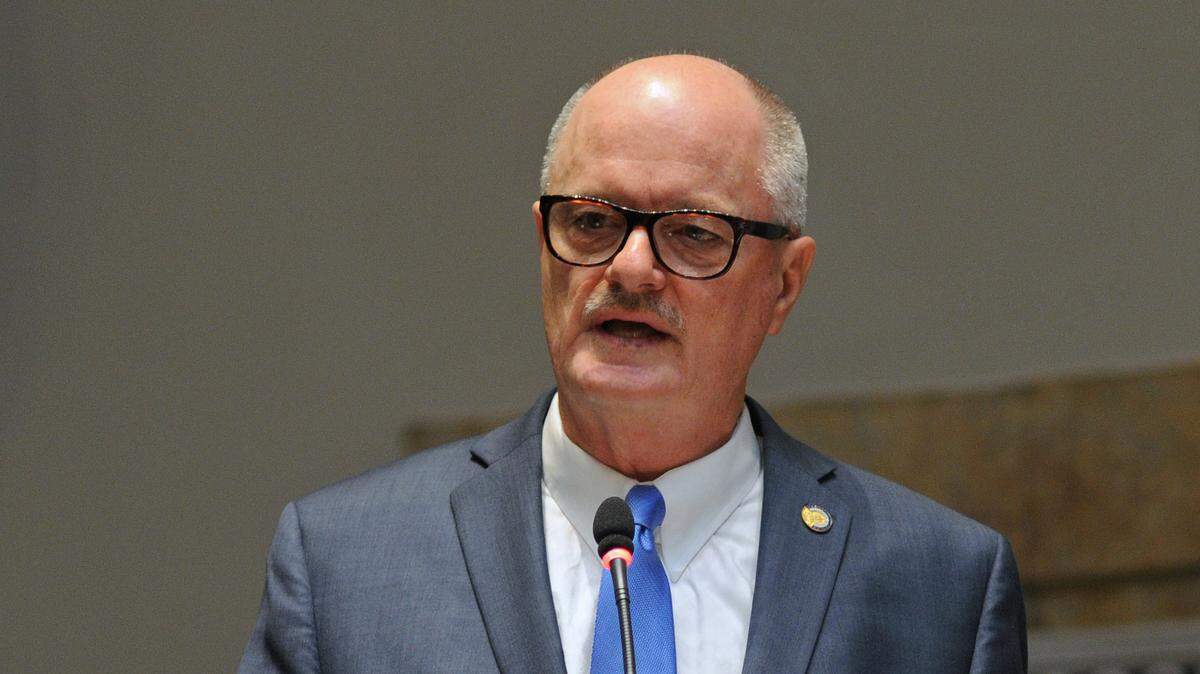
Rep. Schickel: Vote no on proposed constitutional amendments on your ballot.
All eyes and attention are on the presidential election choice at the top of our 2020 election ballots. However, Kentucky ballots will also include two constitutional amendments. These will affect us far beyond the term of whoever becomes President. A good case can be made that these ballot measures will be the most important things you will vote on, yet many folks may not have heard about them.
Our state constitution has served us well since 1891. Once it is changed, it is usually permanent. It is the rules of government by which we live. I would say that changing the constitution during a pandemic is not a good idea in the first place, but the two amendments that are proposed on this year’s ballot are horrible.
The first one—Constitutional Amendment 1 on the ballot—would unnecessarily and carelessly amend the Constitution of Kentucky when the amendment’s goals could be achieved more appropriately through statutory reforms. Many prosecuting attorneys, including Boone County’s chief prosecuting attorney, the respected Louis Kelly, along with people and organizations across the political spectrum, stand in opposition to this ballot measure. Such diverse groups as the Kentucky Tea Party, many prosecutors, defense attorneys, and the ACLU all oppose Constitutional Amendment 1. There is a consensus among legal scholars that this so-called “Crime Victim’s Bill of Rights” will hurt victims. This constitutional amendment will compromise the prosecutor’s ability to get to the truth. Something that is never good for crime victims.
Furthermore, the amendment fundamentally undermines the presumption of innocence, a bedrock of the American and Kentucky criminal justice systems. Our forefathers understood the importance of the presumption of innocence. The Bill of Right’s fundamental purpose is to protect us from the awesome powers of the government. We already have criminal statutes to protect us from each other. There is already a victim’s bill of rights that exist in state law. We could and should improve these laws.
Unfortunately, because of large sums of out-of-state money supporting Constitutional Amendment 1, Kentucky voters have not heard about the consequences it may bear.
Sadly, millions of dollars from outside Kentucky have been and will be spent to lobby for this constitutional amendment. This begs the ethical question. Would this constitutional amendment even be on the ballot had it not been for all of this out-of-state money? For me, the answer is obvious.
The second proposed amendment—Constitutional Amendment 2 —also deals with our justice system. It would double the term years of district judges from four to eight and extend commonwealth’s attorneys from six to eight. This self-serving ballot measure lobbied for by district judges gives less accountability to the public when we need more.
Strong arguments can be made in favor of this amendment. One is that it would sync these elected officials’ terms to make redistricting more feasible. If this was a serious argument, the same could be accomplished by shortening circuit judges’ terms, which was not even discussed. Another argument is that it would be good to have a higher standard of experience for a district judge by increasing their required years of licensed experience from two years to eight years. I find it curious that district judges elected under the old standard would be wanting to have a higher standard now.
We have experienced several scandals recently across the state involving both judges and a commonwealth’s attorneys, which has severely damaged the credibility of the judicial branch in the eyes of the public. This is a time when the public demands more accountability, not less.
I opposed both of these ballot measures in the Kentucky legislature. I would recommend that you join me by voting against them on or before November 3.
Senator John Schickel (R-Union) represents the 11th District in Boone County. He has a 43-year career as a State Senator serving on the Judiciary Committee, as a corrections administrator, law enforcement officer, and teacher.