
‘Immeasurable loss’ and insurmountable sadness: Gentrification in Lexington’s East End.
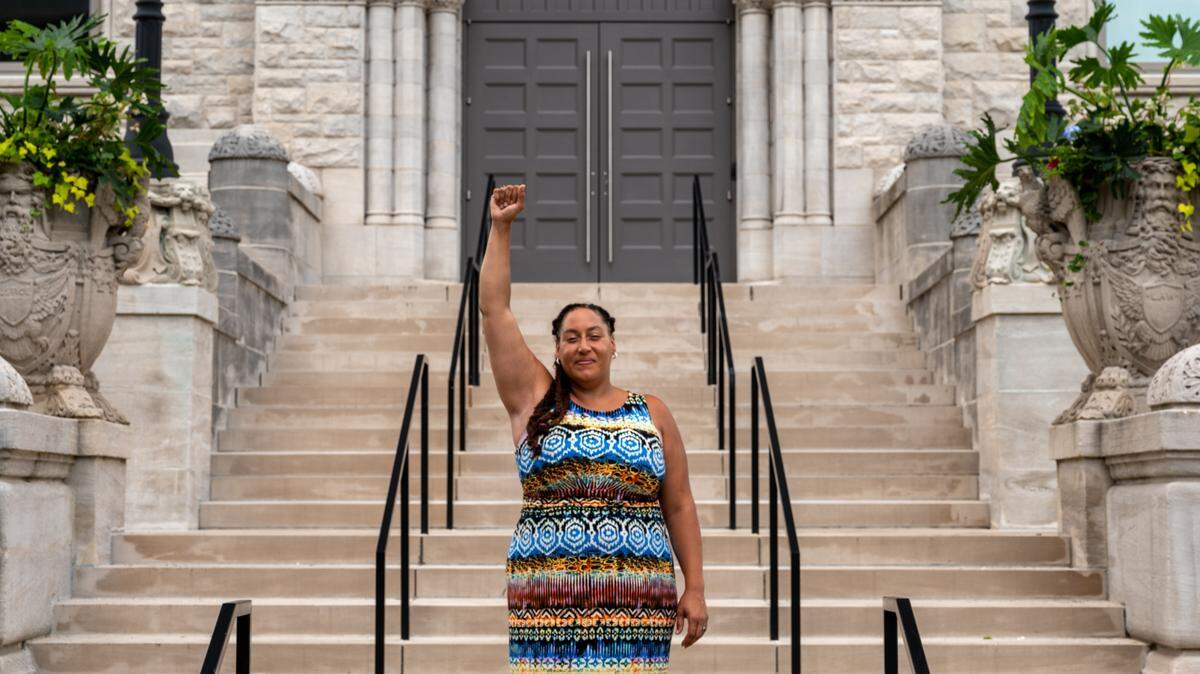
Gentrification. What is it? How can we end it? These questions bring answers as varied as the people asked. As a native Lexingtonian, growing up in the Smithtown area, I returned home in 2014 to discover the deep displacement and loss of community that is gentrification.
While completing my graduate research, I focused on gentrification to bring an understanding of the why and how my neighborhood and many of our black communities birthed after the end of slavery were being torn apart, invaded, and displaced. My research led me to visiting several black communities formed in Lexington following the end of chattel slavery - New Zion, Jimtown, Cadentown, Brucetown, Smithtown, Bracktown, Utterington, Jonestown, and Maddoxtown.
As I drove through Utterington, every single black family greeted me with smiles and waves as if I were family, it felt safe, it felt like home. It was still our community. In a culture and society that takes our life while we sleep in bed (Ayanna Jones) or walk down the street with a hoodie and skittles (Trayvon Martin), being in a community or neighborhood that acknowledges and respects our humanity is literally life saving. To be in community in this current society and culture requires black and brown people to live in community with people who see their humanity — most often guaranteed by living in community with those who look like us.
Cadentown, with our former community church turned into a house, has been divided into sub plots for sale. The historic location of our school house dating back to the 1800s and the ground in which our ancestors are buried, is now marked private property of the house that was once our place of worship.
Gentrification, also politely termed community development, urban renewal, and/or “neighborhoods in transition,” not only displaces and disrupts our communities where we find a safe haven from the ills of racism/white supremacy, but also disrespects our dead. Gentrification is an invasion and displacement of our communities, and in this city, our communities built and sustained by our ancestors after emancipation. Our history is being erased and our roots are withering.
Generations of families are scattered with almost insurmountable loss but this current social construct assigns no value to community. “Community is an environment where you can find a home in each other’s heart and soul,” says author Sobonsu Fu Some. “It is a living entity with spirit as its anchor, where a group of people are empowered by one another, by spirit, and by the ancestors to be themselves, carry out their purpose, and use their power responsibly.” This community is the immeasurable loss that occurs with the displacement and dismantling that is gentrification. This is what gentrification is to me.
How we fix gentrification brings a barrage of additional barriers and exploitation. As I stood looking out the window from inside the new MET building on Midland and Third, tears stung my eyes. Since returning home in 2014, the foundations of my community activism and grass roots organizing to create a safe, sacred space for black people to come together, has been in the East End. We held fish frys to fund our efforts to host a recurring Friday Night Vibe in Issac Murphy Memorial Art Garden and we held four consecutive years of community Juneteenth Lexington celebrations prior to the pandemic. We had early conversations of saving a piece of the community for us to serve the community. We checked the prices of land available in the area. They were $500,000 for the lot on the corner of Race St. and Third St, and over $500,000 for the old nursing home on Third St. We couldn’t understand why these buildings and lots were so overly priced. Gentrification hadn’t succeeded in displacing all of us yet. But as I stood in the MET building, looking at the view almost six years later, it all made sense. More than a decade ago, the demolition of Bluegrass Aspendale set in motion a larger plan to gentrify the East End, a multi-million dollar venture between Community Ventures and outside developers that would bring this final blow of displacement.
Questions remain about who profited from which deal, but it’s clear that a white elite power structure ensured that gentrification was written into local policy through the East End Small Area Plan and the city’s Comprehensive Plans beginning in the early 2000s. These plans made sure to deliver a new, colonized white suburbia into our historic communities.
Where does that leave us? At the very least, Community Ventures, the lead developer of the MET, should live up to its mission and ensure they fulfill grant obligations with a community-owned, worker cooperative grocery store in the bottom floor of the MET Building to end the food apartheid of the East End. Residents will own a grocery store and provide goods and services to the community in which they live.
Sarah Williams, BSN, MA, is a community activist and grassroots organizer.
This story was originally published November 13, 2020 at 9:19 AM.