
‘Benign neglect’ in poor and Black neighborhoods cycles through many lives
Having lived in Lexington since the late 1980’s, I thought my life was a normal life. However, what I witnessed and experienced is what I have learned is called “benign neglect.”
“Benign neglect” is a national race policy whereby the federal government does nothing more than allow the massive civil rights progress of the 1960s to take effect (on paper). In essence, the concept of benign neglect, ultimately blamed the victim and thus ignored the effects of the flawed structure of society in this nation.
Ignoring African Americans, who wanted the government to pursue a more aggressive policy to correct racial inequalities, we only got the changes we could get for ourselves.
In my neighborhood and just about any neighborhood with a predominantly poor and Black population there was a high police presence and an open air drug market and a constant transient population. This made no sense to me as a youth. The everyday citizen would think it’s because we are poor. In reality, it is to keep us poor and unable to relocate. My grandparents lived up the street and my uncle live a few houses down. Various other family members lived in the immediate vicinity or in another poor and Black neighborhood under the same conditions. Living in a community with an open air drug market creates and active transient population and an environment where addiction, vandalism, theft, burglary, and assaults are the norm.
All of this compels residents to take extra measure to secure their property. This also creates a higher police presence, which leads to more criminal, traffic, and civil citations costing the residents more money. This kind of environment discourages employers from establishing businesses in the vicinity, costing residents the expense of having to commute to work whether by public transit or private vehicle. Each of these cause the residents in direct losses of property and sometime safety and health. All of which nickle-and-dimes the residents into poverty. Money that could be used to relocate, upgrade or purchase property has to be dedicated to daily survival. Systematically residents are trapped in the area with the highest police presence and worst social services.
Fast forward. I am a Black man who is almost 50 years old and I was looking to move my family from a 2-bedroom apartment to a 3-bedroom house. I saved up the money for rent, deposit, bills, and moving expenses. I thought surely this should be easy, especially during a pandemic with so many not able to pay rent. I quickly discovered race and gender trump money.
In the process of searching I would find places on line and apply on line. Seemed normal until I was required to jump so many obstacles just to apply. I would inform the owner or management I could come with cash in hand, ready to move in that day. At first the places seemed eager to rent the properties via email and digital correspondence. Then the in-person meet up would happen. Things got complicated quickly. Suddenly they would claim there were several other applicants; I would need to pay an application fee. Several actually wanted background checks, personal and professional references, in addition to the usual credit and income verifications. One property increased the rental price in the ad for their property by $300 while I was there. I decided to look in specific locations.
I thought surely I could obtain a 3-bedroom in one of the neighborhoods I spent my teen and early adult years in. Nope. I discovered that simply adding a pastel color scheme to the house exterior automatically raised the rent by $500. The 1-bedroom shotgun house across the street from a dope house that you wouldn’t rent for $300 in 1999, now rents for $1,200 and the dope house is still across the street. There were a few other homes around them with some of the original residents. Those residents did not look to be moving any time soon. Relatives and family members had moved other poor neighborhoods in the vicinity. My grandparents’ house near Duncan Park was bought and gutted. However, it currently looks to be abandoned in the middle of the job. I decided to abandon the idea of renting property in the downtown area known as east and west end. (which geographically made no sense). Both locations were within seven blocks of downtown Lexington.
My spouse, a 40 something Black woman, and I decided to try a different approach. Instead of me applying for the property, she applied. We got a place the next day. Seems like I should have been celebrating. Mission accomplished; our family is getting a larger home. However I am perplexed. Why couldn’t I, who actually paid the money and found the places, not get secure a place in my name with the ease at which my spouse could? Yes, I am the head of my household and fulfill my duties as a man to the best of my abilities. Yet it must be kept a secret publicly and financially. “Why is that?” I often ask myself.
Clearly I was perceived as a threat judging by the difference in obstacles presented to my spouse. No background check or references required. I did discover that one way the background check works against you is it lists the charges. My few convictions were either 20+ years old or civil. However, the extensive list of charges would not go away. Growing up in the aforementioned environment as a Black male I found myself charged with a myriad of offenses that were eventually dismissed. That did not keep property management and owners from using those charges as reason to disqualify me from consideration.
After years of living in decaying and underdeveloped neighborhoods, I wanted to move my family to a better area but the consequences of living under those conditions prevented me from obtaining housing on my own. Even though the the neighborhood we moved in is a great and safe neighborhood. I had to get it done undercover. The price was about market average for the area. The drawback is that we are in the suburbs and a good distance from most shopping.
All this made me feel as if I officially don’t count. My money is meaningless unless I put it in the hands of my woman.
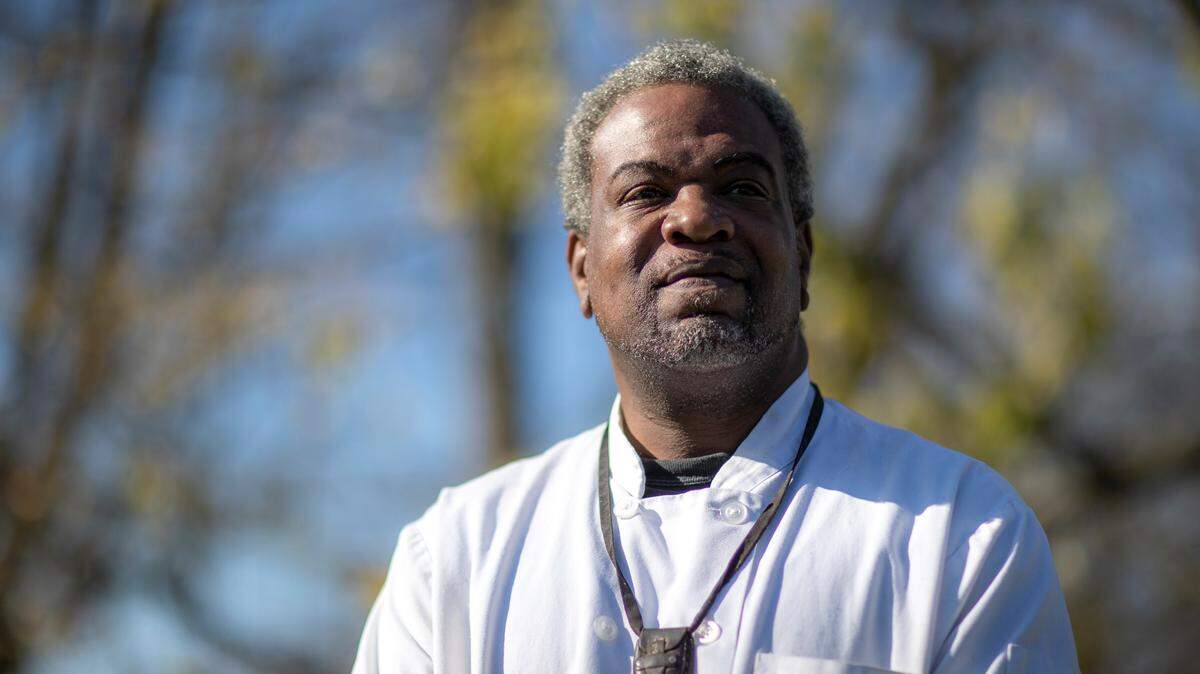
Nam Oshun is Son, father, brother, spouse, author, chef, and Poet for the people.
This story was originally published November 13, 2020 at 9:18 AM.