
The Presidential election was just another battle in a long cultural war
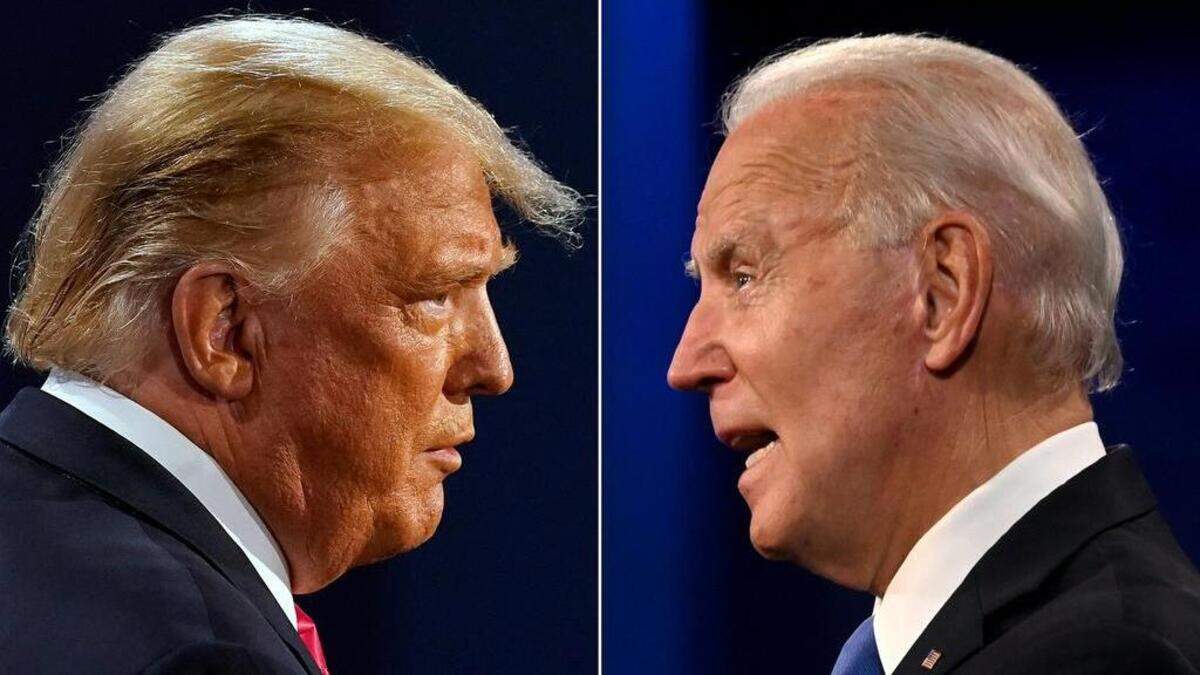
The first two decades of the 21st century found the USA split into two nations. National polls indicated that President Obama was the most divisive President in modern history — until Trump. Obama was heralded as the Second Coming in some news magazines or he was thought of as a Chicago gangster. Trump was either a populist champion or a dangerous, racist, sociopath. But neither Obama not Trump had divided the country. That had already happened. They were manifestations of a growing deep divide that ended whatever common identity Americans had had.
Some years back, former Herald editor Bill Bishop in his book “The Big Sort: Why the Clustering of Like-Minded America is Tearing Us Apart,” detailed how for decades Americans had been self-segregating themselves in schools, neighborhoods, churches of like thinking people regarding the adoption of what might be called a traditional ethos (that is what had been) or a new ethos that defined reality, society, and human nature differently . That is, they had divided themselves over religion. According to Richard John Neuhaus, “Culture is the root of politics and religion is the root of culture.”
Long before Bishop’s book James Davis Hunter in 1991 had published “Culture Wars: The Struggle to Define America, Making Sense of the Battles Over the Family, Art, Education, Law, and Politics.” He wrote that since the 1960s, Americans had been in one of two camps that clashed over world views and the definition of the American nation. “What is ultimately at issue, wrote Hunter, “are deeply rooted and fundamentally different understandings of being and purpose.” Hunter thought the war would go on until one side or the other won completely. The Presidential and Congressional elections of this century do not point to any near future resolution.
Americans no longer have a community based on a common understanding of civilization’s pillars: family, religion, government. Is a male/female union necessary or not? What is meant by gender and sex? Is abortion freedom or death? Are there moral absolutes or not? Is humankind defined by nature and history as tragic? One’s answers to such questions has much to do with how one understands the purpose and desired structure of government. Should government be limited to protect freedom of action or expansive to guarantee freedom from want? Most traditionalists answer all these questions the same way. The more secular generally answer all these questions the same way but differently from the traditionalists.
How one answers such questions gives them insight into other issues such as defining free speech, freedom of religion, the right to bear arms, access to public restrooms and the word equality.
Each side sees itself as moral and the other immoral. All means of combat are consequently fair. Hyperbole such as irredeemable and godless are common verbiage of the war.
It is the cultural war that explains the bloodlettings that have occurred over Supreme Court appointments as far back as Bork on up to Kavanaugh. There is no consensus, and has not been one, over many great issues, and consequently Congress cannot take decisive steps. The Supreme Court decided there was a constitutional right to abortion and gay marriage. It’s not Trump’s personality or capabilities that explains the last four years but his bolstering of one side, the traditionalist side, in the cultural war, especially through federal court appointments.
Today this war divides racially, geographically, politically, by gender to a degree, and by religion. Deep in the 2000 presidential election statistics was a very clear indicator of what had been happening and would continue. In that year two urban counties that had voted Republican in the previous election switched and voted Democratic. A great swath of non-urban, low-density counties switched to voting Republican, the switch fueled by rural, married women.
Making matters worse, given the cultural war, on issues for which there could be compromise, on taxes and spending, business regulation, environmental protection, educational reform, all is viewed as offering opportunities for the other side to have an advantage in controlling government and gradually enforcing its values. There have been no days like this since the end of slavery brought about by war.
J. Larry Hood is a retired state government employee who presently teaches world civilization at Midway University and American and Kentucky courses for UK’s OLLI program.
This story was originally published December 4, 2020 at 9:50 AM.