
Workers, wages, weed: The Kentucky Democratic Party needs to listen up.
This is a worrying time for newly appointed Kentucky Democratic Party Chairman Colmon Elridge and the rest of the Kentucky Democratic Party. What can Democrats possibly do to create more space for the state party in rural communities?
In a recent article in New York Magazine, Eric Levitz proposes a new kind of unified message for the Democratic party: “Democrats Have a Problem. ‘Workers, Wages, Weed’ May Be the Answer.” Levitz suggests that in order to separate themselves from the national Democratic Party, Democratic candidates running in rural areas and states need to focus on supporting policy ideas that have broad appeal, that Republicans cannot feasibly support, and are especially important to non-college educated voters (the majority of voters in the country). Could this be a path forward for the Kentucky Democratic Party?
The issues of workers centers on the idea of worker co-determination. This requires large corporations and businesses to include the workers they employ on boards and in company decision-making. We have seen how the decline in the coal industry has crippled the economies of many communities, especially in eastern Kentucky. The Blackjewel Coal miner strike in Harlan County showed us the power that workers still wield in fighting against corporate maneuvering and malfeasance. Co-determination and supporting the resurgence of unions would show rural voters that the Kentucky Democratic Party is not only for college-educated or city-dwelling voters.
The issue of wages is also salient for rural and working class voters. According to the Pew Research Center, a 2019 survey showed that two thirds of Americans supported raising the federal minimum wage to $15 an hour. The current federal minimum wage of $7.25 an hour has not been raised since 2009. It is woefully unable to raise workers above the poverty line or to provide opportunity for rural communities who have few options for where to work. Some state legislators have already keyed on this issue, with Sen. Reggie Thomas, D-Lexington, proposing legislation to raise the minimum wage to $15 an hour in Kentucky by 2026.
Finally, weed is an issue whose time has come. We have seen recent efforts from Republican state representatives to begin the process for making marijuana available for medicinal use in Kentucky. These efforts have mainly stalled in the state legislature or have not garnered significant support from state senators. Kentucky Democrats cannot allow Republicans to own this issue. According to a Kentucky Health Issues Poll in 2019, 90 percent of Kentucky voters support medicinal marijuana, and 59 percent support its use for any reason. Despite antiquated federal laws, 15 states have now fully legalized marijuana, and a majority of states either allow it for medical use or have decriminalized possession. This has broad appeal in Kentucky: Providing much needed tax revenue to support public schools and public health, providing an alternative to opioids for pain management and recovery, as well as drawing investments for tourism and small business. Harsh marijuana possession laws also disproportionately hurt Kentucky minority groups. Kentucky Democrats should put this issue at the center of their campaigns.
This alliterative messaging will go a long way in rebranding the Democratic Party in Kentucky. Paired with focusing on access to affordable healthcare, tackling the opioid and heroin epidemic, and leading the stand for issues of civil rights, this could help make the Kentucky Democrats more competitive in future elections. This blueprint can be partly attributed to late Lexington native and political figure Gatewood Galbraith, who advocated for many of these issues decades before they became politically acceptable.
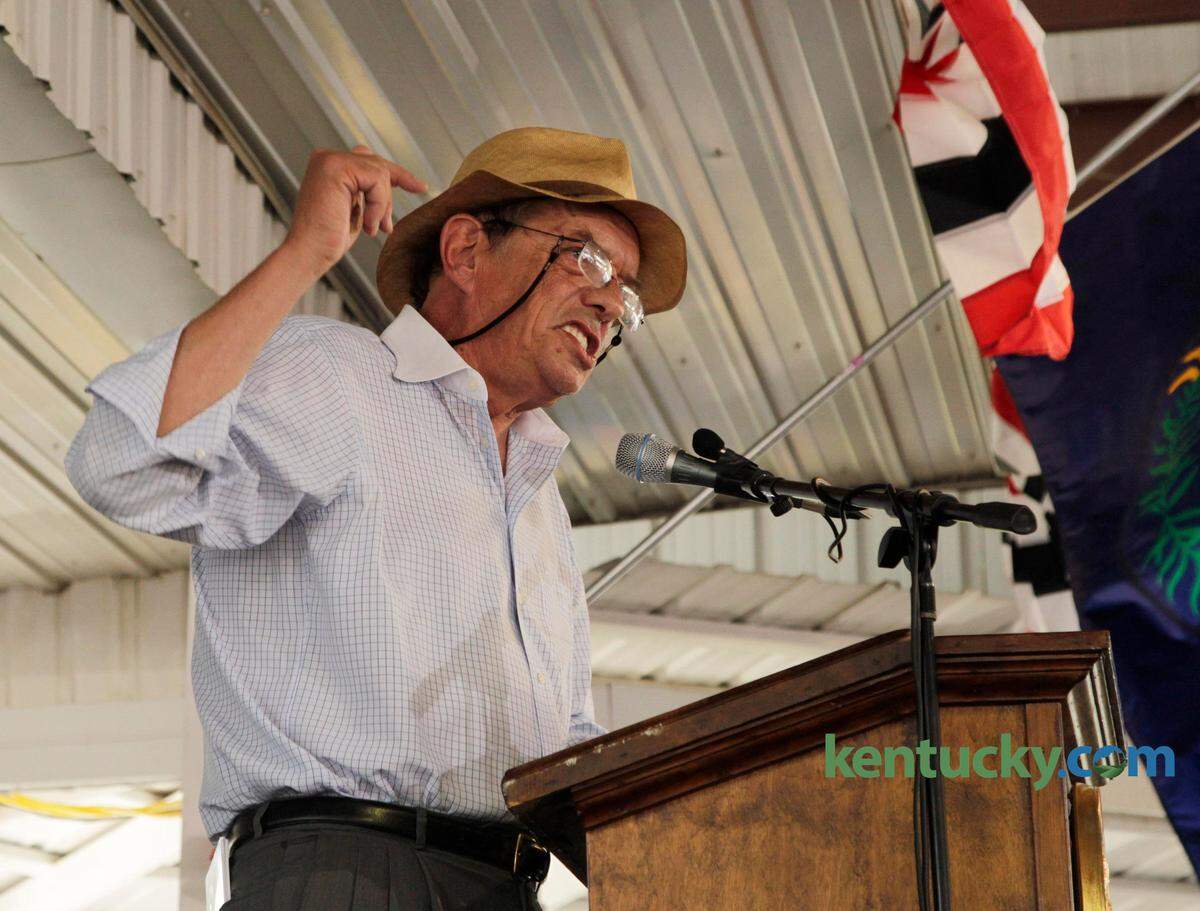
One thing is without question: Kentucky Democrats need to try something new, especially with the specter of Republican-led redistricting later next year. ‘Workers, Wages, Weed’ is a great place to start.
Matthew Strandmark is an education archivist at the University of Kentucky Special Collections Research Center and project manager for the Gatewood Galbraith Oral History Project. You can reach him at mstrandmark@gmail.com.
This story was originally published January 8, 2021 at 10:10 AM.