
Don’t repeat Lexington’s racial past. Make Commission’s recommendations a reality.
Lexington’s history of systemic racism and its effects is a matter of fact, memory and public record. Despite what appears to be considerable effort on the part of our city’s leadership to counteract that racism, we seem to be extending its run.
Here’s what I mean.
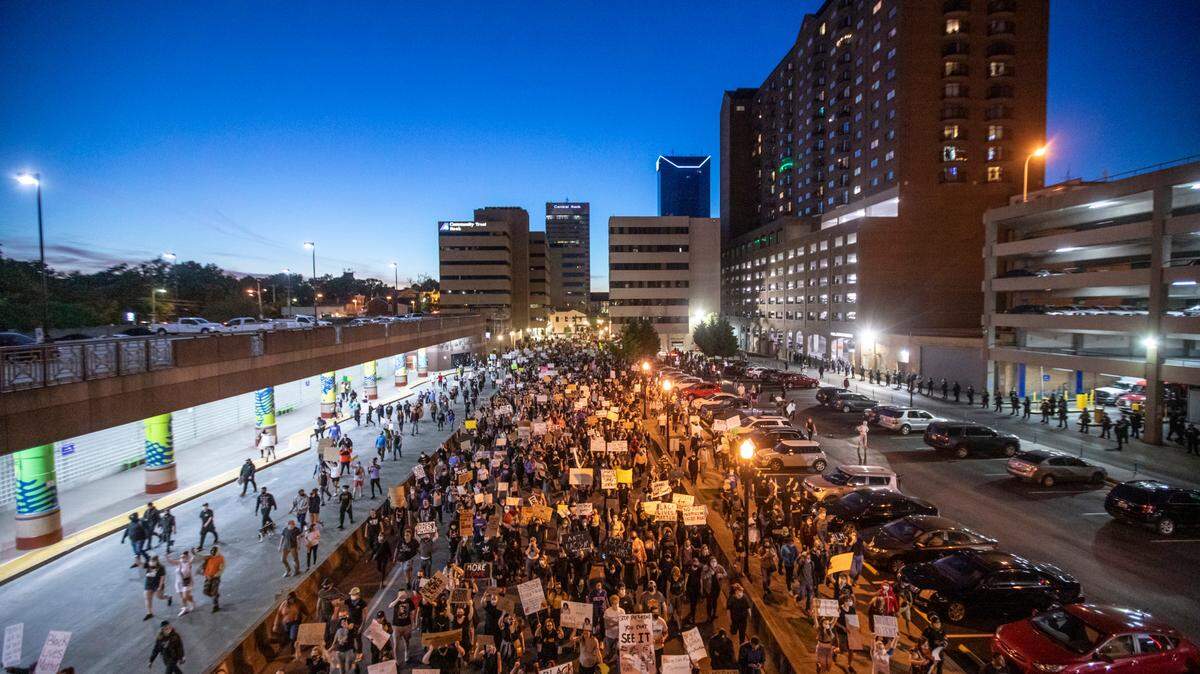
In June 2020, as a response to massive protests here in Lexington and around the country, Mayor Linda Gorton wisely asked two of Lexington’s many Black luminaries, Rev. Dr. Gerald L. Smith and Roszalyn Akins, to lead a Commission on Racial Justice and Equality. Made up of five sub-committees and 70 local experts and community leaders (the majority of whom are Black), the Commission, after months of research and discussion, delivered a 68-page report with more than 50 recommendations to the mayor and LFUCG council this past October.
In the opening pages, the report’s writers outline a brief history of Lexington’s long-running commitment to systemic racism, as well as some of the city’s failed attempts to address that racism over the years. It’s enough to make you wonder why this Commission and its report should fare any differently. But some positive movement exists. The city is getting implicit bias training for its 3,000+ employees, and the problem of how few city contracts go to Black-owned businesses is being addressed. Recommendations around Law Enforcement, Justice and Accountability, however, — the very issues that sparked the protests that led to the creation of the Commission — appear dead in the water.
Why? It wouldn’t take much beyond political will to ban no-knock warrants, to find funding for a true 911 Diversion Plan-Pilot for mental health-, addiction- and homelessness-related 911 calls, to commit to do whatever it takes to amend the Collective Bargaining Agreement with Lexington Police Department so that civilian participants, not just police officers, investigate and vote on police disciplinary matters. But the mayor and council say they need to wait on the state, or they don’t have the money, or their hands are tied without the blessing of the Fraternal Order of Police (FOP).
This putting off of the Commission’s recommendations until some imagined future that is better-funded, less contentious, and somehow occupied by a more convivial FOP is insulting, especially since the Black doctors, nurses, academics, community leaders, educators, pastors and advocates who took part in the Commission — perhaps every one a descendant of enslaved people, each one tasked with finding solutions to problems they did not create — did so without compensation. As those in power sideline recommendations, it’s hard not to conclude that these Black neighbors of ours have had their work, time, expertise, community knowledge, and generational wisdom co-opted and stolen for no other reason than to soothe the pangs of white conscience.
There’s more. Mayor Gorton rightly credits this summer’s protest organizers with helping her see the need for the Commission in the first place, but these same protest organizers face criminal charges because of protesting. How can the mayor and council say they’re committed to racial justice and equality when the very people who convinced them face jail time for doing so? Especially since the majority of those still facing charges are Black?
We are at a crossroads, friends. Shamefully, it’s a crossroads we’ve been at before. We must not find ourselves here again in the future.
So here’s what must be done: Our city’s leaders must fulfill all recommendations set before them by the Commission on Racial Justice and Equality by either meeting them immediately or by laying out a public-facing plan — with a timeline, proposed funding, barriers to overcome, etc. — for how they will be met. They must see to it that all criminal charges still facing protesters are dropped, and if they really want to hammer a nail into the coffin of systemic racism in Lexington, they need to pony up back pay for every Black participant who served on the Commission.
Reva Russell English is an organizer, farmer and artist in Lexington.
This story was originally published January 27, 2021 at 1:14 PM.