
No matter how smart or hard-working, racism makes the American dream a myth for many
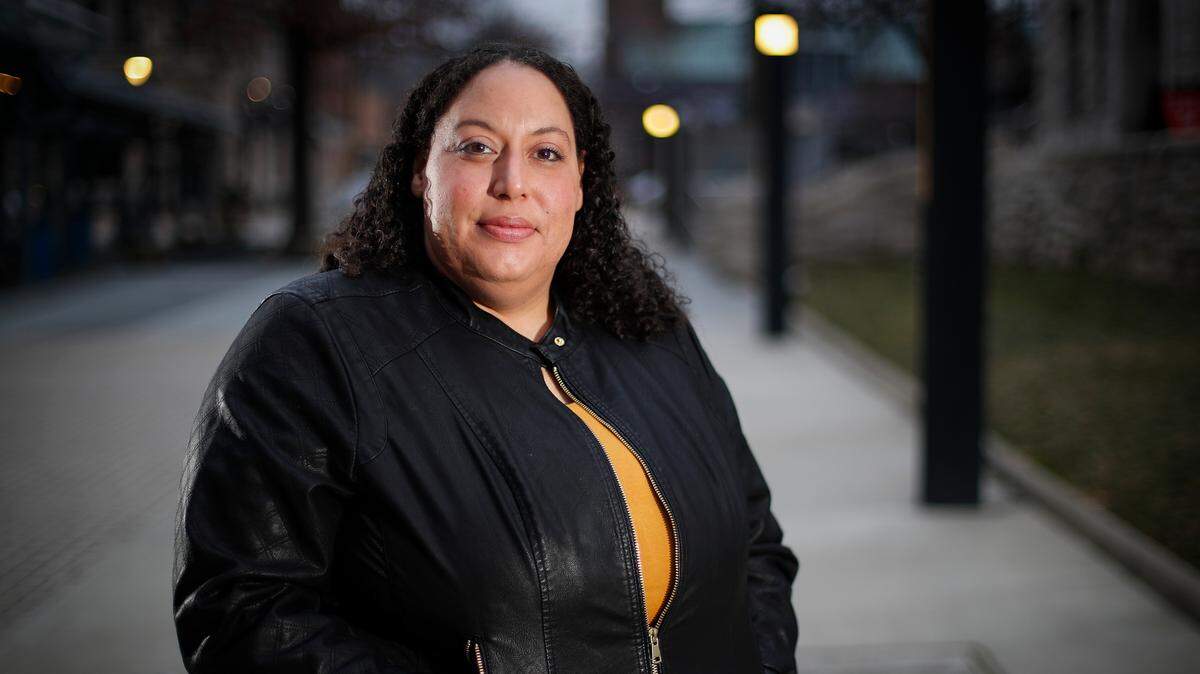
Growing up as a biracial person Lexington, I’ve always been acutely aware of how achievement could only get me so far. Race was always lurking somewhere to remind me that for most Black people, the American Dream is much more of an illusion than reality.
One of my first experiences with how my Blackness could be used to nullify my intelligence was in elementary school. I was usually the first student to finish my assigned work, and instead of this being viewed as an indicator of how gifted I was academically, my teacher saw this as a reason I should be considered for placement in special education. This was despite the fact that I was the only student who could correctly spell a word on the list of National Spelling Bee words for fourth graders and was placed in an accelerated class my third grade year. The angst and disdain with which that teacher treated me stuck with me and served as the first card of many I would be dealt in a game that was starting to seem more rigged than fair.
As a teenager, I was convinced that a college education was the great equalizer, a way to make economic upward mobility equally available to all people. As a result, I pursued academic successes as a means to afford the economic success I saw as an essential part of achieving the American Dream. As an academic overachiever, my list of achievements was longer than most. However, what has stuck with me are not the successes, but the times my Blackness soured success, like being allowed into spaces that people didn’t really want me in or when being intelligent enough didn’t always equate to being well connected enough or financially well off enough to capitalize on an opportunity.
It is these repeated experiences that make me painfully aware of how race impacts opportunity. I bought into the idea that if I just studied hard enough, pulled myself up by own boot straps, and took advantage of every opportunity that the economic promised land was waiting just on the other side of all the sacrifice. I thought that I’d be welcomed with opened arms as my full self into the professional promised land where economic upward mobility was a guarantee. The reality of how fragile economic stability is for me and many other Black people has been a stark contrast to that naivete.
After enough failed attempts at trying to fit a square peg into a round hole, I grew weary of the crushing, asphyxiating weight of trying to downplay the need to feel comfortable and proud in my own skin, and realized that assimilation for the sake of professional success guaranteed the death of a part of me I was unwilling to lose. So I stopped buying into the false romanticism of the American Dream. While I no longer continued to pursue professional success under some false pretense, I did decide to do something about the fact that the economic stability of myself and other Black people is still so profoundly impacted by our proximity to and alignment with whiteness and is still at the mercy of white supremacy and racist policies. My organizing has included collaborating with local organizations to win a local raise to the minimum raise, despite it eventually being overturned by the Kentucky Supreme Court.
The entire premise of the American Dream is based on the myth of a meritocracy. If it were in fact a meritocracy, race-based chasms in wages, unemployment rates, home ownership rates and so many other indicators of economic well-being would not exist. Unfortunately, it’s not just whether or not a person is able to present as white or maintain a certain proximity to whiteness that factors into their experiences with professional and economic success.
There are historical systemic forces at work that include government policies and institutional practices. Despite the rose colored glasses approach many would like to have, occupational segregation and the persistent devaluation of Black workers is a direct result of discriminatory and exploitative policies and systemic inequalities that unfortunately have too many people profiting from them for people to want to dismantle them. Two of the more well known statistics that help illustrate this point are that Black workers are overrepresented in low wage service jobs and that the racial wealth gap between white and Black families has now grown such that an average white family has ten times the wealth of an average Black family. Two lesser known statistics that start to help people understand some of what is going on behind the illusion we are all sold is that 8 of the 10 states with the highest percentage of Black residents have “right-to-work” laws on the books, preventing many of them from unionizing or advocating on their own behalf, and nearly 70 percent of Black children who are born middle class are likely to fall out of the middle class as adults. This last statistic helps drive home the fact that even when a Black person escapes the risk factors associated with poverty by being born middle class, they are more likely to become poor as an adult than to maintain their economic footing within the middle class because of the impact of racism on economic mobility.
Given these statistics and knowing the experiences of Black people, white people may wonder what it is they’re supposed to do. For some it’s easier to stick their head in the sand and sit comfortably in their privilege, but a system that produces this kind of inequality hurts everyone who participates in it. It is up to each and every one of us to act and disrupt the ways that racism and racist policies continue to create such drastic economic disparities. This includes voting, lobbying for policy changes, and learning about economic alternatives like cooperatives and solidarity economies where economic equality and self determination are real, tangible things for everyone instead of just a dream.
April Taylor is a community activist and organizer whose work is accompanying marginalized communities to the freedom, joy and self determination we all deserve.
This story was originally published February 18, 2021 at 11:40 AM.