
The same Ky. communities most harmed by COVID-19 now face a lack of vaccine access
Last spring, my colleagues and I wrote a couple of opinion articles that highlighted historical and contemporary racialized structural inequalities in the political and social determinants of health that have led to COVID-19 racial/ethnic disparities. Specifically, we noted that early in the pandemic, African Americans nationally, and in our own community of Lexington-Fayette County, were disproportionately impacted by COVID-19 morbidity and mortality. More importantly, we highlighted that “evidence-based interventions, well-reasoned actions, and broad cross-sector collaborations are needed” to foster social justice and eliminate health inequities.
We are now at a period in the pandemic where COVID-19 has infected over 27 million individuals, and resulted in over 465,000 deaths in the U.S (30,569 cases and 211 deaths in Lexington-Fayette County). The rapid development and approval of COVID-19 vaccines is anticipated to be a critical force in slowing infection rates and subsequent loss of life.
But despite all this, we now see that the same communities most adversely impacted by COVID-19 are facing a lack of vaccine access. A recent study found that white Americans are being vaccinated at a rate three times higher than African Americans. A recent NY Times article reported that in cities nationwide white wealthy residents are disproportionately receiving more vaccinations, even when vaccination distribution centers are located in poor non-white neighborhoods. The Centers for Disease Control and Prevention report that of those who have received at least the first dose of a vaccine, 5.4 percent are African American, compared to 60 percent who are white American. On Feb. 8, Governor Beshear reported that of the 352,888 Kentuckians who had received the first dose, only 4.3 percent (16,570) were African American.
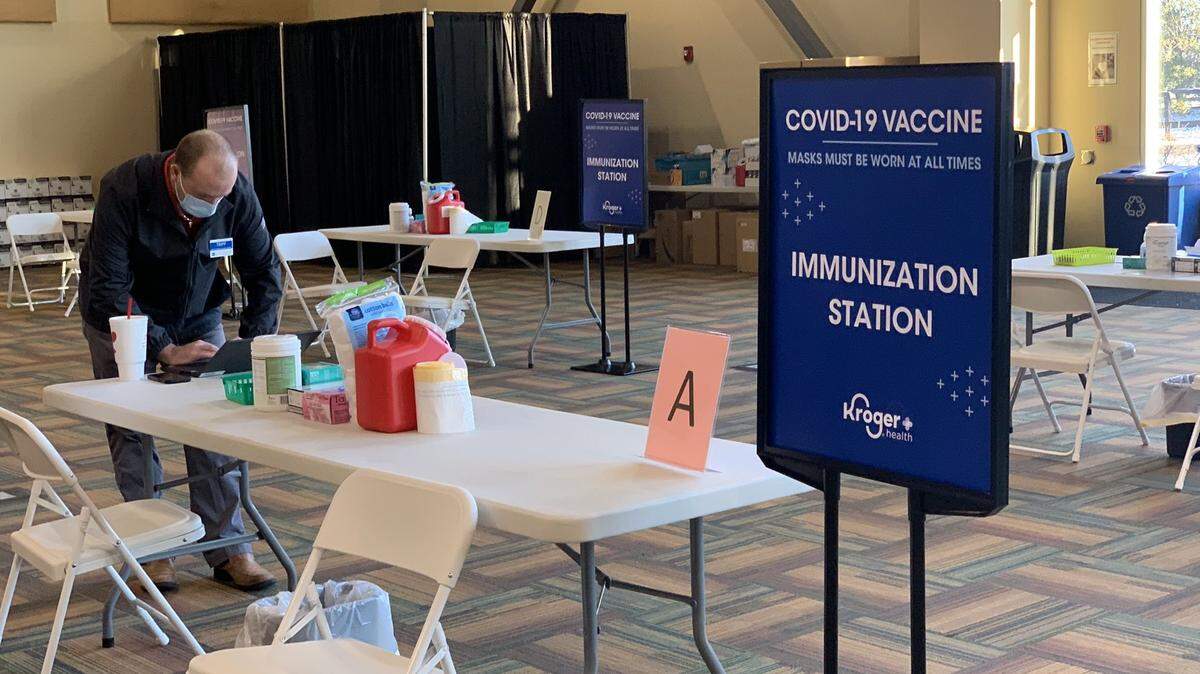
While the Lexington-Fayette County Government vaccine distribution website documented that as of Monday, Feb. 8, eighty-three thousand four-hundred total doses had been administered in Fayette County, no data is provided that details who is receiving the vaccine. Well-organized mass vaccinations are being administered at the following locations: the Kentucky Horse Park, the University of Kentucky’s Kroeger Field, the Lexington VA on the University of Kentucky’s campus, and the Lexington-Fayette County Health Department. Of note, with the exception of the Lexington-Fayette County Health Department, no other vaccine distribution centers are near communities that have a high density of African Americans, a population at high risk for COVID-19 morbidity and mortality.
Inequities in vaccine distribution are further complicated by the high rate of vaccine hesitancy in the African American community. A recent Kaiser Family Foundation poll found that about 35 percent of African Americans indicated that they don’t plan to get the vaccine because of mistrust/distrust of the vaccines’ safety. Such mistrust/distrust is not simply paranoia, but is reflective of long-standing historical and contemporary trauma of African American bodies being unethically targeted for inhumane scientific experiments and inadequate health care the genesis of their enslavement in this country.
As vaccine distribution proceeds in our community, we are reaffirming the call for “evidence-based interventions, well-reasoned actions, and broad cross-sector collaborations”. We urge vaccine distribution decision makers to partner with a cross-sector network of community representatives and to consider the following recommendations as initial steps in the progress toward achieving vaccine distribution equity:
1. Prioritize distribution in zip codes and communities that have been most severely impacted by COVID-19 and areas with residents who have high social vulnerability risk (i.e., lack access to transportation, experience economic hardship, and work 2nd and 3rd shifts);
2. Partner with trusted healthcare providers and community organizations, like churches, to allay vaccine safety concerns and increase vaccine uptake among African Americans and other communities that have been disenfranchised;
3. Track who is receiving vaccinations by demographics (including race/ethnicity);
4. Provide additional non-digital registration procedures;
5. Staff the vaccine clinics with individuals who are racial/ethnic concordant and/or culturally competent. Follow through on such recommendations is critical if we are to ensure distributive justice and advance health equity in our community.
Anita F. Fernander, Ph.D., ABPBC Diplomate/Fellow, is an Associate Professor of Behavioral Science in the College of Medicine at the University of Kentucky. Lovoria B. Williams, PhD, FAAN, is an Associate Professor in the University of Kentucky’s College of Nursing.