
Selling off Morton House could jeopardize its historic mission — and future.
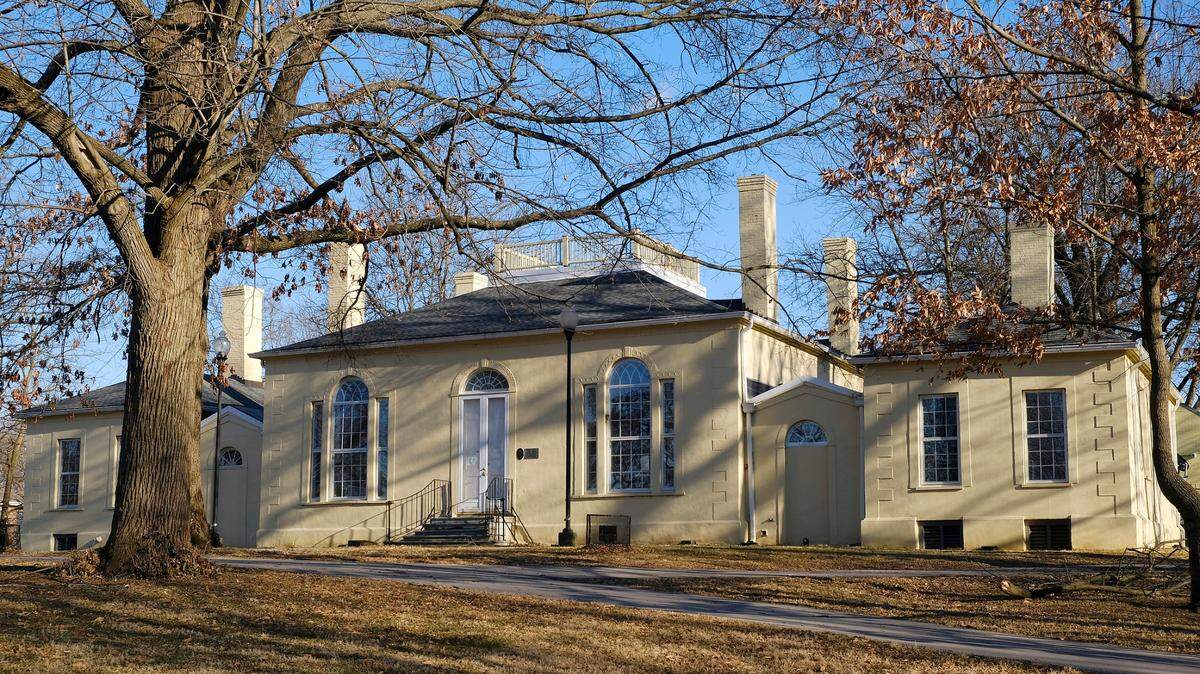
An Urban County Council subcommittee is recommending the sale of at least three city properties. Among them is one of Lexington’s most historic and architecturally significant buildings: Morton House in Duncan Park.
This mansion, built in 1810, is an outstanding piece of Federal architecture with a rich and diverse history. It also is a successful example of “adaptive reuse” — the concept of preserving old buildings by reinventing them for modern needs.
This subcommittee seems to have narrow, myopic goals, and it is barreling forward with little public discussion. Let’s slow down, open up this process and think through the long-term implications.
The subcommittee has discussed selling Morton House to The Nest, an outstanding social service agency that has occupied the building for three decades. This would be a terrible idea — for The Nest, for Morton House and for Lexington.
Morton House was built by William Morton (1752-1836), an Englishman who came here in 1787 and became a wealthy merchant, banker and philanthropist. He built his elegant mansion with huge proportions — 10-foot-tall front doors and 8-foot-wide Palladian windows — to enhance its appearance from North Limestone Street. Those proportions, and the stucco exterior imitating stone, are unique among early Lexington buildings.
After his death, Morton’s heirs sold the property to one of Kentucky history’s most colorful characters. Cassius Marcellus Clay (1810-1903) was a diplomat and anti-slavery crusader who donated the land for Berea College to educate Black people. Two of Clay’s daughters, Mary and Laura, born while he lived in Morton House, grew up to be national leaders in the women’s suffrage movement.
The property was bought in 1873 by Henry T. Duncan, a reformist mayor and journalist who started Lexington’s first daily newspaper, an ancestor of the Herald-Leader. The city purchased the estate after Duncan’s death in 1912 and it became Lexington’s second public park, after Woodland Park.
Under city ownership, Morton House began a second life as a civic space and incubator for efforts to help Lexington’s most vulnerable citizens.
Morton House hosted recreational activities, youth clubs and cultural groups. During World War I, it housed a National Guard unit. Soldiers camped around the mansion, and local women came there to learn to be military telegraph operators.
My review of a century of Herald-Leader news articles shows that Morton House’s main focus was always social services.
The Baby Milk Supply Society — forerunner of today’s Baby Health Service — set up there in 1914 to provide milk and medical care for poor infants and toddlers. In the early 1920s, the Civic League, a citizens group, opened a child day care center. In 1927, the Junior League used some rooms to house babies and small children whose parents were temporarily unable to care for them. Four years later, Junior Leaguers assumed management of the day care center, too.
The city-county Children’s Bureau began using the mansion in 1933 to house orphans and foster children until they could be placed with families. Children continued living there until 1952, when the bureau moved to larger facilities on Cisco Road. From 1953 to 1972, Alcoholics Anonymous met there. In the 1980s, some rooms became a Black cultural center.
The Child Abuse Council built a rear addition in 1989 and opened The Nest. It provides free early childhood education, helps families with basic needs, assists survivors of intimate partner violence and offers parenthood education programs.
An antebellum mansion was never the perfect space for any of those activities. But, thanks to city ownership, it was available and affordable. I also suspect there has been an aesthetic benefit for the generations of Lexingtonians served at Morton House. You shouldn’t have to be rich to experience architectural beauty.
The Nest has neither the money nor expertise to properly care for Morton House on its own. Its mission is social service, not historic preservation. Asking it to do both is asking for trouble.
Many questions about selling Morton House need answers: What legal restrictions would guard against demolition or inappropriate renovations? How would those restrictions be enforced? Where would money for future maintenance come from? What are the ramifications of the city giving up control of a building in the middle of a city park?
A century of city ownership has been good for Morton House and, more importantly, good for Lexington. The Nest’s $1-a-year lease means that its resources go toward helping families in need. Even if The Nest could afford to buy and properly maintain a 210-year-old historic mansion, that money would be better spent building a second addition behind it to serve more families.
Lexington has a well-known history of slavery and racism, yet Morton House is a rare historic site that speaks to anti-slavery sentiment and, since the city’s parks were desegregated in 1956, interracial activity.
There may be opportunities for public-private partnerships, preservation partners or philanthropy to help city government look after Morton House while The Nest looks after people in need. But Council members must not jeopardize the future of this architectural gem, historic landmark and public asset just to save a few bucks.
Tom Eblen, a former Herald-Leader columnist and managing editor, has seen too many historic Lexington buildings neglected and demolished over the past six decades.
This story was originally published February 25, 2021 at 10:30 AM.