
Kentucky’s forests are valuable to everyone. We must do a better job caring for them.
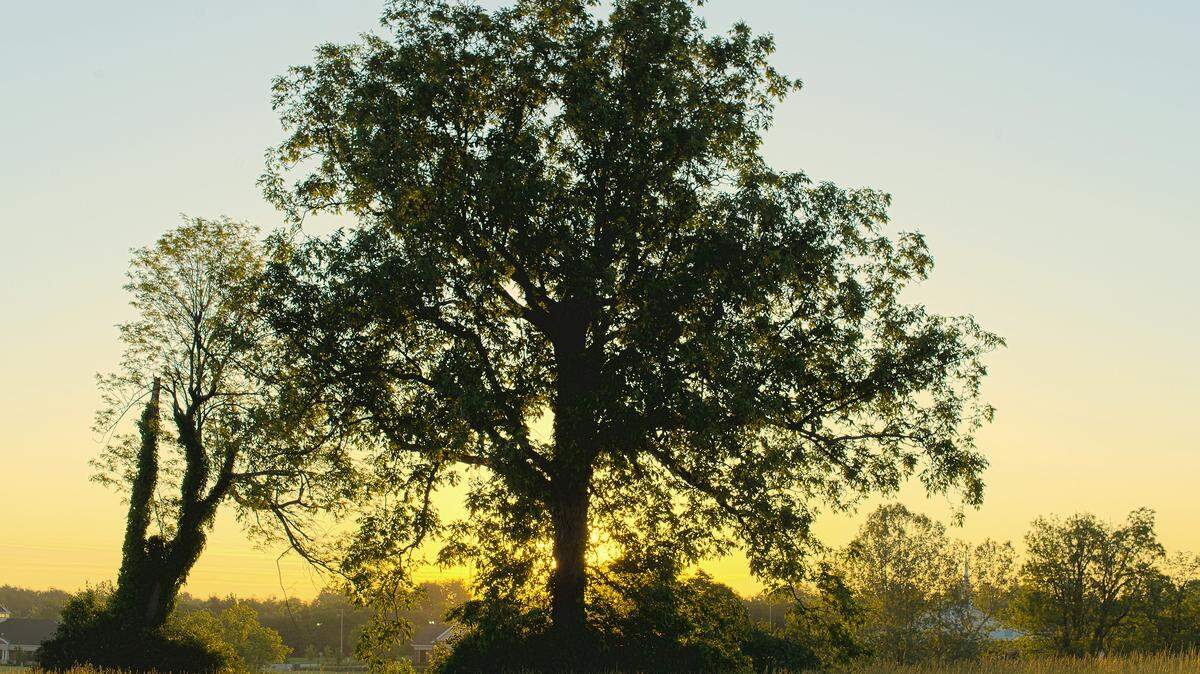
One day each spring, people gather along a creek in Lexington to plant trees. Reforest the Bluegrass is one of the oldest and most successful citizen tree planting programs. Now, tree planting fever is spreading worldwide. There are plans to plant a trillion trees across the globe. Countries from Ireland to Mozambique are enlisting their citizens to plant trees. Corporations and governments are investing in tree planting.
There are good reasons for this attention. We are in the midst of three global crises: climate change, loss of biodiversity, and poverty. Trees and forests can help with all of these by removing carbon dioxide from the air, by protecting habitat for plants and animals, and by providing livelihoods for millions of people.
Our bourbon industry depends on a continuous supply of white oak for barrels. Acknowledging that the future supply of white oak trees is uncertain, several distilleries and cooperages have joined tree planting campaigns. Some distilleries promise to plant a tree for each bottle of bourbon sold.
Tree planting, though, is not really what Kentucky needs. Kentucky is a forest state, like much of the eastern US. In 1920, only about 20 percent of the state was forested. As people abandoned marginal farm land, forests quickly took back the land. Our land is now about 50 percent forest. Our forests are perfectly capable of creating and maintaining themselves. Squirrels, birds, and wind, not people, are the busy planters of our forests. Less than 1 percent of our forest land consists of planted trees. The white oak trees that make those important barrels come from natural hardwood forests, not from planted trees.
Kentucky forests are growing faster than ever: Although climate change has devastated forests worldwide due to increased drought and fire, our trees are benefiting from increased rainfall. We have entered what climate scientists call a pluvial, a long-term period of excess rainfall tied directly to climate change.
Despite increased growth, our forests are not healthy. We constantly introduce foreign pests and pathogens, from the chestnut blight fungus that caused the near-extinction of American chestnut, to the emerald ash borer that is wiping out our ash trees. By importing contaminated horticultural plants and wood products without adequate sanitation or inspection, we continue to invite the next tree plague. Our forests also suffer from poor management, including logging operations that lack supervision by professional foresters.
The University of Kentucky, Kentucky Division of Forestry, and the US Forest Service are now focused on improving forest health. Their efforts are paying off, but they need much more funding. We need to find ways to pay for forest health and management programs.
Independent Stave and other cooperages, along with Brown Forman, Beam Suntory, and other distilleries, recognize that they must play a role in ensuring their future wood supply. Through agreements with The American Forest Foundation and many state universities and agencies, they helped form the White Oak Initiative, providing money and resources to ensure a future for natural hardwood forests containing white oak.
Our forests are immensely valuable. We all benefit from the clean air, water, and habitat that trees provide and from recreational use of our forests. We benefit psychologically and spiritually from being among trees. Forests are part of the solution to the climate crisis, pulling vast amounts of carbon dioxide out of the atmosphere into long-term storage in wood and soil, though we also have to rapidly switch to renewable energy to fully solve the problem.
Our forests produce valuable timber from which we build our homes, our furniture, and thousands of other things. Some people think logging is bad for forests, when the opposite is true: Properly done logging, planned and supervised by professional foresters, improves the health and growth of our forests. When we use wood products for long periods of time in barrels or wood buildings, we prevent the carbon in those products from going back into the atmosphere as carbon dioxide.
Kentucky would benefit from a change in forest ownership patterns. Our forests are 90 percent privately owned and should stay that way. But too many forest owners own tiny slivers of land that they inherited, and they may live in Detroit or other far-flung places. It is very hard to manage small forests, let alone arrange suitable timber sales. Companies like The Forestland Group have been consolidating small holdings, and they have the resources to manage forests both to produce timber and improve forest health and productivity.
We should keep planting trees where they are needed, in urban areas and surface mines, but we can trust our forests, properly managed, to care for themselves far into the future. And we can continue to enjoy and love our forests and the benefits they provide us.
Tom Kimmerer, PhD, is a forest scientist and the author of “Venerable Trees: History, Biology and Conservation in the Bluegrass.” He may be contacted at his website, kimmerer.com.