
‘This changes everything.’ How new law will help one million Kentucky kids.
Chris Turner lives in Blackey, Ky., and works in freelance construction, struggling to get by in the pandemic to support his partner, and their two kids, 7 and 12. He’d just heard about the new federal COVID relief act, the American Rescue Plan, which in addition to a $1,400 check to every family, will include a new child tax credit that starting in July will send $250 a month per child to him. Children under 6 will receive $300 a month.
“My work is really slow, so this will help with bills, help with necessities for the kids,” he said on Thursday as he worked at the Black Sheep Bakery in Hemphill. “Anything is a big help.”
In Letcher County, nearly 50 percent of children — every other child— live in poverty, which is an astounding number in the richest country in the world. Gwen Johnson, the bakery owner, is a lifelong Letcher County resident, and as we talked about the new tax credit, she started to choke up.
“It is such a big deal ... it’s making me want to cry,” she said. “A rising tide lifts everybody, and this will enable families to do things they’ve not been able to do before, so they can live a little better.”

“We have been in such despair here,” Johnson continued. “With the coal business gone, which has been our only economy, with it went the service jobs that women typically worked, and then comes the pandemic where if they had a job, day cares have shut down and lot of people were without childcare, then even more people had to quit their jobs because they didn’t have any place to put the children.”
Down the road in Whitesburg at the Center for Rural Strategies, director Dee Davis said they’ve been talking about Kentucky’s child poverty rate, 1 in four children, (not to mention the number one ranking for child abuse and neglect) for 20 years.
“It’s crazy, you can’t justify it, but nothing ever happens,” he said. “Then all of sudden in 50 days, Biden passes a law that will cut child poverty in half in counties that voted against him four to one. That’s all the social math in the world right there. It changes the horizons these kids can look to, it changes what’s possible for the families.
“It changes everything.”
Practical outcomes
The child tax credit has been around for years, but families that didn’t make enough money to pay taxes didn’t receive it. The Biden plan expands it from $2,000 a year to up to $3,600 per child with direct monthly payments to families, guaranteeing a kind of basic income for families. It’s currently set for one year, but progressives hope to make it permanent, setting up a safety net for children in the same way that Social Security did for the elderly.
“It’s really a sea change in recognizing that we need to be like other advanced countries and address child poverty regardless of the situation” said Jason Bailey, executive director of the Kentucky Center on Economic Policy.
It has broad parameters, bringing the benefit to families who jointly make $150,000 in income a year, which in Kentucky means a good chunk of the middle class. In all, the benefit will affect more than one million Kentucky children. A study by Columbia University found that if made permanent, it could cut the country’s child poverty rate in half. An Urban Institute study found that the entire act— the COVID relief, new childcare benefits, the child tax credit, etc. — would cut poverty by about 42 percent for Black, non-Hispanic people, 39 percent for Hispanic people, and 34 percent for white, non-Hispanic people.
That will help families that need money for food, as well as more financially secure families, who can use the money for supplies or for savings, thus helping the overall economy, too. For single moms, like Liz Kilgore, who works at the Food World in Neon, it will be like the monthly child support payments she rarely receives on time. “This will help us tremendously,” she said.
Up the road in Berea, another single mom, Emily LaDouceur might be on firmer financial footing as a freelance healthcare market analyst while raising her two boys, but like many Americans, is only one emergency away from being run off the economic rails.
“This means I can be more present in their life, instead of picking up every single side job that I need,” she said. “It’s means I don’t have to stress over a new pair of shoes.”
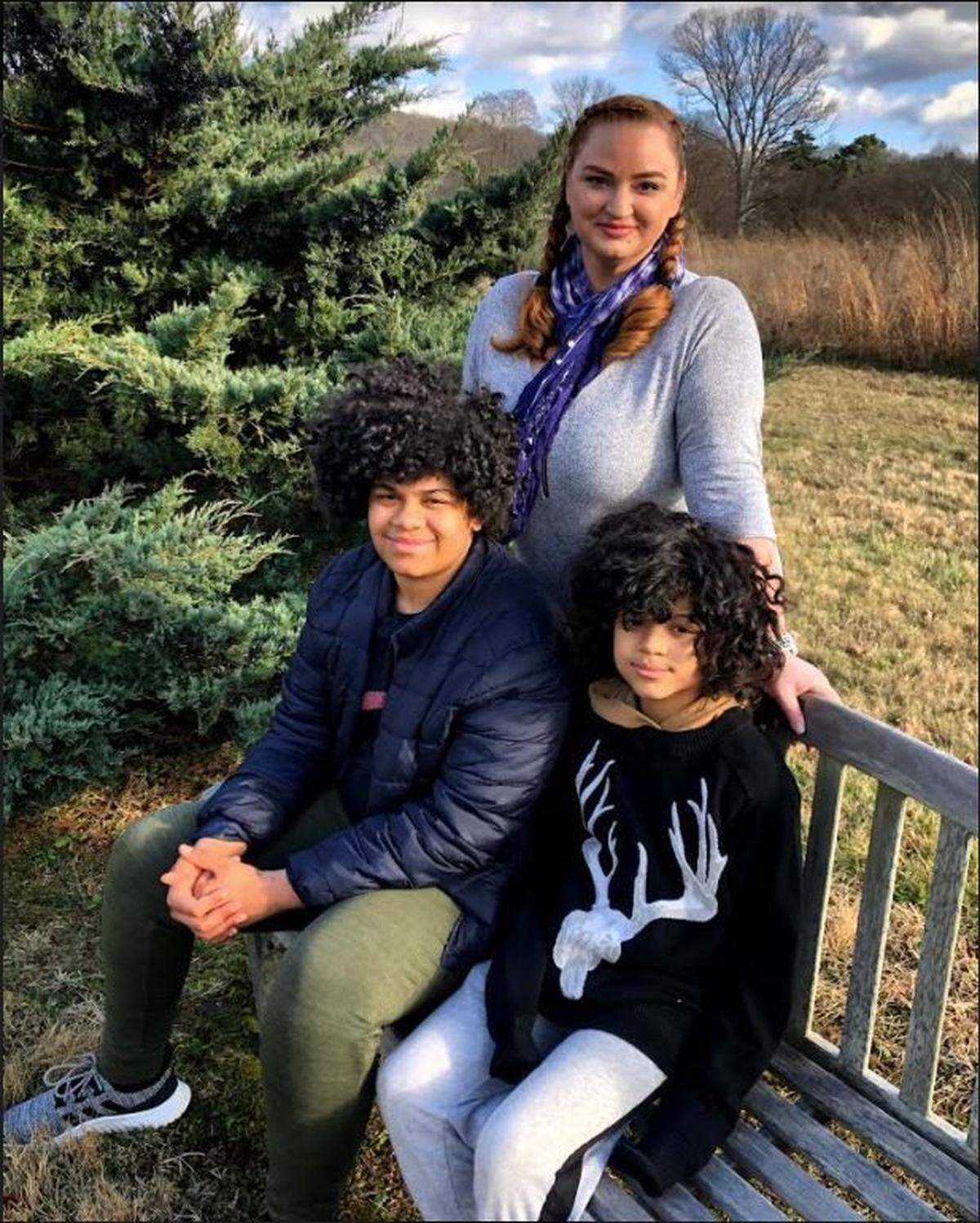
LaDouceur, a former Berea city council member, is also a volunteer with CASA, Court-Appointed Child Advocates, who help children going through the court or foster care systems.
“When I think about this for children in the lowest of low incomes — this could mean less children in danger of being left home alone, a family being able to buy a car to get to a job. It’s people living out of a hotel being able to pay the down payment for an apartment. It could be so many things — it will change the face of Kentucky, especially if we can look at the data and see progress and see better outcomes for children.”
Political outcomes
The practical outcomes of this are easy to see, the political ones harder to gauge. Although the American Rescue Act was co-authored by Kentucky Congressman John Yarmuth, Democrat of Louisville, not one Republican in the Kentucky delegation voted for it. Lexington’s Congressman, Andy Barr, called it a “$1.9 trillion spending spree,” without acknowledging how much it will help his own constituents. Rep. Hal Rogers, who has represented some of the poorest counties in the country for decades, complained about a bailout for blue states, when in fact, it will save red states like Kentucky.
Barr, Rogers and other Republicans prefer top down aid, like tax cuts for rich people, which have been their modus operandi for 40 years, the trickle-down economics that have created the greatest income inequality since the Gilded Age. According to an analysis by the Washington Post, the last round of tax cuts in 2017 accrued the most benefits for the top 1 percent, while the American Rescue Plan will give the most benefits to the lowest income quintile.
Of course, some of the money may get spent unwisely, and on the other hand, no it’s not enough. We still need to address other issues like raising the minimum wage and forgiving some college debt. But like the pandemic, this new benefit has the power to show why government can do good and help people, especially the most vulnerable ones.
So will this help be enough to change the very culturally rooted deep red of Kentucky voters? Or to put it another way, will Kentucky voters punish their elected officials for voting against a plan that so obviously benefits them?
Not right away. I often write about Mitch McConnell, who has been in office for 36 years amassing power, but never moving the needle on Kentucky’s immense poverty, sickness and lack of education. Cultural issues like abortion or gay marriage usually win out.
But “these political vectors can change quickly but the driver is usually cultural not because of one candidate or one clever campaign,” said Dee Davis. “So if we change the prospects for our children then the politics of it become a lot smaller and the possibilities become larger.”
This story was originally published March 12, 2021 at 10:09 AM.