
Ignoring Breonna’s Law shows how much work Kentucky has to do to dismantle racism
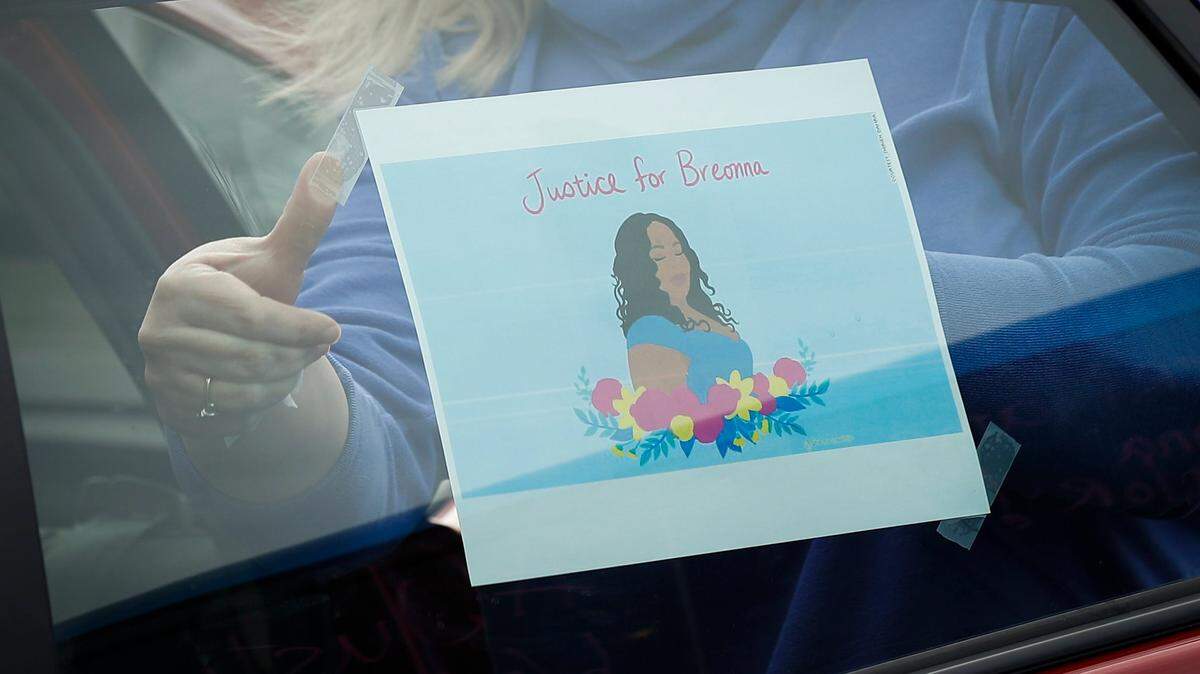
“It is our duty to fight for our freedom.
It is our duty to win.
We must love each other and support each other.
We have nothing to lose but our chains.”―Assata Shakur
On Saturday, March 13, my community and the world marked one year since Breonna Taylor was murdered in her own home.
As a Black woman and the mother of a Black daughter not much younger than Breonna, I was and remain devastated by what took place that night and what we have learned in the more than 365 days since then. What happened to her could have happened – could still happen – to other Black women across the United States. To us, Breonna’s death feels like the rule, not the exception.
I live with that fear every single day, and deeply empathize with the pain that Breonna’s mother struggles with which drives our advocacy for justice. We are united in making sure that Breonna does not become another story to be forgotten, another statistic in a sea of numbers that don’t tell a story.
Kentucky can be cruel to Black women, even in death. We saw that a year ago in the immediate aftermath of Breonna’s murder. She was demonized by many and compartmentalized away by many more in the hope that what she represents would be, quite literally, buried and forgotten.
So what does justice look like when today’s Black daughters can be murdered for doing nothing more than sleeping peacefully?
One thing is clear: Justice will not be found in the Kentucky General Assembly.
Last summer, I filed Breonna’s Law for Kentucky, a bill that would ban the same no-knock search warrant that led to Breonna Taylor’s murder. For seven months, my legislation – House Bill 21 – was ignored while 250 other bills were heard and passed through the state House where I serve.
My proposal all but mirrors what passed unanimously as law in Louisville. It would ban no-knock search warrants and have law enforcement clearly announcing themselves before serving a warrant. It also calls on officers to wait 10 seconds before entering the premises.
These officers would have body-worn cameras to record serving a search warrant, and they would face mandatory alcohol and drug testing if they are involved in a deadly incident. We give these tests to forklift operators after an accident, while my brother, a truck driver, is randomly drug tested. It is unconscionable that we do not do the same for public employees when they make life-or-death decisions.
Breonna’s Law was only posted to committee late last week, when there were only a handful of days left in this year’s legislative session and no real chance for it to become law. It was my first bill to be heard in committee in the five legislative sessions in which I have served, and it was only discussed, not acted upon.
It was further proof that racism is not limited to outright violence and hateful rhetoric; it can also be found by the actions of elected officials who do just enough to silence us.
Justice for Breonna Taylor is not a single policy issue. It includes passing Breonna’s Law, of course, but that is just one of a countless number of steps. Along this journey, we must end the exclusion of Black women in places of political power, we must challenge institutional and systemic racism in the halls of democracy and we must – must – listen to Black mothers when we tell you how best to protect our children.
We have so much more work ahead of us, Kentucky, to dismantle racism, to hold law enforcement accountable, and to create a Commonwealth that works for all of us. We will only get there together.
State Representative Attica Scott serves Kentucky House District 41. You can follow her on Instagram and Twitter at @atticascott4ky.