
Our Voices: Black history is American history. Why do we still teach them separately?
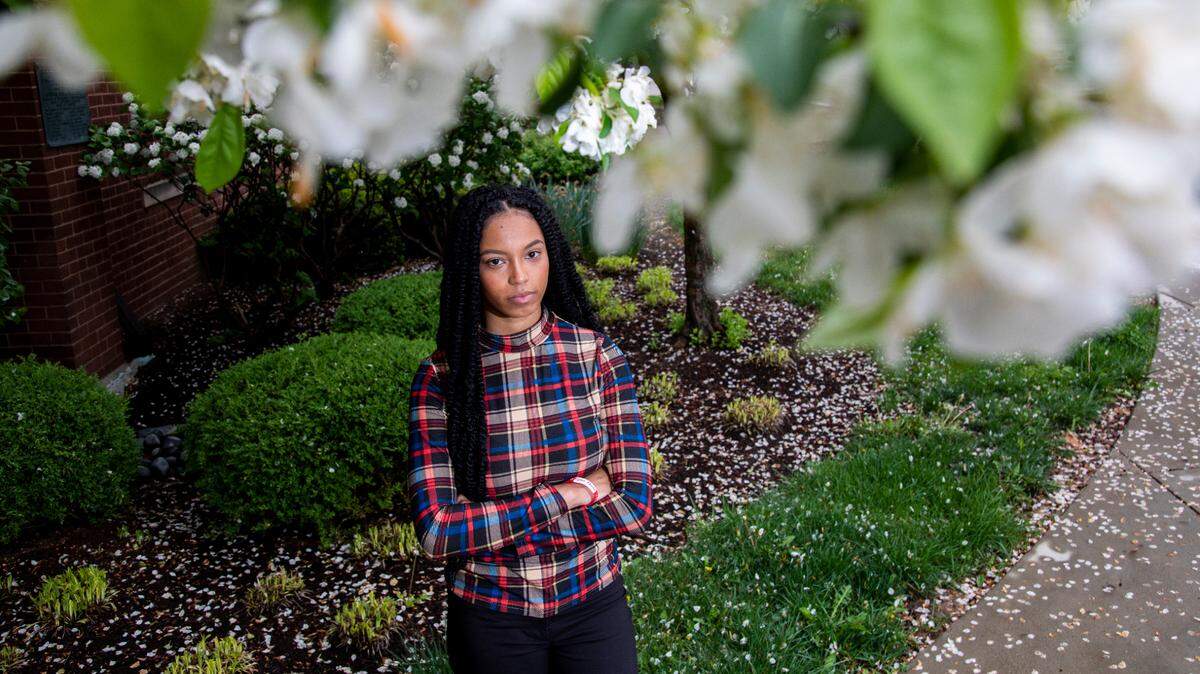
Should some African American classes be required?
African American history is intertwined in American history — it is American history, in fact — and yet the two are taught separately.
From my own experiences in high school, I was taught how Christopher Columbus sailed the ocean blue in 1492. I was taught that slavery happened, and it was tragic, but America recovered.
I wish I’d been taught that slavery wasn’t abolished in 1865, convict leasing was a thing and Black people were still fighting for basic human rights well past 1865.
It wasn’t until I came to the University of Kentucky that I was introduced to my first African American studies class. The class started with about 11 people. I was disappointed by the small number of students who wanted to learn about African American history.
Shortly after the professor went over the syllabus, I noticed that a few students weren’t pleased with the class agenda. The next class period was even smaller as students began dropping the course.
I remember having conversations with my peers about these classes and how moved I was by the deep discussions but for them it was simply: “I am not African American, so those classes don’t pertain to me.”
The response in my head was, well I’m not white and I still had to learn American history, while Black history was seldom taught. It didn’t surprise me that their response was that they once did a Black History Month project on Martin Luther King Jr. What would have impressed me more was if the project analyzed slavery in Haiti, white supremacy or the failures of the criminal justice system.
From there my curiosity began. Why is American History a required course and African American history an elective? Both are connected through time and show parallels. Both happened, but one is enforced while the other is merely referred to.
Again, I pose the question, should some African American content be required?
Dr. George Wright, the Vice President of Institutional Diversity at the University of Kentucky, says that opposition is expected when discussing whether to make such electives required now.
“In the society in which we live, when you say something is going to be required, that’s new, that hasn’t been required before, people think that you’re then interjecting something that is not as valid as the things that are already required,” he said.
Why is it being required an adjustment for some?
1865 is a good date to use as an example. From what I was taught at a young age, that was the year slaves were freed. While technically slavery was illegal, certain limitations were placed on Black people, such as Black codes that allowed the same system of slavery to shift and manifest into a legal system known as convict leasing.
Incarceration is another topic that dates back to slavery. By the 1920s, most states had gotten rid of the convict-leasing system, and the modes of incarceration replaced it.
Jails and prisons, all tended to re-create the system of the ’normal’ society, which meant, the racial subordination of black inmates.
People with criminal records face many obstacles to re-enter society even after they fully completed their time. The charges by the courts may have been lifted but the stigma behind the word criminal doesn’t end when their sentence is completed.
The knowledge that I have now after taking some of those courses has allowed me to view the world differently. I understand different perspectives of different races, cultures and people who have lived in oppression. I understand how freedom was for some and slavery was for others.
But how do I go from understanding to helping others?
“How do we go from the making people realize that it is in their best interest to know more about others that live in our society. If people knew more about the black experience they might then say— I have a sense of why people are saying black lives matter,” says Dr. Wright.
Making some African American content required would force those hard-to-have conversations that have been overlooked and barely touched on for years brought to light.
It is so easy to live in our privilege. If I was never exposed to the information how would I have obtained it? We should strive to talk more about experiences before they happen.
We should have had dialogue about police brutality before George Floyd happened. We should have had dialogue about color prejudice before Trayvon Martin happened. We should act progressive and not regressive, and by doing so we can change how we understand each other as individuals.
But first, we have to understand history.
Keyera Jackson is a graduate student at the University of Kentucky.
This story was originally published April 23, 2021 at 8:21 AM.