
Our Voices: Teach students the truth about history so we are inspired to help fix things.
Last year, Ahmad Arbery, Breonna Taylor, and George Floyd were brutally murdered. Their deaths not only brought up discussions about Black lives, but also the depiction of Black people in history. Social media was flooded with information about what we should know about history and how it’s been whitewashed.
For most of my life, my core teachers have always been white. Of course, my school had some Black teachers and teachers of color, but I’ve never had them for a major subject like history. So when social media and other news sources were coming out with a bit about the truth of whitewashing American history., it really made me think about what I was learning in school and whether it was the truth.
I have already done research on big historical topics because, I’m sorry, I don’t trust the system. I wanted to see what my friends knew. I asked them if they knew that there was a Black Wall Street? No one could tell me anything about it. Then I asked: Do you know who Emmett Till is? Malcolm X? Billie Holiday?
Some answered yes to Malcolm X. To sum up their response: “He was Martin Luther King, but less popular and bad.” Some also knew who Emmett Till was. To sum up their response: “He was killed by KKK members.” They didn’t know anything about Billie Holiday, but their definitions alone about Malcolm X and Emmett Till left me disappointed.
I like to think I have a pretty diverse group of friends. They can recite for me “I Have a Dream,” but they cannot recite for me “The Ballot or the Bullet.”
I became very disappointed in the teaching of American history. I then began to look at myself. I understand how I knew what I knew about history. I have had amazing teachers growing up that taught me all sorts of things about history. I’ve also had ones that for a time, I felt, hid certain things about history from me. It wasn’t their fault; you can’t hide what the textbook does not teach you.
An example of the white washing of history is the story of Rosa Parks. Textbooks will tell you of the frail old person whose feet hurt, and she had to work very long hours that day. Rosa Parks was in her forties, she was a seamstress and her feet were simply fine. She was tired of injustice though. Mrs. Parks was also a freedom fighter way before that incident. She hosted gatherings in her home where people would discuss ways to fight for equality.
It’s not only the history of the Civil Rights Movement. Many of the details about slavery have been whitewashed, and even educators believe it. A New York Times article by Nikita Stewart highlighted a 2017 study by the Southern Poverty Law Center that found 60 percent of teachers did not believe their textbooks’ coverage of slavery was adequate. It also found that one-third of the 1,000 high-school seniors who were surveyed believed that the Emancipation Proclamation abolished slavery (the 13th Amendment did). The center had experts evaluate textbooks’ depictions of slavery out of 30 points. Most of these books received a 46 percent, a failing grade on most grading scales.
In Sept. 2020, former President Trump said during a history conference in Washington DC that history teachers’ concentration on slavery has taught children to despise their country. Trump said that “patriotic” schooling is now needed so children are encouraged to love their nation.
Mr. Trump thought we were focusing too much on slavery and that students would hate their country. I think they’ll be more willing to fix it if they learn more truthful information. America is beautiful, America is bold, and America is Brave.
In order to secure the blessings of liberty to ourselves and our posterity, we must teach the truth about American history, stop whitewashing it and stop covering up. It’s not a simple fix, but if we allow students to take the time to do their own research, talk about and have discussions about what they found and what they read, we can help make sure the students know the truth. We could also read autobiographies written by the actual person in history instead of reading text books that have been washed and cleaned. If you are able to read, listen, hear the truth then you are able to move forward and see what needs to be fixed.
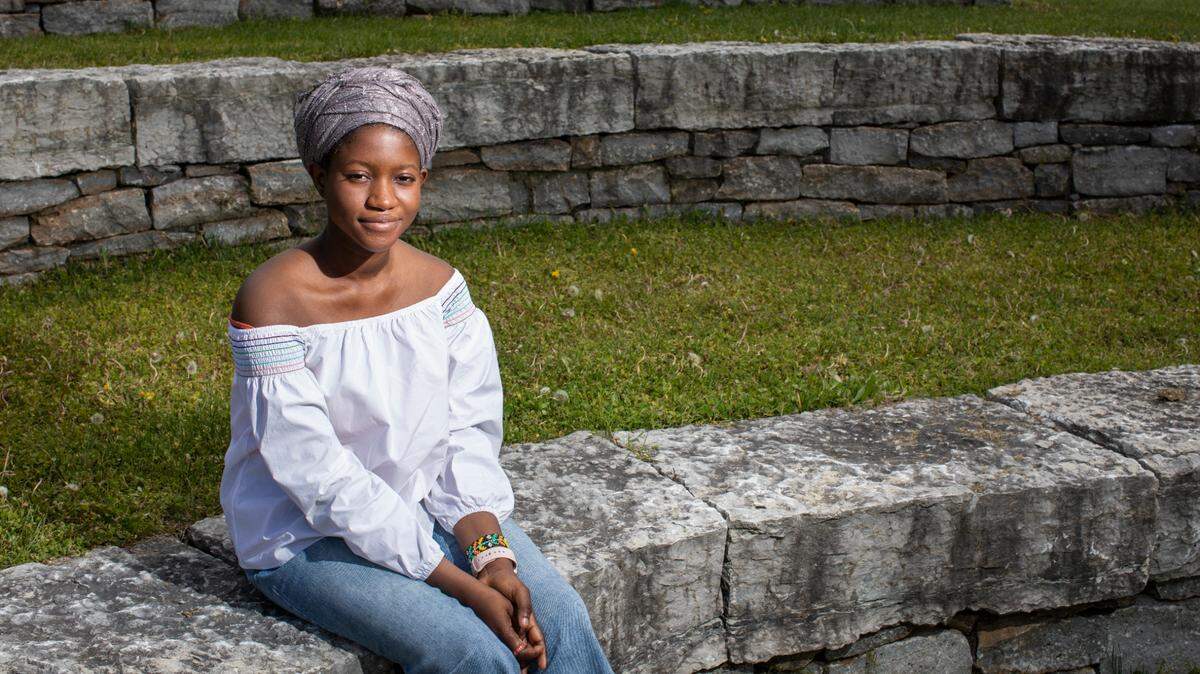
Lordina Mensah is a junior at Steam Academy in Lexington and a Ghanaian American. She loves learning about history, especially African American history, and hopes to one day serve America while giving back to communities of color who are disproportionately affected by the healthcare system.
This story was originally published April 23, 2021 at 8:34 AM.