
Our Voices: To uproot and change racism in law enforcement, first understand the past
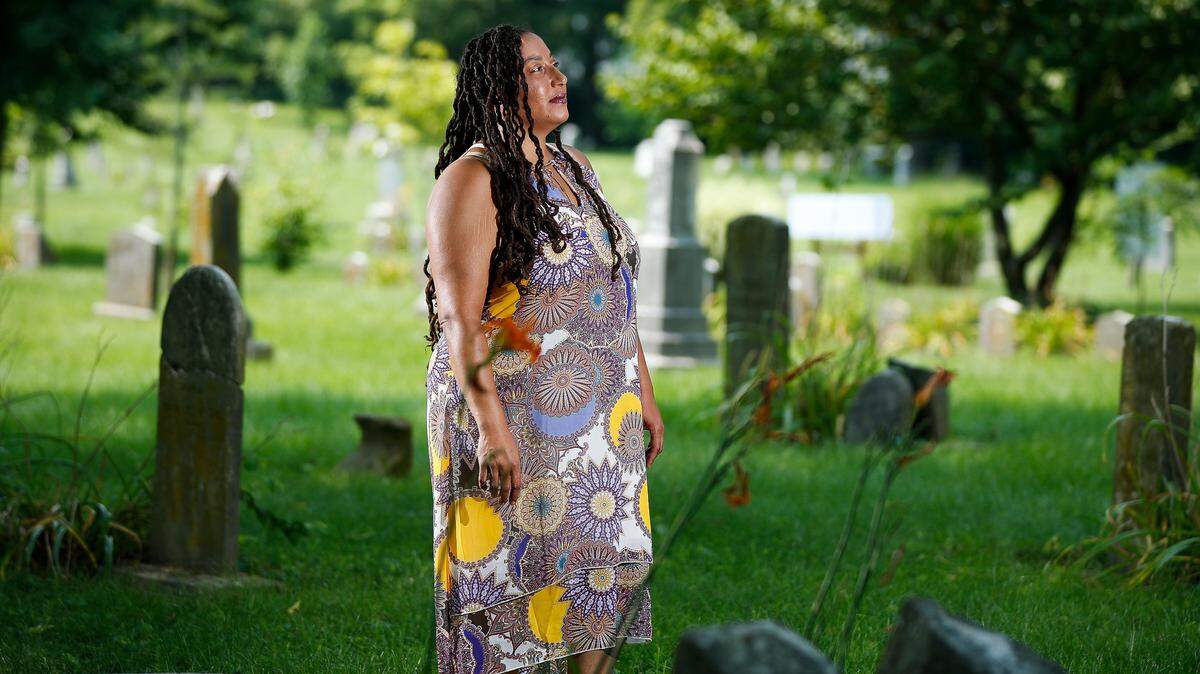
On a cold winter night my husband at the time and I had returned home to Lexington from our undergraduate studies at WKU. On our way to the hotel, we saw red and blue lights begin to flash in the night. A knot formed in my stomach and my heart began to race. Anyone with melanin to our skin is familiar with this anxiety when encountering law enforcement. Will this officer treat me like a human being? Am I going to jail? Will I make it home alive?
My husband and I were newlywed college students. Our tags were expired. Although expired tags are not inherently criminal, my ex husband and I were treated like criminal, nonhuman beings unworthy of dignity and respect. When the officer returned from running our information, he asked if we had any deadly weapons in the car. I laughed to myself while my heart skipped a beat. Several other officers had arrived. We told the officer we had no deadly weapons. He asked if he could search the car. We naively obliged for the sake of our safety. As we stood outside in winter’s cold, we watched helplessly feeling powerless as officers scattered our belongings with no regard for replacing items disarrayed during their search.
Fear gave way to anger as the officer let us go with a traffic ticket and our humanity degraded to a “show your papers or face the consequences” disposal inflicted for centuries in this country by “Indian killers” turned “slave patrol” turned Jim Crow turned modern day policing. As a black woman with biracial roots, my experiences with law enforcement and the criminal injustice system mingle between the blood of my ancestors seeped into this soil and the evil mindset and corrupt values that continue to spill blood of innocent people in our streets. Many of us have these experiences repeatedly inflicted over the course of our lifetime. Witnessing circles held in front of LPD during the protests of last summer brought the truth of many people’s lived experiences with law enforcement to light. The anger and rage in defense of our humanity against those whose mindset and values view us as disposable brutes find outlets through the struggle for liberation. Drawing historical parallels between law enforcement and the criminal injustice system today, in this city, in 2021 is fundamental to identifying and uprooting systematic racism and white supremacy within the values of this city’s law enforcement and criminal injustice system.
The recent address to city council by the Fraternal Order of Police president Jeremy Russell about no-knock warrants looked and sounded more like a plea to uphold the social order of 1844. How so?
Delia Webster, a white woman and a school teacher living in Lexington in 1844 was on trial for assisting enslaved people to freedom. Her first hand account bears witness to the values and mindset of law enforcement and the criminal injustice system in this city just prior to emancipation. Yet, it reads like an explanation of LPD and FOP’s tactics against civic change agents since the summer protests of 2020.
Ms. Webster writes, “having been arrested and imprisioned in an excited and unguarded moment, it then became necessary to convict me, lest my enemies should themselves be exposed to the rigors of the law. Various schemes were resorted to, for accomplishing this end, and some of them at the expense of every principle of honesty.”
Using the language of racist segregationists in the 1960’s, the FOP literally stalked protest organizers on social media to edit their fear mongering propaganda with real time targeting. Yet, when Russell addressed city council in defense of these actions, he indignantly offered a reprimand to council with a reminder of the mindset and values of law enforcement in Lexington. As if 2021 were 1879 when John Bush was lynched after the lies of the prominent Van Meter family in a time when law enforcement and the words of white people were given the privilege of truth no matter its veracity, Russell asserted that “if you want the truth you have to be willing to ask for it from the only people who are accountable to you for the truth and that is your police officers.” Since when?
In 1938, when Kentucky reluctantly became the last state to outlaw public hangings, Albert “Happy” Chandler stated, “our streets are no longer safe.” In 2021, the FOP has repeatedly asserted that the city council’s ban on no knock warrants is making our streets unsafe. These historical parallels show how the values and mindset of LPD and FOP are in fact based in the racism and white supremacy that are the historical foundations of this country.
FOP and LPD’s denial of racism within its values can be traced to the founding fathers’ oxymoronic dishonesty in writing the Declaration of Independence while enslaving human beings based on a social construct created to justify racism. The denial of racism within LPD juxtaposed with the federal lawsuit filed by former officer Jervis Middleton that details deep issues of racism and discriminatory treatment within the department illustrate how grotesque the dishonesty of racism can be.
What’s next in addressing the issues of race, law enforcement, and the criminal injustice system in Lexington?
In 2021, we still have an all white male disciplinary review board that decides if police misconduct occurred. The protests of 2020 brought trumped up and fabricated charges against protest organizers, many of whom were subjected to brutal treatment by LPD officers. Will there be any findings of misconduct by the equivalent of an all white male jury? Racism white supremacy has hardly ever found itself guilty of its own offenses.
Will Mayor Linda Gorton and city council members listen to the cries of the hundreds to thousands of people taking to the streets last summer in nonviolent protest and heed the recommendations of the Mayor’s Commission that give tangible steps for dismantling racism white supremacy within LPD and the FOP?
Thousands of people in this community joined in sustained nonviolent civil disobedient direct action as one collective unit with the understanding that love liberates and that “justice is what love looks like in public.” Some of us have risked our safety, our livelihoods, and our freedom to bring our city to this critical juncture in dismantling racism from the values and mindset of policing and the criminal injustice system. City council must reject the collective bargaining agreement coming up for vote if Article 15, Section 3(c) is not amended to include three civilians on the police disciplinary review board. The Commission provided all necessary steps for this amendment to be in alignment with current local ordinances and KRS statutes.
This city is at a historical juncture in the struggle for freedom from law enforcement policing and criminal injustice systems that continue to perpetuate racism in its values and mindset. Will the fear mongering lies of indignant cisgender heterosexual white men steeped in racism continue to control the social order? Or, will the citizens of this city who seek the liberating power of love stand in solidarity to demand values that respect all of humanity and usher in a shift in mindset from hate, apathy, fear, and prejudice to love?
Sarah Williams, BSN, MA, is a civic change agent and grassroots organizer.
This story was originally published August 13, 2021 at 9:22 AM.