
Grandma sent three sons to war, rationed food and sacrificed. But we can’t wear masks?
We face some serious questions as Americans: Wear a mask or not? Get vaccinated? Is one’s personal choice more important that the community’s right to be protected from a deadly disease ravaging our country? When should the government be allowed to tell us what to do and when not?
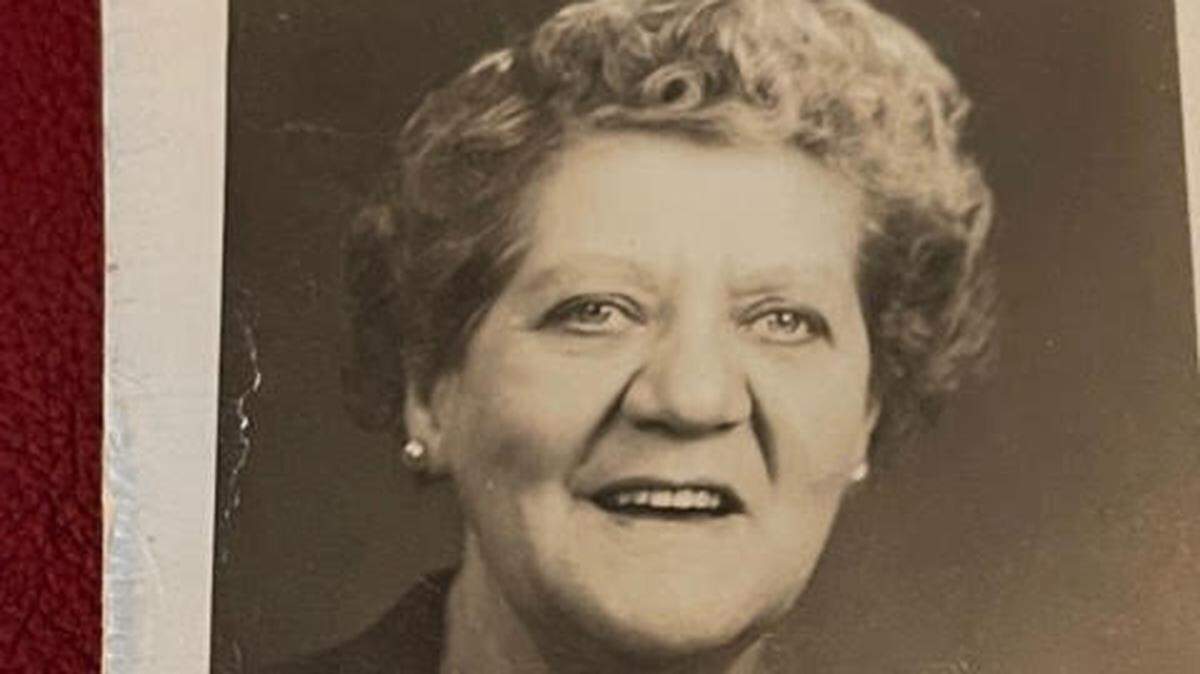
It is not easy to answer such questions in a democracy where individual rights are held in high esteem and people mistrust government intrusions. My personal guidance is to turn to my history and ask: What would my grandmother say about these issues?
In 1945 as a young child, my single mom and I lived with my mother’s parents in Wheeling, West Virginia, on McColloch Street. Grandpa was the head plumber in a local factory that had been converted from producing garbage cans into making steel landing strips and tank shells. My mother worked as a bookkeeper in the same factory. Grandma ran the household. She and I went to Mass every morning, after Grandpa and Mom left for work.
Grandma’s religious fervor was not just a manifestation of her Catholicism. She had three sons in combat zones. The world was at war and people were dying every day across the globe. Uncle Bill commanded a truck unit that supplied Patton’s Army racing toward Germany. He had spent some harrowing nights in foxholes near the little town of Bastogne, Belgium. Uncle Jerry was in the Navy and drove a landing craft full of Marines headed toward Japanese held islands. Uncle Harold was stationed on New Caledonia, a French island in the South Pacific Ocean, and a major supply base for Army operations. Each night at the supper table we prayed for their safe return. She must have looked apprehensively at her strapping young son, Tom, captain of the Wheeling High School football team, who was scheduled to join the Army immediately after graduation. My two aunts were teenagers attending the all-girl Catholic high school.
Like house wives throughout America, Grandma scrimped and saved to provide for her family during a hard time. Essential supplies were rationed to further the war effort. Grandma had to produce ration cards to buy butter, sugar, meat, coffee, lard, shortening, and many other common kitchen items. The American government rationed automobiles, tires, gasoline, fuel oil, coal, firewood, nylon, silk, and shoes due to trade disruptions. Grandpa raised a “Victory” garden on land provided by the city near Wheeling Creek. Grandma canned everything from garden tomatoes to the blackberries we picked on an adjacent hillside.
I never heard her complain. She thought the sacrifices she had to make at home were the least she could do to support the war, defeat America’s enemies bent on destroying our country, and bring her boys back safely. Her belief was shared by the great majority of Americans at that time.
I know the happiest day of her life was attending the victory parade in downtown Wheeling after the surrender of Germany. I got to wear the Navy uniform that Uncle Jerry had bought me. Her boys were coming home!
For someone who had endured such hardships, Grandma always had a positive outlook. Maybe it was knowing that her family had survived. Uncle Tom, who was in the Army of Occupation in Japan came home safely too. A lot of her sons’ schoolmates did not come home. In fact, over 400,000 Americans never came back. I’m sure Grandma prayed for them every time she went to early morning Mass in the years after World War II.
More than 600,000 Americans have died from COVID-19. I’m sure, if Grandma were alive and I asked her about government leaders, school boards, and ordinary citizens vehemently fighting mitigation strategies to combat COVID-19 she would look at me with a furrowed brow, a slight smile, and say, “You mean all they have to do is get a shot and wear a mask once in a while?
Bruce D. Bonar is a retired Professor of Education at Eastern Kentucky University.
This story was originally published August 19, 2021 at 2:08 PM.