
We served in Afghanistan. We know what America’s withdrawal will mean to its people.
“When you’re wounded and left on Afghanistan’s plains, and the women come out to cut up what remains, jest roll to your rifle and blow out your brains and go to your gawd like a soldier.”
English poet and journalist Rudyard Kipling wrote these words more than a century ago after his own experiences with the brutality of Afghanistan.
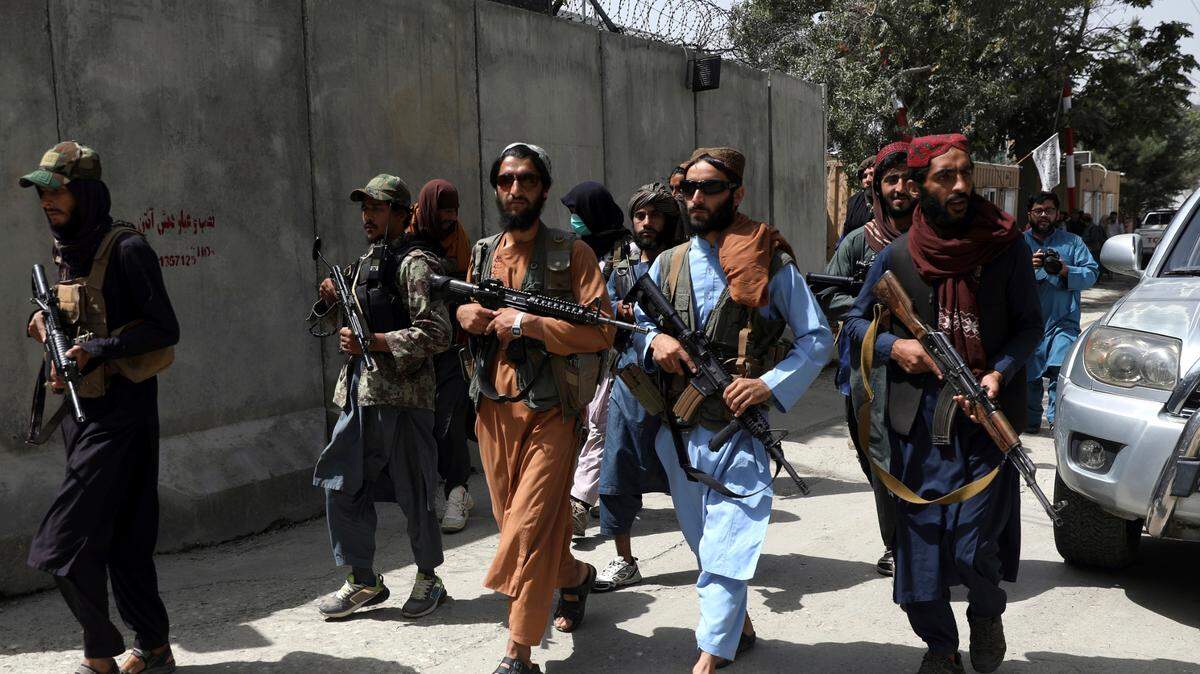
Today, I wish I could ask my dad how he felt watching Saigon fall in 1975. We imagine that it must’ve been something like we are feeling now as Afghanistan war veterans. We find ourselves stuck somewhere between the need to get out and the sickening outcomes that are already occurring. The Taliban have never done anything peacefully. Executions, rape, forced marriages, and exile await anyone who stands in their way.
After reading numerous books, studying the culture, and being deployed there, we still cannot say we understand Afghanistan. Can any American? It feels like a lifetime ago when we landed there one cold morning in January 2004 as Infantry Officers with 6th Marines Air Ground Task Force. It was our job to know the country. So how does one “know” Afghanistan? In the early days of 2004, you started with the Russians, the British, and you go back through the conquerors of the region, including Alexander the Great; you study Shahr e Gholghola (the city of screams) which fell to Ghengis Khan in 1221.
What do they all have in common? They are gone and the Afghanis are still there. The Soviets entered and left a wretched nine and a half years later. Critics referred to it as the Soviet Union’s Vietnam. The harsh mountain environment proved to be too much for the Red Army. Much like the British who saw 16,000 troops destroyed with only one survivor making it to Jalalabad in the 1840s.
The Afghanis have what we do not: time. It is of no consequence to them whether they wait us out for one year or 20. Let’s be clear, not every citizen of Afghanistan believes or follows sharia law. We would argue that most do not want it, but isn’t the oldest law around the one that says those who have the power make the laws? We could have held and supported the proud people of Afghanistan, but instead we have abandoned them in their moment of need. That will never be forgotten. The people didn’t need 20,000 troops to hold the line. What they needed was the hope and promise that America had their back. It’s much easier to fight and stand tall when you know that air support is a call away. How can an Afghani commander stand and fight when the Taliban can simply “visit” his family and take the will away? It’s not that they don’t want to fight, but rather they are faced with certain loss when they do.
We know what the takeover will look like. We have seen it before. The Taliban will impose a brand of justice that most Americans can’t even begin to fathom. In our days of political correctness and wokeness, most of us have no idea the level of evil that exists. They will ban all un-Islamic behavior. It will require women to wear the head-to-toe burqa; men better start growing their beards. Music, movies, and TV will be eliminated or government controlled. Simply said, when war ends for some, it does not truly end for those left behind.
As veterans, Afghanistan is with us every day. It’s part of who we are. We pray for the families of 2,312 Americans who gave their lives on the fields of Afghanistan. They carried out their mission and did it well. We think about the children of Afghanistan and memories come flooding back. We remember the children we shared MREs with or gave crayons to. We think about children living in mud-bricked houses nestled into a mountain near Asadabad. As dusk set into the Kunar Valley, children would emerge from their homes, wade through the poppies, and stand at the edge of our base. There, they waited, dirty faces staring eagerly at us over the concertina wire that lay beyond the walls. What did they want? Candy. Hard candy. We watched them approach from the roof of a nearby building. And, one-by-one, we tossed candy over the wire and laughed as they chased it. Something so simple to us as candy brought them tremendous joy. Where are those children now? How are they affected by the ending of the war?
We saw daughters playing on a sandbar as mothers washed clothes in the crisp waters of the Kunar River. These daughters would be young women now and subjected to the Taliban’s inhumanity.
When war ends for some, it does not truly end for those left behind. Repercussions from the fighting remain. Poverty, years of rebuilding and retribution for those who supported the party who lost, or who abandoned the war and its people, also remain. Such will be the case for those who supported America these last two decades and are left there to face the Taliban. For them, it is worse the war ended.
And how do they view America now?
John Donne famously reminds us that “no man is an island entire of itself; every man is a piece of the continent; a part of the main.” The metaphorical main inhabited two decades by America and Afghans has been split asunder, shattered by a hasty departure and promises of duly earned asylum, unkept by our government. Those watching who might one day need our help, join our metaphorical continent, may instead choose to remain an island of themselves.
Brad Jones is a former Marine Infantry Officer and author of “Black Walls Turn Gray.” Matt Koch is a former Marine Intelligence Officer and current state representative from the 72nd District which includes Bourbon, Bath, Nicholas, and part of Fayette.
This story was originally published August 23, 2021 at 2:39 PM.