
‘Souls of Black Appalachian coal town folks.’ Read an excerpt from ‘The Harlan Renaissance.’
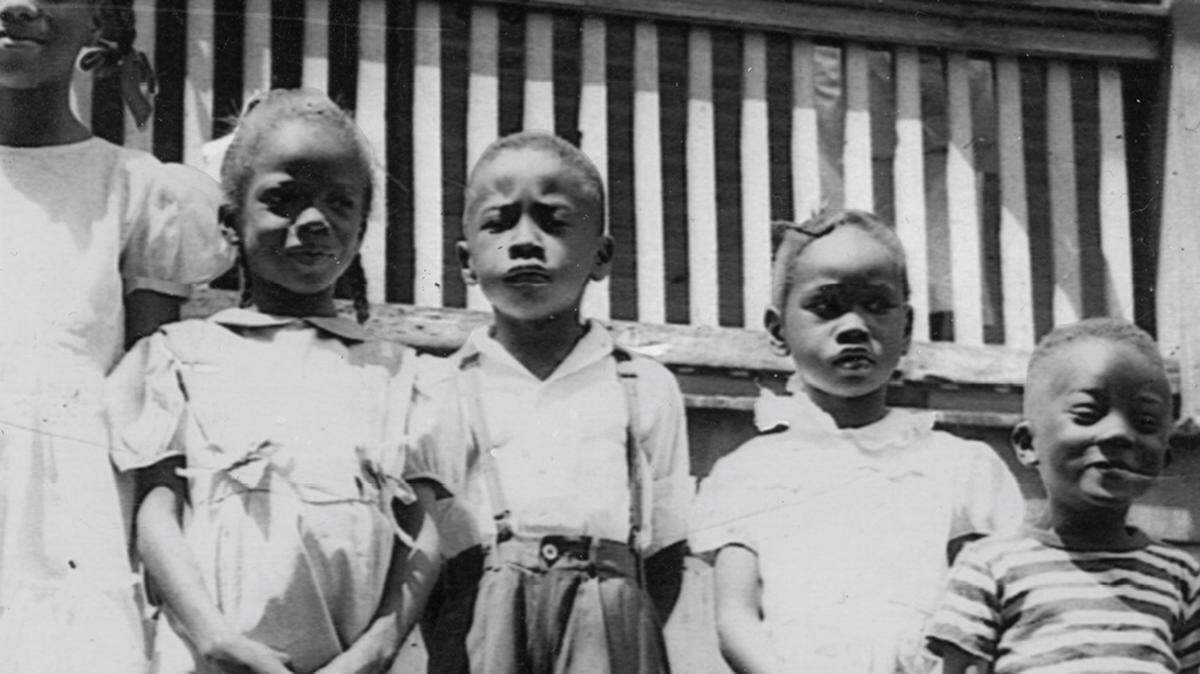
Over the years, when someone would squinch their face and wrinkle their brow when I told them that I was born in 1946 and stayed in Harlan County, Kentucky until I was twenty, I have, lightheartedly, of course, responded by saying, “I would not have chosen to be born in Harlan County, Kentucky, a year after World War II ended, except that is where my mother was.” Our mother was born in Harlan County, in Benham, two decades earlier and was fixed firmly there to her parents, both of whom were among the first group of Black people to migrate in great numbers to the county in the Roaring Twenties. Mama’s two older sisters were also born in Benham, Kentucky.
A critical mass of us African Americans lived throughout the span of the twentieth century in the heart of Appalachian coal country. Our sense of belonging in Harlan County was realized over almost a century, and the ties remain unbreakable. Our connections to this land attached us to it like chocolate-colored railroad crossties atop crushed white gravel. We were spiked down and anchored in place, able to carry heavy loads and perform a balancing act on life’s narrow steel rails, our arms outstretched the way an acrobat holds a stabilizing pole while on a high wire, looking up and moving forward, one step at a time, gingerly. That said, we never went around humming the state song, “My Old Kentucky Home,” as though Harlan County was that charming, picturesque, and serene; that idyllic. We knew that our Appalachian coal-town hollow was not Plymouth Rock. We knew we landed in Harlan County by coincidence of the global economy as America emerged as a world industrial power during WWI, the production of coal a major factor. After all, my grandparents’ generation – sharecroppers, mainly – was but one generation removed from enslavement.
Within the blink of an industrial eye, between 1917 and 1920 – during which time my maternal grandparents migrated to Lynch from rural Macon, Georgia – the population of Lynch increased dramatically to seventy-two hundred. The first nonnative residents in Lynch were Italian and Hungarian stonemasons brought directly from Ellis Island by United States Steel Corporation, then the largest, most highly capitalized company in America ($1.5 billion in 1901), founded by J. P. Morgan. These robust souls were the first line of laborers who carved out what became a colossal coal camp, carved into the wilderness. By 1940, Harlan County’s population (75,275) was exceeded in Kentucky only by the counties of Jefferson (Louisville) and Fayette (Lexington). Lynch and towns like Harlan, Hazard, Jenkins, and Wheelwright (in eastern Kentucky); Big Stone Gap, Grundy, and Stonega (in southwest Virginia); and Gary, Keystone, and Beckley (in southern West Virginia) were as racially and ethnically diverse—each group living in their neighborhoods and with traditions openly displayed—and as booming and blooming as New York City (Harlem). Harlan County was to Kentucky Black coal-mining families in the 1920s through the 1940s what Harlem was to Black New Yorkers in the same period. It was the cultural and social epicenter of the region for Blacks, and as “the blackest town for mountains around,” Lynch was equivalent to 125th Street in Harlem—the school was our Schomburg Center for Research in Black Culture, and the Pool Room was our Apollo Theater.
When I went away to college in Lexington to the University of Kentucky at the age of twenty, in 1966, my initial observation, my version of cultural shock, was made by phone to my parents: “Mama, I’ve never understood why they say there are no Black people in our neck of the woods. I have never seen this high a concentration of White people in my whole life!”
The demise of the coal towns of central Appalachia never caused a collective sense of future shock. After all, the changes did not come like the COVID-19 crisis of 2020. There were plenty of signals, spread over the decades since 1940, as mining mechanized. Losing work was one thing, but the loss, the destruction of entire communities—physically and psychologically—was yet another. If indeed light is to photography and filmmaking what sound is to music, I have tried to cast light, mining down into those dark and blurred and concealed regions of a culture known only to, and noticeable only by, those with the lived experiences of it. I move between specific contexts—which are both fixed and past tense—and dynamic memory, and I tried to steady the images, freeze the frames, so to speak, and when fitting, I sought to concentrate on the foreground, then blur the background, and vice versa. At heart, from my heart, this book is a series stories that are personal, narratives that were told to me, and things I heard and observed, as well as participated in, personally, and studied as a sociologist. These stories and tales merge as a community cultural identity narrative, blended well enough, I hope, to paint pictures of the unique, yet universal, souls of Black Appalachian coal town folks.
-An excerpt from “The Harlan Renaissance” by William H. Turner. West Virginia University Press.