
It’s not hard to understand the Great Resignation once you start stocking shelves
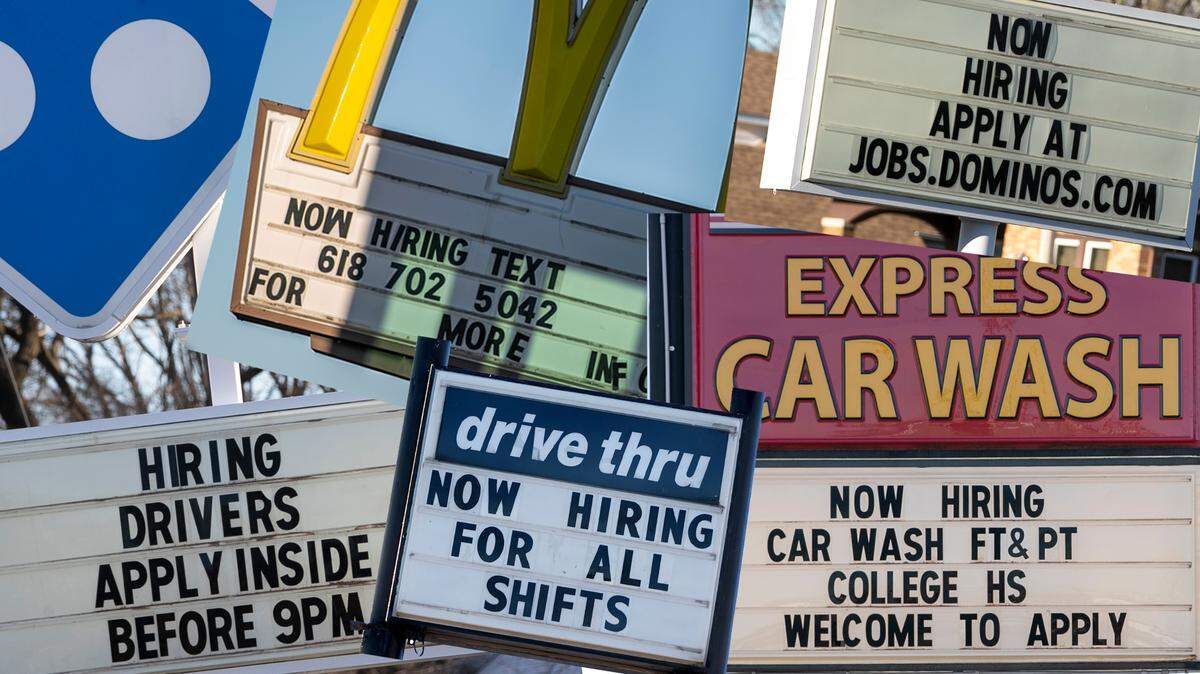
It’s been twenty years since Barbara Ehrenreich published her classic “Nickel and Dimed – On (Not) Getting By in America.” It’s a shame the book isn’t coming out today, amidst “the great resignation.”
Why don’t people want to work? In Springfield, Missouri, business owners have bought billboards reading “GET OFF YOUR BUTT! Get. To. Work.”
While I can sympathize with small-business owners struggling to find staff, those billboards feel tone deaf to me. There are legitimate reasons why able-bodied people aren’t going back to work – lack of child care, fear of Covid – but these reasons aren’t being discussed.
In her book, Ehrenreich poses as a recently-divorced, middle-aged woman without any marketable job skills, and she takes one miserable, low-wage job after another: server in a restaurant, cleaning maid, etc. She describes intolerable indignities: sexual harassment by her supervisor, inability to rent an apartment without paying a deposit and the first month’s rent, demeaning work scrubbing floors on her knees while the wealthy homeowner stands over her, watching.
Here is my experience.
I have been mostly retired since 2000, doing volunteer community work, but recently I have taken a series of low-wage jobs, to get out of the house and help me stay physically fit.
Last winter I took a job stocking shelves at a big box store: $11 per hour, third shift, and therefore little exposure to Covid. I like things to be tidy, and I thought stocking shelves would give me the satisfaction of taking messy aisles of merchandise and magically transforming them overnight into neat rows, like a good little gnome. On third shift, I would be left alone to do my simple, mindless-but-rewarding job.
Oh boy, this job was horrible. At the start of my shift, I was given two pallets of cans of tomatoes, paper towels, laundry detergent etc. and instructed to use the bar code labels on the shrink wrap to shelve the items in their proper location, corresponding to the tags on the shelf - except the tags on the shelf were either missing, damaged or printed in such tiny fonts that they were impossible to read through my mask-fogged glasses and my sleep deprived eyes.
The ergonomics of the job were atrocious, forcing me to lay on the floor at times, constantly bending and stretching. Corporate management seemed to have given absolutely no thought to the difficulties of placing a carton of Basil-Olive Oil Diced Tomatoes onto shelves with only a quarter inch of clearance from the next carton (Fire-Roasted Crushed and Peeled Tomatoes).
The stench of the air fresheners, detergents and the smelly stuff you add to your laundry to make it smell even more was actually headache-inducing. Or maybe it was the supposedly inoffensive 80’s light rock on the PA system, or the monotonously perky store announcements that informed non-existent shoppers — every 15 minutes — that the store sold stamps.
I wonder if management ever thinks about how tiresome and degrading it must be for employees to have to listen to this crap all day. I quickly began to hate the store, and my mood was not improved by my lack of sleep: I was supposed to work from 11 pm to 7 am, three days a week, but I could not adjust. I compensated with a heavy dose of mid-shift caffeine, which made it worse.
I can well remember my last night, laying on the linoleum floor and staring up at the fluorescent lights in the ceiling in bewilderment and utter exhaustion.
I like to work. I’m a hard worker. But I can’t do the impossible. I quit.
Maybe if those business owners in Missouri would spend a few weeks stocking shelves, or delivering pizzas, or caring for patients in a nursing home, they would better understand the great resignation.
Dave Cooper of Lexington is a longtime community and environmental activist.
This story was originally published November 12, 2021 at 9:32 AM.