
In November, let’s remember Kentucky as sacred ancestral homeland for Indigenous people
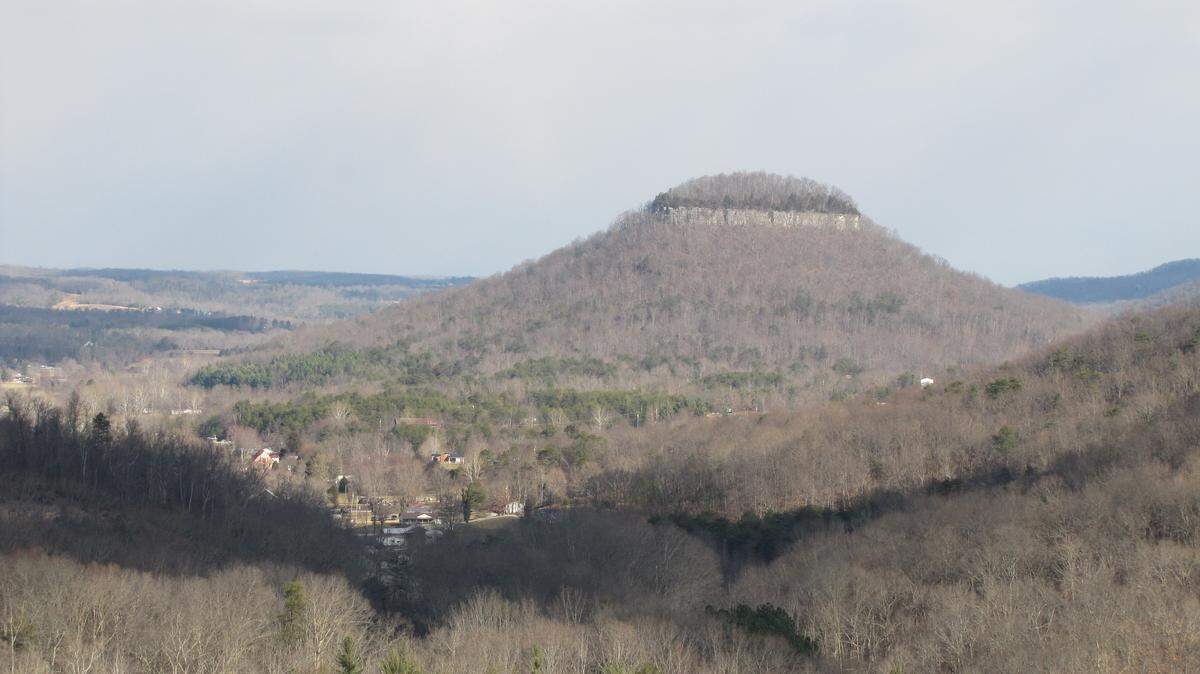
It is the time of year when seas of meadows’ golden yield is finally harvested and tiny asters flourish, hugging the time-worn cedar fences. It is when autumn paints a rich tapestry of foliage and the crisp air invades the landscape. It is a time when we gather once more around table and campfire, to share the time honored stories of old and dream of hearth and home. It is truly the most appropriate time to remember that Kentucky is the sacred homeland of Indigenous peoples, and November is Native American Heritage month.
Indigenous peoples have lived in Kentucky for at least 14,000 years, including the Cherokee, Shawnee, Chickasaw, Osage, and others. The commonly held belief that Native Americans utilized Kentucky lands merely as a hunting ground is a myth that has unfortunately persisted. To be sure, it is likely that this myth was first perpetuated to minimize the importance of the Kentucky territory to Native Americans, making acquisition of these lands all the easier. Nevertheless, Kentucky has been the sacred home of Native Americans for centuries. And the powerful story of Kentucky’s Native American history is unique to our commonwealth. Their saga speaks to us from across the ages.
Long after the eras of the Paleo-Indian, Archaic, and Woodland peoples, the storied Mississippians of far western Kentucky had reached their pinnacle from 1100-1350 A.D. (Wickliffe). Atop a bluff with a hawk’s view of the winding Mississippi River, the father of waters, they constructed two platform mounds and at least eight other mounds around a central plaza. It is estimated that at one time, hundreds of people lived there. It was a hierarchical society led by a hereditary chief. They built homes and farmed the land. They participated in local and distant trade. They were artisans, hunters, builders — citizens, dreaming of a better life. It is not difficult to imagine life there, the daily struggles and celebrations, in the careful art of harvesting a crop, caring for a child, in the creation of a valued object. And all perhaps in the sunshine of an unknown day, the fragrance of a summer rain, or bathed in the moonlight on the great platform mounds, high above the Mississippi.
In the course of time, early American archaeologists would seek alternative explanations for the great mounds in an effort to discredit Native Americans of their impressive engineering achievements. They suggested Vikings and Toltecs, among many others. This coincided with the introduction of the government policy of removal of Indigenous peoples from their sacred homeland to ease the settlement of the frontier.
In 1775, the opening of the frontier in the wilderness of the Kentucky territory was about to commence. At that time, Kentucky was a territorial satellite of Virginia. Resulting from the Proclamation Line of 1763, the Virginia House of Burgesses strictly prohibited making treaties with Native Americans. Yet, Judge Richard Henderson, a land speculator, had different plans. He envisioned a colony in the vast wilderness, that would be named for his land company, Transylvania. Henderson knew Daniel Boone very well. He knew of his trips into the Kentucky wilderness, of his knowledge of Cherokees and their language. Boone had long owed Henderson money. Thus Henderson offered to cancel his debt in exchange for negotiating a treaty with the Cherokees. The Treaty of Sycamore Shoals, as it became known, relinquished Cherokee claims to most of present day Kentucky in exchange for a mere wagon load of trade goods. It was the largest land session treaty in the history of the frontier up to that time, and ushered in the era of westward expansion.
In the twilight of autumn, when we gather once more around pine wreathed candlelight or warm campfire, let us remember once again and always, the powerful story of Kentucky’s Indigenous peoples; a story of a sacred ancestral homeland, a story that has been unfolding for thousands of years.
Angela Arnett Garner is a social justice activist who organized the first Indigenous Peoples Day ceremony in Kentucky history.