
New film offers Kentucky perspective on Muhammad Ali’s extraordinary life and death
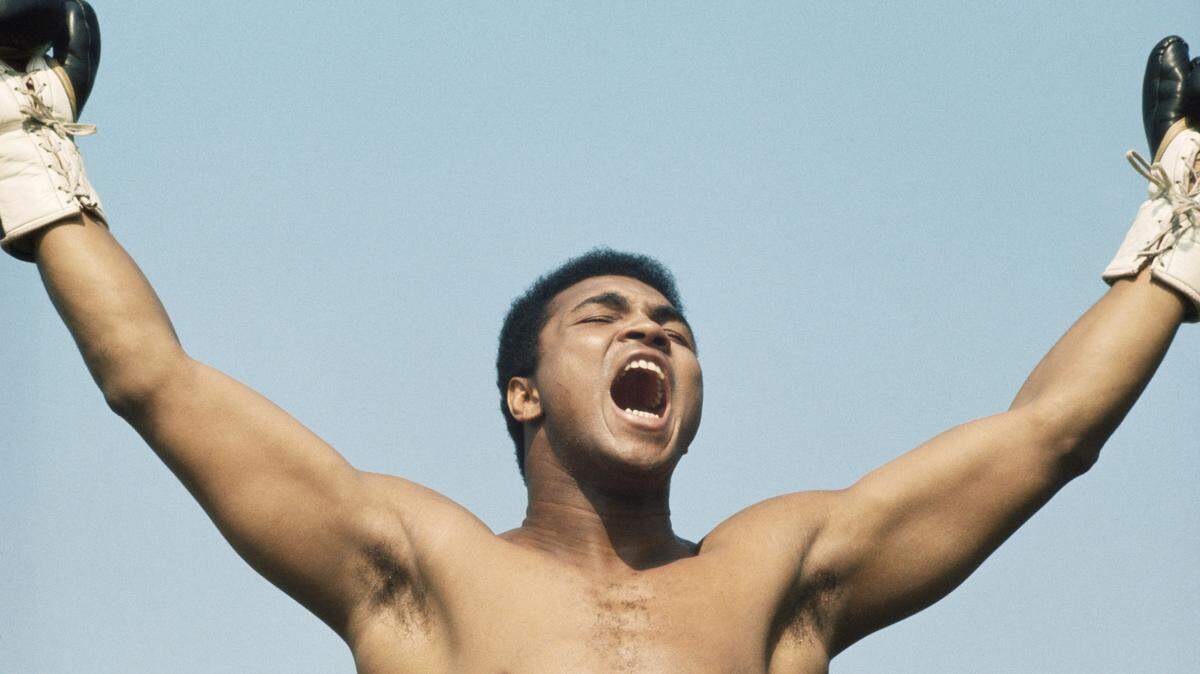
“Muhammad Ali lived a life so big and bold, it’s hard to believe that any one man could do everything he did, could be all the things that he became, in the course of just one lifetime … .Ali belonged to the world, but he only had one hometown.”
Louisville Mayor Greg Fischer spoke those words on the morning of June 4, 2016, in a speech that was excerpted in news stories around the world as people woke up to the news that The Greatest was gone at the age of 74.
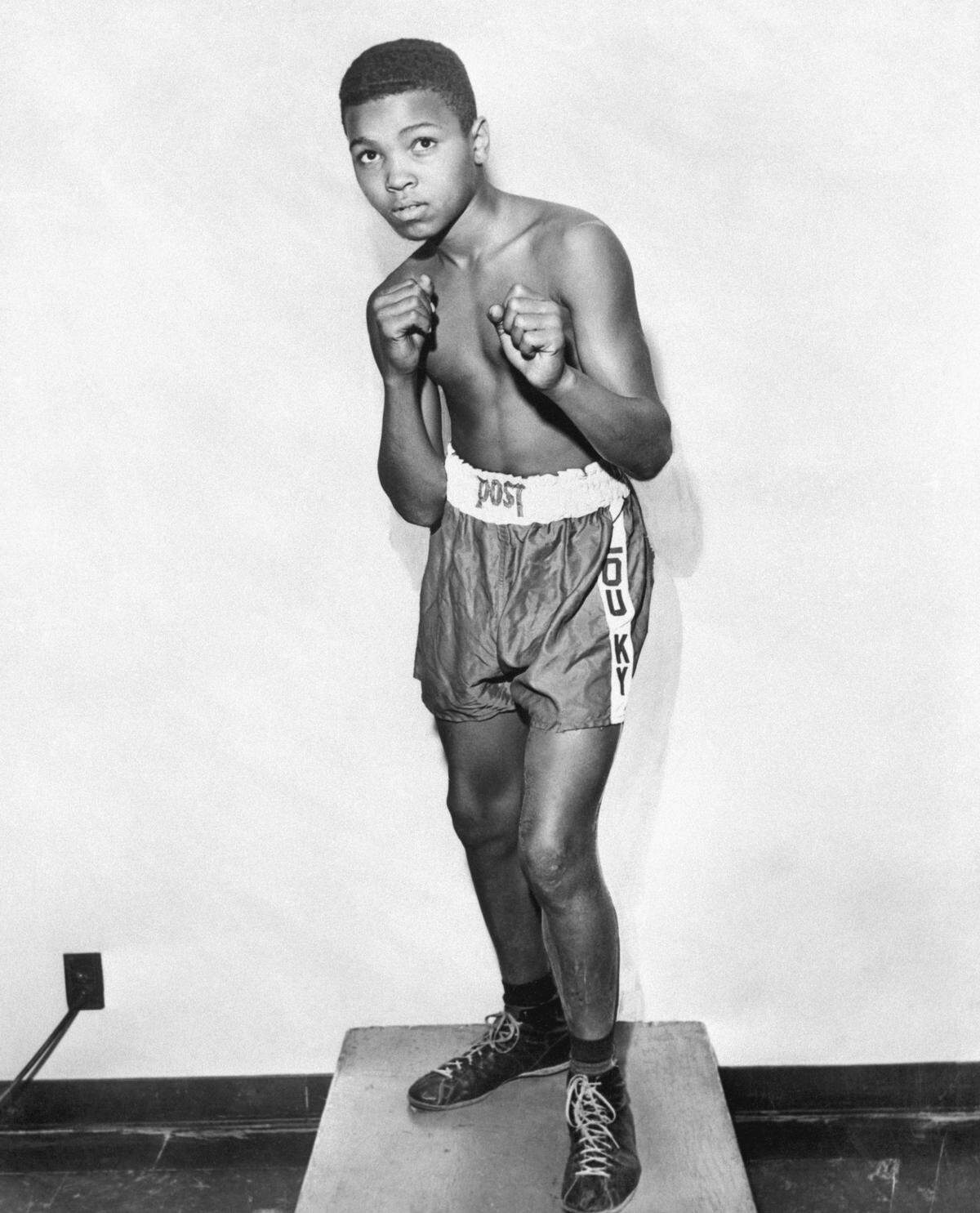
As the mayor’s speechwriter at the time, I’d helped write those words, which reflected the challenge of trying to summarize Ali’s incredible life and incalculable impact, as well as his deep connection to his Kentucky roots. That connection endured after he left the state at 18 to become a boxer who would eventually win the World Heavyweight Championship three times and use his platform to speak out for civil rights and for stronger connections among people of different faiths and nationalities. Ali also inspired controversy and criticism, in part with his conversion to Islam in 1964 and his refusal to accept his draft notification during the Vietnam War. Still, over the decades, Ali became a beloved global icon whose story still resonates.
Monday is the 80th anniversary of Ali’s birth in 1942 as Cassius Clay at Louisville General Hospital. Monday night KET will air “City of Ali,” the documentary I directed about Ali’s history in Kentucky and the historic celebration of his life that unfolded in the days immediately after his passing.
Honestly, describing the events of June 3-10 in Louisville “historic” feels like a world champion understatement. Imagine the dynamic at a funeral for a relative, someone everyone in the family loves and reveres so much that they put aside longstanding resentments to embrace one another in grief, gratitude and ultimately celebration. Now imagine that feeling on a global scale, with Louisville at its epicenter – that’s how it felt.
Produced by a public-private partnership that includes Louisville Metro Government, Brown-Forman and L.A.-based documentary producer Jonathan McHugh, “City of Ali” tries to render that dynamic and the enormous practical challenges that came with it, as tens of thousands of Ali fans, reporters, celebrities and dignitaries arrived, many of them heading to the Muhammad Ali Center on a kind of pilgrimage. As a courtesy, the Center stopped charging admission, welcoming over 20,000 guests from 135 countries in one week.
City government worked with various local entities to organize events on extremely short notice: A children’s festival. A bike ride. A screening of the feature film “Ali.” The Kentucky Exposition Center, perhaps best known as the site of the Kentucky State Fair, hosted a Janazah, a Muslim prayer service, attended by thousands.
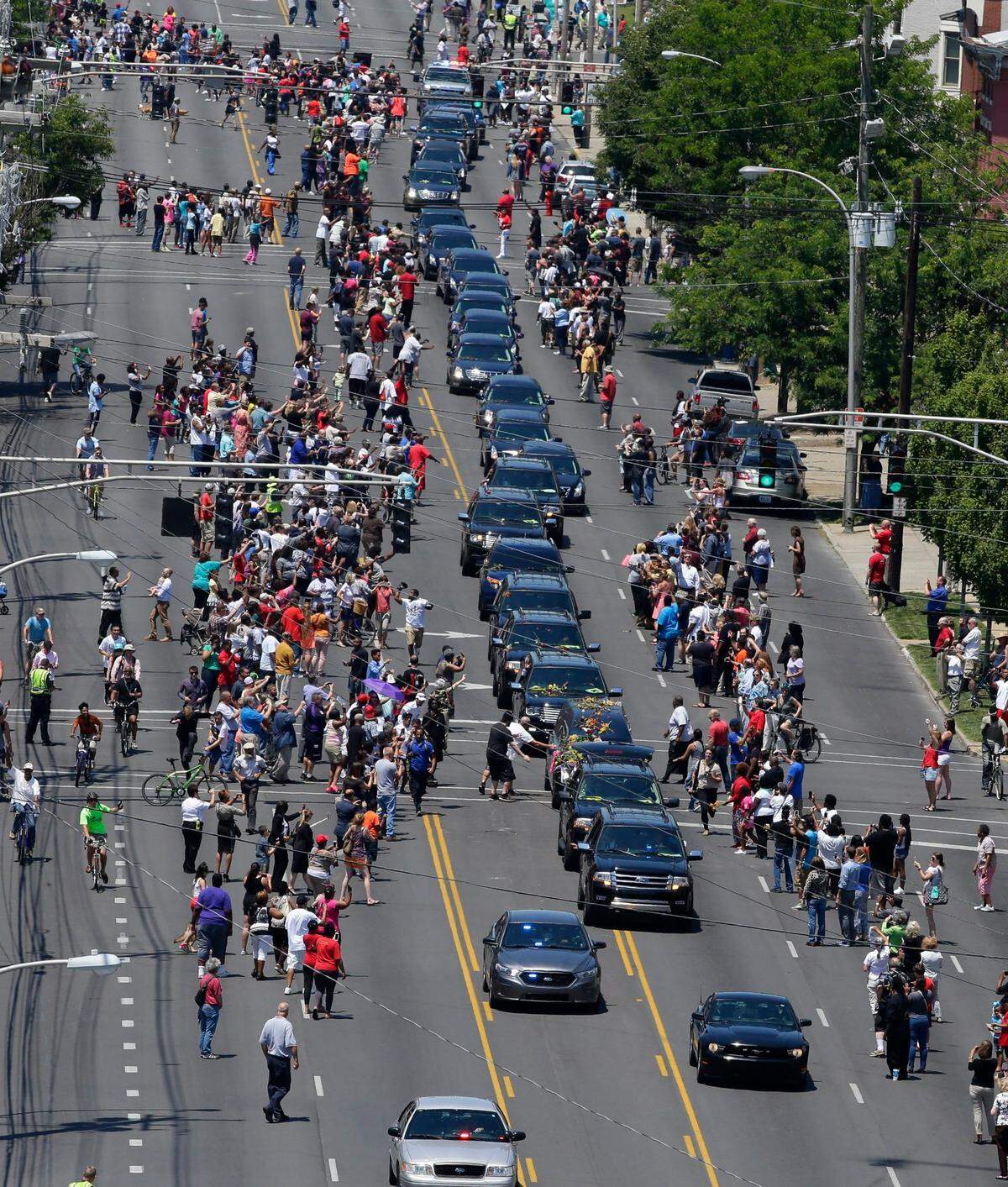
While Ali’s funeral was a small private ceremony, his family arranged a 20-mile procession throughout the city. I stood at the corner of 34th and West Broadway, shoulder-to-shoulder with a mostly Black crowd of different generations. We were among the over 100,000 people who lined the procession route. Folks held up pictures of Ali, or homemade signs with messages like, “RIP CHAMP” or “WE ARE ALI.” When the funeral procession came through, people cheered and shouted with this fierce combination of joy, longing, appreciation and pride. Two women waved an American flag the size of a bedspread. Ali’s daughter Rasheda described the procession as “an out of body experience for me …every single race, every single nationality, every single religion represented wearing Ali shirts together in harmony. Happy.” Through her car window, she heard people shouting, “Thank you.”
Some version of this is perhaps what Ali envisioned when he decided, year earlier, that he would return home for his final rest. If that’s true, then Ali Week serves as a kind of parting gift from The Champ, but also a kind of challenge. Now that we have this memory, this example of unity, what do we do with it? How do we keep from surrendering Ali Week to nostalgia, especially now that it shares mental space with more recent, painful memories of street protests, of Breonna Taylor, and record homicides, all against the backdrop of a fiercely divided country?
“I know what America can be. I saw it that week,” says Louisville poet and activist Hannah Drake in her interview for the documentary. “If we live like that every day, longer than 7 days, what could Louisville really be? What could this nation be?”
One of the reasons we made “City of Ali” (and the companion classroom guide that’s available free to Kentucky teachers) is that we believed that capturing the spirit of that moment was important, in part to remind ourselves and each other in an often-fractious world that we’re capable of finding reasons to come together, and that the results can be extraordinary.
Graham Shelby is a graduate of Bryan Station High School and the University of Kentucky. He directed the documentary City of Ali, which debuts on KET Monday night at 8p.m. More information about the film and its free educational program is available at cityofali.com.
This story was originally published January 14, 2022 at 8:31 AM.