
Tuesday is Education and Sharing Day in honor of one of Judaism’s great leaders
Today is a unique day on the American calendar.
April 12 this year marks Education and Sharing Day, a nationally proclaimed day to promote the importance of education in our society.
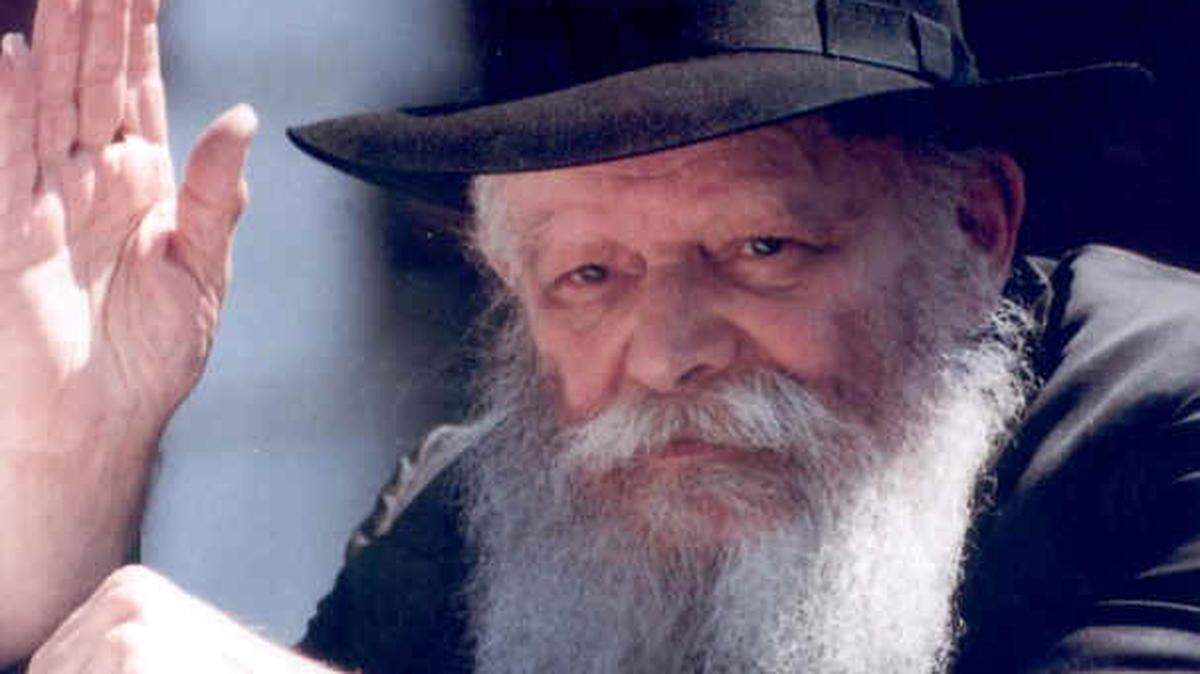
Unlike every other annual proclamation, Education Day follows the Jewish Lunar calendar, in order to coincidence with the birthday of Rabbi Menachem Mendel Schneerson, the Lubavitcher Rebbe. He is my personal mentor, one of the foremost Jewish leaders of the modern era and perhaps the individual more than any other singularly responsible for the resurgence of Judaism after the Holocaust.
The Rebbe was born in 1902 in Nikolaev, a city currently engulfed in war in Ukraine. Born into a family of educators, he could trace his lineage to Rabbi Shnuer Zalman of Liadi, the founder of the Chabad Chasidic movement, and beyond that back to the biblical King David.
His father Rabbi Levi Yitzchok engaged in a life long battle for Jewish education against the Bolshevik government, and his mother taught classes on Judaism to local students.
From a very young age the Rebbe’s love for learning and educating was obvious. As a young teen, he helped support the defense for Mendel Bellis, a local Jew falsely accused of a blood libel.
In his twenties, he was engaged to Rebbetzin Chaya Mushka, the daughter of Rabbi Yosef Yitzchok Schneersohn, then the Rebbe of Lubavitch, who was battling to preserve Jewish education in Russia and across Europe.
His father in law appointed him “Minister of Education” and tasked him with helping visiting scholars and preparing education documents for print.
Following his marriage the Rebbe studied in Berlin under Nernst and Schrodinger. Following the rise of Hitler he fled to Paris where he studied at the Sorbonne, and in 1941 he arrived in America, where his true contributions to education began.
Upon his arrival, Rabbi Schneerson’s father-in-law and mentor appointed him director of Chabad’s printing arm, social arm and most importantly their education arm. Over the next nine years, Rabbi Schneerson built those fledgling organizations into powerhouses that changed the landscape of world Judaism.
When his father in law passed in 1950, Rabbi Schneerson was asked to take the leadership of the orphaned movement.
From his first day, Rabbi Schneerson made education his priority. He not only was concerned with Jewish education in his local area, but he sent students to Morocco, Tunisia, Soviet Russia and to small communities across the United States to support Jewish education.
The Rebbe’s influence was not limited to the Jewish community.
Having spent time in Berlin in the 1920s and 30s, the Rebbe saw the most advanced and educated country in the world become the most barbaric in history.
Following these lessons, and realizing the unique values of the United States the Rebbe not only promoted education, but a moral education. He stressed that we should not just teach math and science, but morals and values. Schools should not only prepare students for the workforce, but produce well rounded people.
From his support and of the creation of the Dept of Education to the Rebbe ‘s work revolutionizing Jewish education, the Rebbe’s influence is still felt extremely heavily.
Today the Rebbe has over 11,000 emissaries, educating and leading communities in over 100 countries around the world, and all 50 states, each one joining the president to proclaim the importance of this day.
In 1978, Congress instituted Education and Sharing Day to Honor the Rebbe’s leadership. So as we mark education and sharing day and the Rebbe’s 120th birthday, let us all take a moment to rededicate ourselves to the moral education of our communities, and our children.
The Rebbe stressed that the world is not a jungle. It’s a garden. But a garden needs gardeners. To have a moral and educated society, we must roll up our sleeves and do the work.
Rabbi Shlomo Litvin is executive director of Chabad of the Bluegrass.
This story was originally published April 11, 2022 at 9:47 AM.