
A literary legacy: Neil Chethik’s decade of leadership at the Carnegie Center
Some of my favorite nights out in Lexington have been at the Kentucky Writers Hall of Fame. Each year, literary enthusiasts gather to honor a new cohort of writers, many posthumously, including some relative unknowns. With their families in attendance, the honorees’ works are read by other writers who are themselves possible future inductees, while any living honorees read from their own work. It’s a brilliant formula. When the Carnegie Center for Literacy and Learning first dreamed up the Hall of Fame in 2013, I remember worrying that too many names were being inducted, that they’d run out of worthy candidates. To the contrary, each year I’m newly inspired by how widely the net of genres is cast, from novelists to poets, songwriters to journalists.
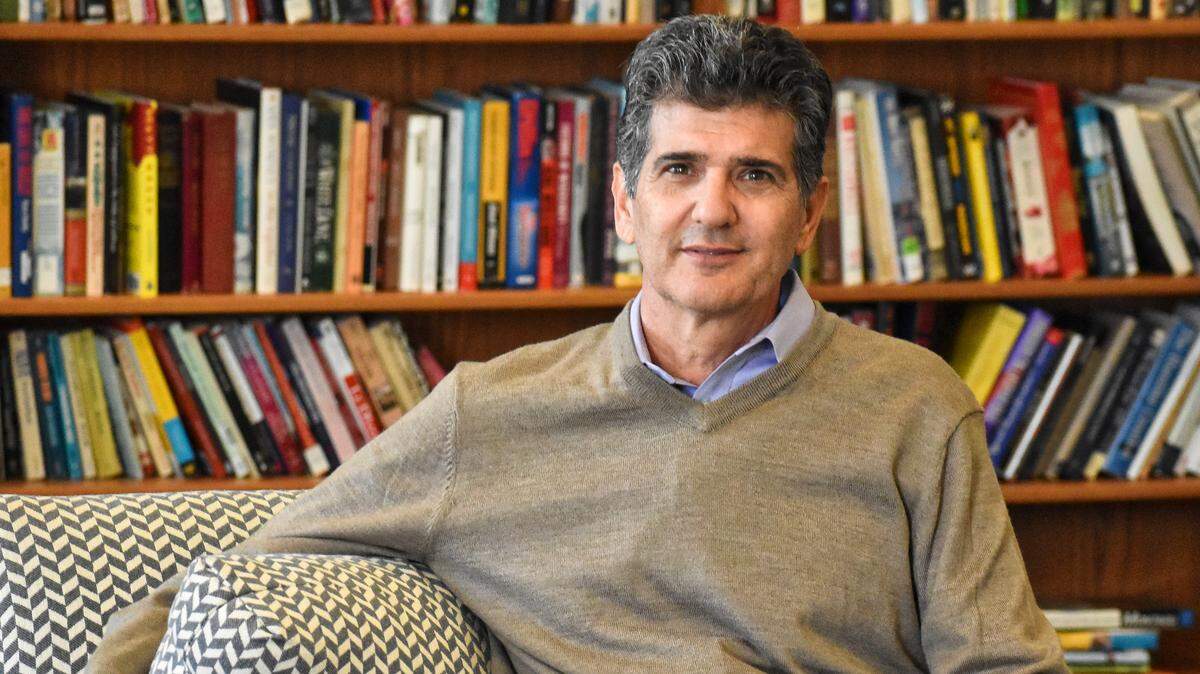
My favorite moment at the Kentucky Writers Hall of Fame has always been when Carnegie Center Executive Director Neil Chethik steps up to offer remarks, a sort of State of the Literary Union address. A journalist himself, Chethik artfully synthesizes a year’s worth of publishing news and other literary milestones into what feels like a grand adventure that all readers and writers present are embarking on together. I think those speeches are what I’ll miss most now that Chethik is retiring after leading the Carnegie Center for the past decade.
Ten years ago, Chethik, a veteran teacher at the Carnegie Center, embraced his new role as executive director and was eager to learn best practices for running a nationally recognized writing center. In 2012, with Neil in the driver’s seat, I had the pleasure of carpooling with him and two other writers to the Association of Writers and Writing Programs in Chicago. There, we gave a panel on Kentucky’s great literary institutions and absorbed ideas from other participants.
Since then, I’ve observed Neil’s steady leadership, innovative vision, and wise stewardship of this jewel of an institution that holds so many treasured memories for those of us who love the written word. As the longtime home of the Kentucky Women Writers Conference, which I had the privilege of directing for 14 years, the Carnegie Center is the site of such experiences not just for Kentuckians but also for writers from all over the U.S.
Not many cities have their own literary center unaffiliated with a university. Those that do, such as the Loft in Minneapolis or Grub Street Writers in Boston, lack the Carnegie Center’s dual focus on programs for creative writers as well as tutoring for children. During Chethik’s tenure, the Carnegie Center drilled down on its commitment to youth, doubling the number of children it serves with one-on-one tutoring, academic camps, and art activities. Chethik tirelessly advocated for these programs, often in this newspaper, pleading for city funding and volunteer tutors, while always tutoring a child himself.
Under Chethik’s leadership, the Carnegie Center also expanded its offerings for writers, including the Books-in-Progress Conference, the Carnegie Center Author Academy, and its Writing Critique Nights. I witnessed Neil’s emotional intelligence in guiding and nurturing the talents of a diverse staff, many with their own artistic gifts and ambitions. He had a flair for asking supporters to align their values with their pocketbooks, while successfully threading the needle of which programs to make free-of-charge vs. which programs to make revenue-generating, and how to fairly compensate presenting artists for their expertise.
In Covid times, Neil found a way to maintain salaries for staff while successfully transitioning classes online. The Carnegie Center’s long history of supporting social justice causes was on display in 2020 as Neil met the moment again by establishing the Kentucky Black Writers Collaborative and inviting Black residents of Kentucky to take writing classes at no charge.
Leadership can look easy to outside observers, but Neil’s exemplary guidance of such a vital cultural institution is not something to take for granted. He leaves the Carnegie Center financially strong and artistically dynamic, with a committed Board of Trustees. Perhaps most importantly, Chethik departs his role having created generous and welcoming invitations to current and future generations of writers to come, learn, read, share, and most of all, write. That kind of leadership leaves all of us deeply in his debt.
Julie Kuzneski Wrinn is Chief of Staff in the College of Arts & Sciences at the University of Louisville. She was Director of the Kentucky Women Writers Conference from 2007 to 2021.
This story was originally published April 29, 2022 at 8:57 AM.