
This fall, Democrats need to remember they’re no longer party of the working class
When Donald Trump outdueled Hillary Clinton in three states no Republican had carried since the 1980s, he turned a spotlight on white voters without a college degree, aka the white working class. Why had a critical number of these voters switched parties, and what might win them back?

Boosting the party’s working-class cred became a top Democratic goal for 2020. A tell-all book from that campaign reminds us why nothing is simple:
“… Planners of the Democratic Party’s virtual convention thought about featuring a national map that would highlight the locations of various speakers, thus countering the notion that the party was a club for coastal elites – only to can the idea when they realized multiple speakers would be broadcasting from Martha’s Vineyard.”
One suspects even the second-string speakers would have been broadcasting from well above the Hamburger Helper rungs of the social ladder. The convention planners encountered the same demographic reality that analyst David Wasserman used to statistically represent the country’s red/blue divide by locating Whole Foods stores and Cracker Barrel restaurants: Democrats are the party of the upper middle class.
That sounds off-key if you remember when Democratic politics conjured images of hard hats and union halls. But that world changed in 1968 amid conflicts around race. White anxiety about integration’s effects on property values and school quality – along with rising crime, which had a Black face for many white voters – fueled an exodus from the party that championed Black empowerment. The white working class gave 64 percent of its vote to Richard Nixon or George Wallace. When George McGovern’s candidacy added issues like feminism and environmentalism to the mix in 1972, the figure rose to 70 percent.
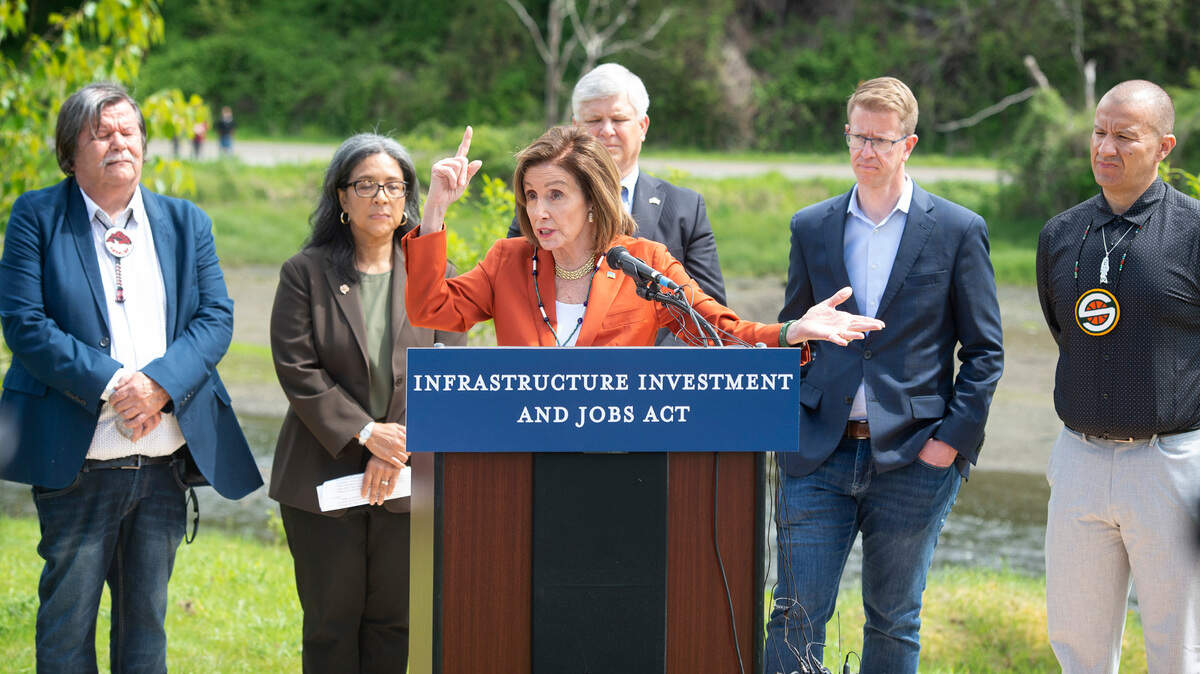
Democrats haven’t been a working-class party since. If the reputation outlived the fact, credit nostalgia and branding. The party cherished its New Deal coalition, which dominated American politics for three decades. It also needed to keep some of the voters who anchored that coalition if it hoped to compete in decades to come. Hence the periodic professions of love for the little guy and promises to reward him for his support. Nancy Pelosi sang from the hymnal in a recent interview:
“What unifies us is the … empathy that we have for America’s working families and the priority of meeting their needs. Lower cost, bigger paychecks, lower taxes, all paid for by making everyone pay their fair share ...”
Such pocketbook appeals haven’t budged the white working class, which gave the same share of its vote to Joe Biden that it gave to Hubert Humphrey. “Why do these people vote against their own economic interests?” ask Democrats, echoing a 2004 bestseller on the subject. It’s a silly question. Plenty of elections, including those that gave Republicans a new voter base a half-century ago, are contested more on social and cultural than economic grounds. The culture wars aren’t going anywhere, and the white working class seems disinclined to be bought off the battlefield.
Democrats are pondering their approach to the battlefield as November looms. Many fear a repeat of last year’s Virginia governor’s race, a culture war classic, in this year’s congressional races. Data analyst David Shor wants Democrats to simply stop talking about unpopular issues. Veteran politico Ruy Teixeira suggests they publicly denounce their radicals to show swing voters the party is changing.
For their part, the Congressional Progressive Caucus wants President Biden to enact a sweeping left-wing agenda by executive order. That’s called a “base strategy” – forget chasing swing voters and focus on turning out the base. It would require real optimism, considering that working-class voters far outnumber college-educated voters and that Democrats’ problems with the group have begun bleeding over to Latinos.
It would also risk eroding the one-third share of the white non-college vote Democrats still enjoy. Building on that might be more feasible than trying to scare up progressive crusaders from the ranks of non-voters.
Michael Smith is a freelance opinion writer in Georgetown.