
Lexington’s Comprehensive Plan needs to focus on equity rather than affluence
Last month, I shared some thoughts about Lexington’s Path to Shared Purpose, a report that describes a new agenda for our education and community. I suggested that our 2018 Comprehensive Plan (CP) should include the School Board’s Strategic Plan in a participatory manner that involves our youth and prepares them for the Lexington they will inherit in 20 years.
Next, we must make sure the comprehensive plan directly addresses Lexington’s biggest problems caused by segregation. Right now, we’re doing the opposite by making plans to create an AFFLUENT city instead of a just one. Our current narrative of progress and economic development glosses over the underlying issues of education, poverty, and gentrification in favor of building an even more affluent city.
Much of the work done in addressing these issues have been along the lines of “coordination” of resources, and not the “collaboration” of community efforts that our city desperately needs. Why is there a lack of collaboration in our city? The answer is simple. Collaboration requires an equitable and just distribution of Lexington’s resources, instead of the disproportionate allocations to affluent areas that we currently see.
Plainly stated, we are siloed into affluent and poor groups. This segregation of our city leads to inequalities which cannot be solved by the unequal coordination of resources. As stated in the Lexington Fair Housing Council’s report by Taylor Shelton in Mapping a Segregated City (Figure 1):
“While concentrated poverty and affluence are both on the rise in recent years, concentrated affluence actually represents a more widespread problem within the city. …these processes are fundamentally interconnected and co-produced. …The presence and growth of both concentrated poverty and affluence indicate that Lexington is becoming an increasingly unequal and bifurcated city, …[and] any policies adopted to address this issue [should] understand that the problem isn’t inherently with these places or people, but rather the persistent inequalities between places.”
The issues we’re facing are tied to inequalities between places, schools, services, etc. Specifically, the problems caused by segregation are inherently attached to local land politics and socioeconomic boundaries. For example, we tend to connect the Urban Service Boundary (USB) as both the “cause” and “solution” to many of these issues. This is because underlying zoning laws determine the wellbeing of those residing in these places. Since this is the case, we MUST implement equitable housing and zoning ordinances, especially if we plan to continue in-fill development while keeping the USB unchanged.
This is why bridging the gap between our City’s CP and FCPS Plan through a shared purpose is important. Zip codes, for example, have an overarching effect on determining the social mobility and economic opportunities our youth have, as the Opportunity Atlas indicates. Zip Codes are affected by our CP, a blueprint that guides our zoning process. Closing the inequality gap between places requires equitable planning tied to our CP.
Knowing that zoning and land use determine our future wellbeing, where we invest as a city tells us about our values as a community. Our City’s FY21/22 budget is an illustrative portrait of what we value. For example, nearly 50% of our budget is invested in public safety, i.e., protecting properties from decreasing values resulting from crime and fires. This is in comparison to the 1.79% for public health and social services, and the 0.86% for housing. If we want to bridge any gaps, we need to reconcile our priorities as it relates to unequal investments.
For far too long, our local investments have not solved the underlying issue of segregation. The type of investments in “progress” and affluence that we promote through our current narrative is actually the root of our problems. The current investments simply promote in-fill development while protecting the USB and property values, in favor of producing more concentrated affluence. This in turn, produces more concentrations of poverty and associated problems, says Shelton.
To create a more just city, our shared purpose should be in Fostering School, Family, and Community Involvement in our CP –in a manner that targets “problems such as poverty, child development, education, violence, crime, safety, housing, and employment.” This requires more collaboration and less coordination of resources by city leaders and advocacy groups.
In my opinion, the ideal starting point for implementing community shared purpose is at the city level. Through a collaborative integration of community and government leadership, the City’s Commission on Racial Justice & Equality can address the issues caused by segregation by implementing the recommendations of the Education and Economic Opportunity Sub-committee.
Instead of adopting policies that gloss over the inherent issues of segregation through an implosion of in-fill initiatives, Lexington needs to put liberty and justice into the bones of its blueprint. We need to use our CP as a tool to bridge any gaps in our community. Through the CP, we can develop an equitable plan that guides us in better investing our local capital in order to decrease the inequalities between our affluent and poor communities. In doing so, we can increase opportunities for all our community members. However, as Shelton says; “In the absence of deliberate actions to decrease segregation and concentrated poverty in Lexington, these inequalities are not only unlikely to improve, they are almost sure to be exacerbated.”
There are no vacuums in the economy of a civil society, and unless we start to put a purposeful reign on our progress and growth—centered around a shared purpose to develop a city that ALL our children can inherit—we will only exacerbate the problems of a segregated city. Now could you imagine that, Lexington?
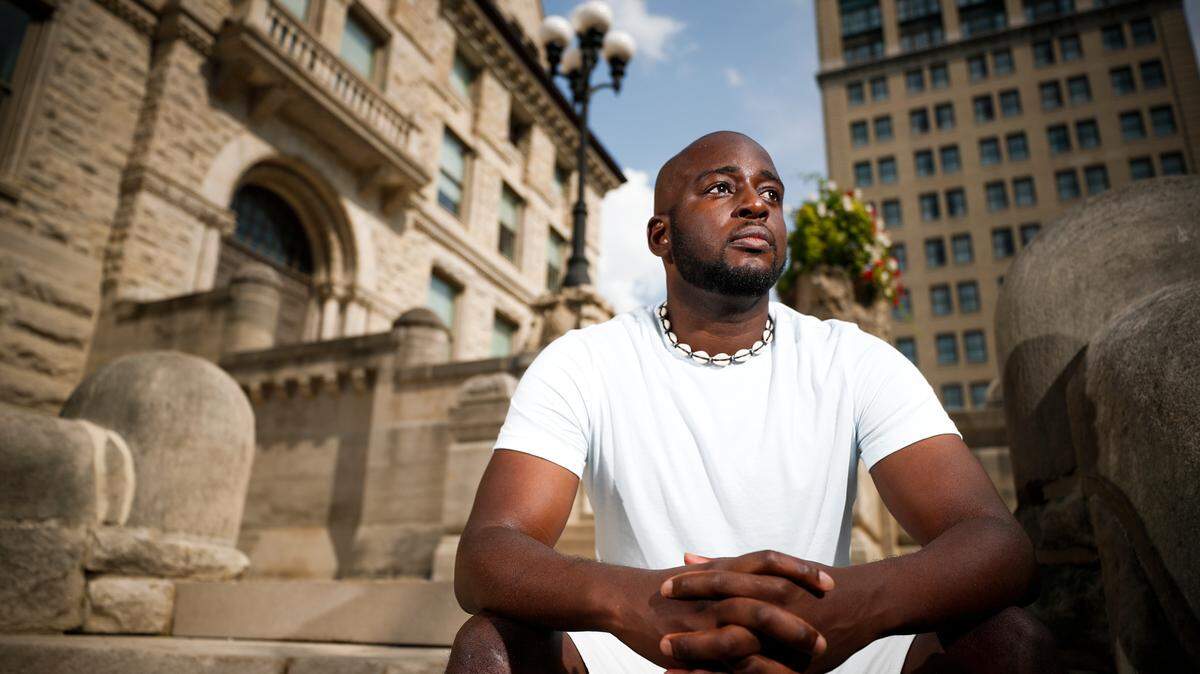
David Laurenvil is a local entrepreneur that currently serves as a Co-Director of Kids MakeIt Institute, a 21st Century educational institution focused on exposing at-risk youth to Science, Technology, Engineering, Arts, and Math (STEAM) skills and careers.