
Under Ky laws, my pregnancy might have killed me. My story could happen to anyone.
In June, I discovered I was pregnant. This news was a dream come true for my husband and me. My husband and I yearned to grow our family and give my son, Jack, a sibling and best friend.
At our first ultrasound, I felt a wash of happiness and love when we heard the heartbeat for the first time.
We spent the next few weeks daydreaming about our life as a family of four. Would this new baby be the spitting image of his father, like our son Jack, or would this baby take after me with dark eyes and long toes?
In the days between June 1 and June 24, the Dobbs decision came down from the U.S. Supreme Court. The court held that the Constitution of the United States does not recognize abortion as a right. Therefore, the laws regarding abortion are left up to the states. For Kentucky, that enacted an archaic trigger law banning all abortions should cardiac activity be detected.
Even knowing that, I never imagined this ban would affect me.
I felt compassion and empathy for the many women whose autonomy was stripped. I grieved for our country and the women whose self-determination and liberty were being ripped away. I was angry, but mostly sad for girls who could no longer believe that they could grow up to be anything they wanted to be. Because birth could now be forced upon them.
I was also grateful that I was pregnant with a child that I desperately wanted and that I would not need access to abortion care.
Little did I know how wrong I would be.
Our joy and naivety ended tragically and abruptly on July 18. My doctors confirmed the baby had a fatal chromosomal abnormality called Triploidy.
My doctors told me that if the baby survived the pregnancy, my child would be born into a life of excruciating pain with heart and lung abnormalities and would only live for minutes, hours, or, at the very most months. Our baby would never see our home nor survive into childhood.
And as the expectant mother, I was diagnosed with a partial molar pregnancy, a rare pregnancy complication characterized by the abnormal growth of trophoblasts, which can turn cancerous, requiring chemotherapy and potentially a full hysterectomy.
The medical treatment for the chromosomal abnormality Triploidy is termination. The medical treatment for a molar pregnancy is termination. Termination is abortion.
July 18 was the worst day of my life.
I sat in the hospital room that day, overcome with grief, loss, and sadness. Once I composed myself, I asked my doctor: if the safest and most compassionate choice for these diagnoses is termination, when can the hospital do the procedure?
They could not – nowhere in Kentucky could.
The abortion ban meant that the hospital — a well-known Lexington healthcare institution —would not perform this lifesaving procedure unless I were coding on the table. They could not terminate the pregnancy. I would have to plan my own travel out of state to receive the care I needed.
It did not matter that the placenta could be killing me. It did not matter that the baby I was carrying would be met with immense and extreme pain if it survived birth. None of those things mattered.
All that mattered was that there was still cardiac activity.
I felt like MY life had no value.
I felt stripped of my dignity, autonomy, and liberty.
Every day, I sat with the knowledge that I was carrying a child I would never be able to take home from the hospital and every day I sat feeling less than and subhuman. I tried calling out of state, but due to out of state demand, I could not get a call back.
It was pure torture.
Until July 22 when a miracle occurred.
Kentucky Judge Mitch Perry ruled that Kentucky’s abortion laws violate “the rights to privacy and self-determination” protected by Kentucky’s constitution. I was 13 weeks pregnant and could obtain the lifesaving care I deserved from compassionate, kind, and empathetic caregivers for whom I am immensely grateful. I received an abortion.
Unfortunately, by that Friday, women were again stripped of their rights in Kentucky.
I was lucky and am unapologetic that my decision was the best for my health, for our family, and the compassionate choice for my unborn child. I am telling my story and fighting for the women who do not have a choice or healthcare access.
I am not special. My story could happen to anyone. I beg you to find empathy and understanding for your daughter, wife, niece, neighbor, and strangers. Choosing to terminate a pregnancy is heart wrenching. The procedure is painful and invasive. It is not black and white. And those who need it, access it out of desperation. Abortion is healthcare. And healthcare should remain between doctors and patients and be accessible in the state of Kentucky.
Vote NO on Amendment 2 on Nov. 8.
A No vote on Amendment 2 does not mean that abortions in Kentucky will be legal, nor does it provide funding for abortion. (Taxpayer funding of abortions in Kentucky is not permissible per the Hyde Amendment and by Resolution in the Kentucky General Assembly.)
A No vote leaves the door cracked so doctors can provide care for their patients and women can access healthcare as a full and equal citizen under the law.
A No vote is freedom from government overstep into the healthcare sphere.
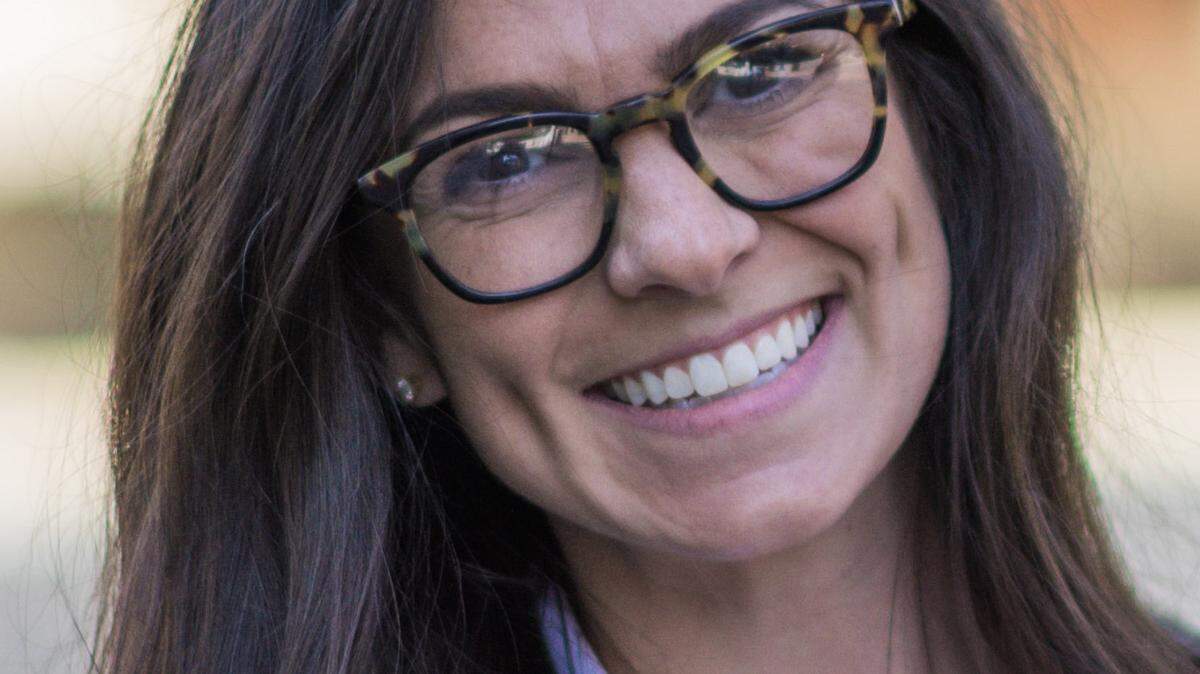
Leah Martin attended the Lexington School, Sayre School and the University of Virginia. She now lives in Central Kentucky with her husband and son.
This story was originally published November 1, 2022 at 9:16 AM.