
Coach Calipari reflects the paradox at the heart of college athletics | Opinion
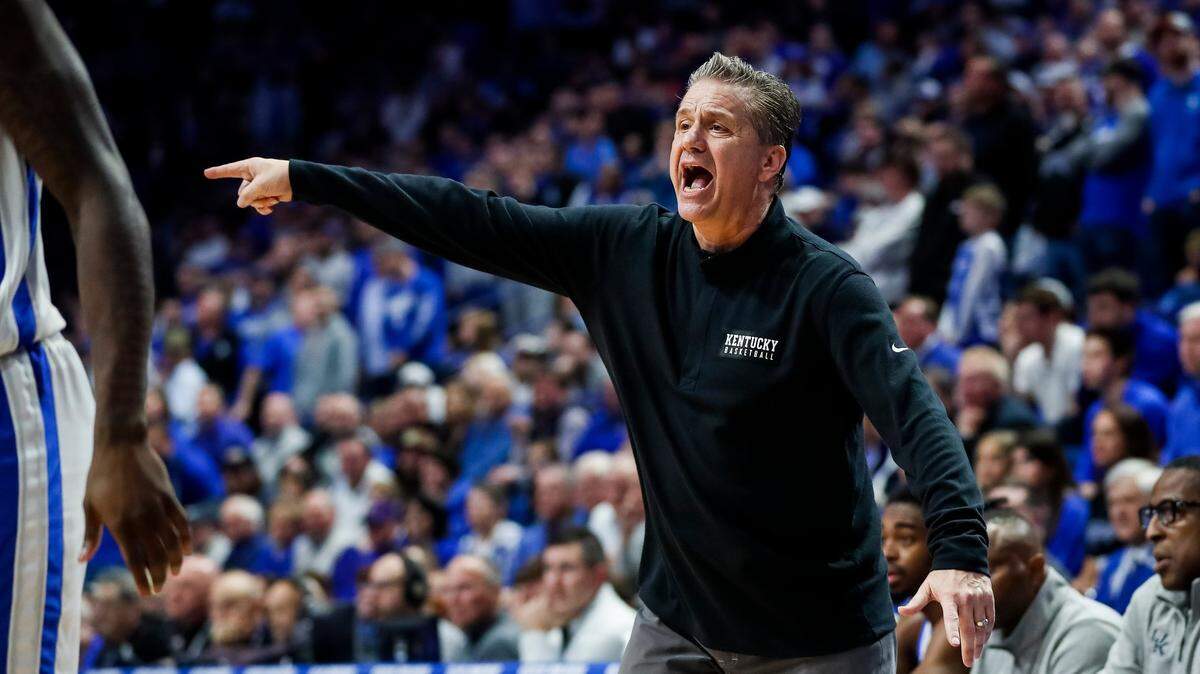
Two recent articles, published in The Athletic (“Kentucky is searching for pitchforks” by Dana O’Neil) and in the New York Times (“Shai Gilgeous-Alexander is one of the most dynamic players” by Scott Cacciola), offer an interesting lens through which to view a paradox of college athletics.
Coaches are hired to recruit the best student-athletes to satisfy the requirements of ardent fans to win championships or be sufficiently competitive to do so. Inability to fulfill that expectation is shouldered by the head coach and his staff. Explanations for failure provided by side-line, non-professional experts include inadequate coaching techniques; poor game preparation; inability to coach from the bench as the game unfolds; lack of talent; intangible team bonding and internal competitions or simply complete failure to keep up with advances in the game itself.
The failure to consistently contend for championships, regardless of reason or excuse, draws the ire of fans who stress the incompetence of the coach. Hence, according to O’Neil, “Kentuckians are seeking pitchforks” to toss out Coach Calipari to be replaced with that phantasmic magus who wins, always. The formative factors of success in college athletics are complex especially when viewed by most fans through a fog of ignorance, irrationality, hubris, and myth.
The abilities and success of a coach are quantitatively measured by games won. On the other hand, young student athletes who choose to play for a particular coach do so to enhance their ability for success. These student-athletes’ goals are qualitative, to reach their maximal abilities in hopes of success in professional sport. Similarly, university professors are employed to provide the best possible instruction and hence educate and encourage non-athletic students such that they, too, can obtain success in the profession they have chosen. Both educational experiences are qualitatively designed to maximally enhance the potential for professional success — whatever that may be.
If the effectiveness of the educational process can be predicated solely on monetary gain, it is abundantly clear that Coach Calipari has achieved extreme success for his students-athletes. He has “coached 14 All-Americans, 10 SEC Rookies of the Year, six SEC players of the Years and produced 45 NBA Draft picks, 22 who have turned out to be lottery players.”
Data, outside the high profile of professional sport, explicating ‘successes’ from non-athletic based academic performances is cloudier. It is well known and extensively documented that GPAs do not predict monetary success. Thus, what defines and is exemplary of successful non-athletic college experiences defies precise measurement. Nevertheless, when viewed from the totality of college experiences, professors and coaches are both educators whose successes are judged by the numbers of students enrolling in their class (numbers of the best athlete recruits); the word of mouth amongst students; perceived importance of a course; and assessment provided by students at the conclusion of a course. In both worlds, academic and athletic, ‘success’ is manifest in the educator’s personal gratification that an individual student has successfully achieved the projected goals of education by acquiring the tools to fulfill her or his dreams.
When one reflects on the successes of the UK Basketball program from the context of individual experiential education, acquisition of knowledge, and self-satisfaction of his students, Coach Calipari has been an outstanding professor and coach. He has greatly contributed to and shaped the lives of many youngsters who otherwise, perhaps with a lessor professor, would never achieve their full potential. Yes, we all enjoy winning; yet we should place colleges athletics in context with the education of all students. Even the brightest incoming students who have achieved the best SAT scores, GPAs and demonstrated exceptional abilities experience difficulties with transition to college, on occasion fail examinations and even may fail to achieve what was predicted on past achievements. No difference with athletic abilities. The educational goals are to provide each student with the best educational experiences possible; provide mentorship in an environment where the individual goals may be achieved. Clearly, Coach Calipari has provided that environment.
Thus, both Coach and fans are challenged with a paradoxical dilemma: to view his tenure as successful based on the numbers of championships won (quantitatively) or on the educational outcomes of his players (qualitatively). His solution is obvious; that of the fans is much more difficult – or so it seems.
William Brooks is a retired Lexington resident.