
No need for speed: Lexington needs to go slow when considering future growth. | Opinion
Every 5 years, Lexington updates its Comprehensive Plan, which is the blueprint for how and where our community grows. Fayette Alliance has always believed it is not IF we grow, it’s HOW. The Planning Commission voted unanimously to approve the Goals & Objectives, considering significant public input from On The Table, the Mayor’s Commission on Racial Justice & Equality, individual organizational meetings, and more.
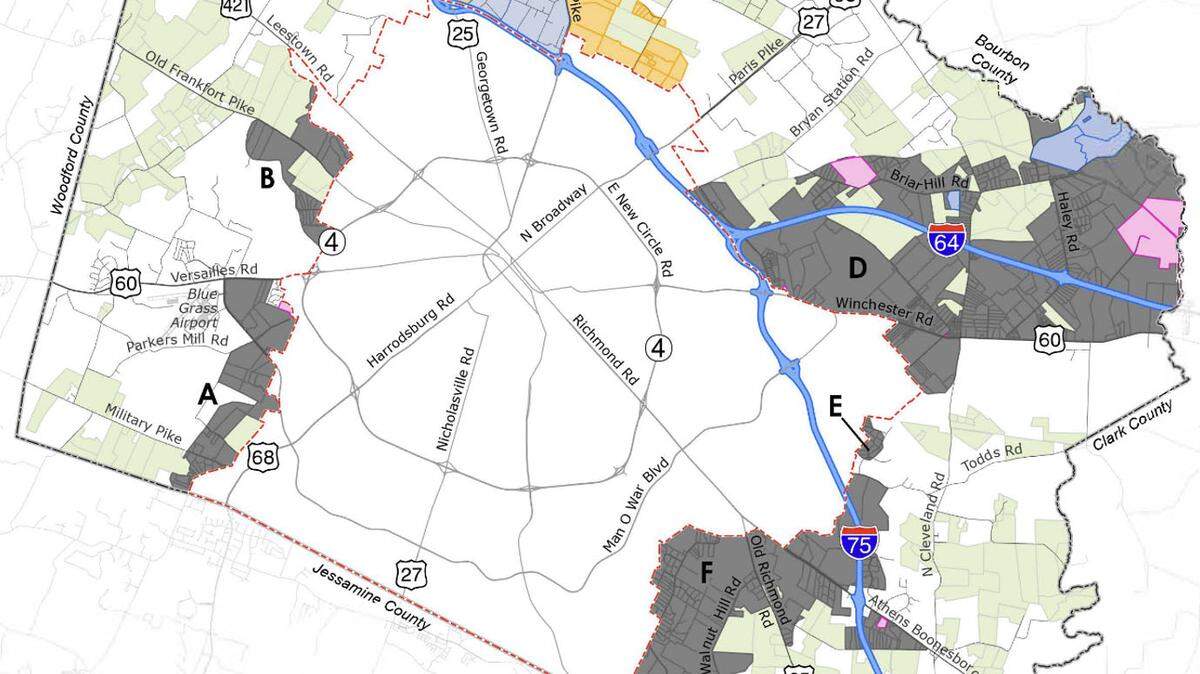
The Goals & Objectives proposal is now in the hands of the Urban County Council, which will hold a public hearing on Tuesday, May 9 at 5 p.m. in Council Chambers at the Government Center. Some community groups are requesting changes to the Goals & Objectives that would expand the Urban Service Boundary up to 5,000 acres — without data to support the proposal, or a plan for how that land must be used to meet needs like affordable housing and job creation.
Community members who care about the way Lexington grows should write to their councilmember about their commitment to a responsible growth plan and attend if possible. The current Goals & Objectives reflect the community’s overwhelming desire to focus on equitable infill and redevelopment, environmental sustainability, housing that meets the needs of all our community members, and smart infrastructure investments in existing neighborhoods and commercial centers like transportation, parks, and more.
Directing development inside the Urban Service Boundary is fiscally responsible and sustainable. It supports investment in the already established neighborhoods, industrial, commercial, and retail areas throughout Lexington-Fayette County. But, the Goals & Objectives also acknowledge the important need to create a more forward-thinking growth strategy around the USB. A new process can serve our community for decades to come, but to get broad support and provide responsible recommendations, it will require thoughtful public engagement, broad representation in decision making, and updated foundational studies to inform it.
Theme E of the draft Goals & Objectives, which focuses on our urban/rural balance, outlines a responsible roadmap for creating this new process. Research and history tell us expansion of the USB doesn’t result in affordable housing. Studies show more diverse housing types in urban areas — near existing jobs and services and transportation — are necessary to house our aging population and address housing affordability.
Environmentally sustainable growth requires compact and transit-oriented development, because low-density, sprawling development results in higher costs to taxpayers for services, spreads taxpayer dollars thinner, puts more cars on the road, which all disproportionately impact the low income and workforce communities our policies should be supporting.
The Goals & Objectives recommended by the Planning Commission and Planning Staff are based on objective data and tested planning principles that take a long-view. They provide an opportunity to build on existing research and create a community supported process for future growth. This is what our community has asked for and deserves. Entertaining an irresponsible proposal for expansion of the USB is not a solution. Working together on a new process, based on data and public engagement, is a smart, sustainable, and equitable approach to how Lexington should grow into the future.

Brittany Roethemeier is Executive Director of Fayette Alliance, a non-profit dedicated to achieving sustainable and equitable growth in Lexington-Fayette County through land-use advocacy, education, and research.