
Kentucky youth should be empowered to learn more about state politics | Opinion
“Ok, so we all agree, Andy, right?”
That was the question one of my friends asked as our casual hangout began to take a political turn. We all favored Beshear, noting he was the candidate we’d most heard of, and some of his views aligned with our beliefs. As reporting from July noted, Beshear had approval from about half Kentucky’s Republicans, making him “the country’s most popular Democratic governor with the other party’s voters.”
Apart from occasional small talk, discussing politics, most notably the current governor election, with my peers has not been substantial. I believe that our communities should do more to involve youth and students in state politics. Learning about issues affecting young people, being aware of our government officials, and participating in enriching discussions about current issues are all beneficial to the shaping of a robust democracy.
When it comes to state politics, so much affects youth, but many don’t feel empowered to contribute. In a report from the Center for Information & Research on Civic Learning and Engagement about youth (defined as ages 18–29) and political action, results found that half of youth say they’re “as well-informed as most people” and only 40% say they “feel well-qualified to participate in politics.” All of these individuals were of legal voting age and could be active changemakers, yet most didn’t feel prepared enough to be participants in politics. This poses skepticism about the extent to which our institutions are promoting political learning to facilitate civic engagement and overall awareness.
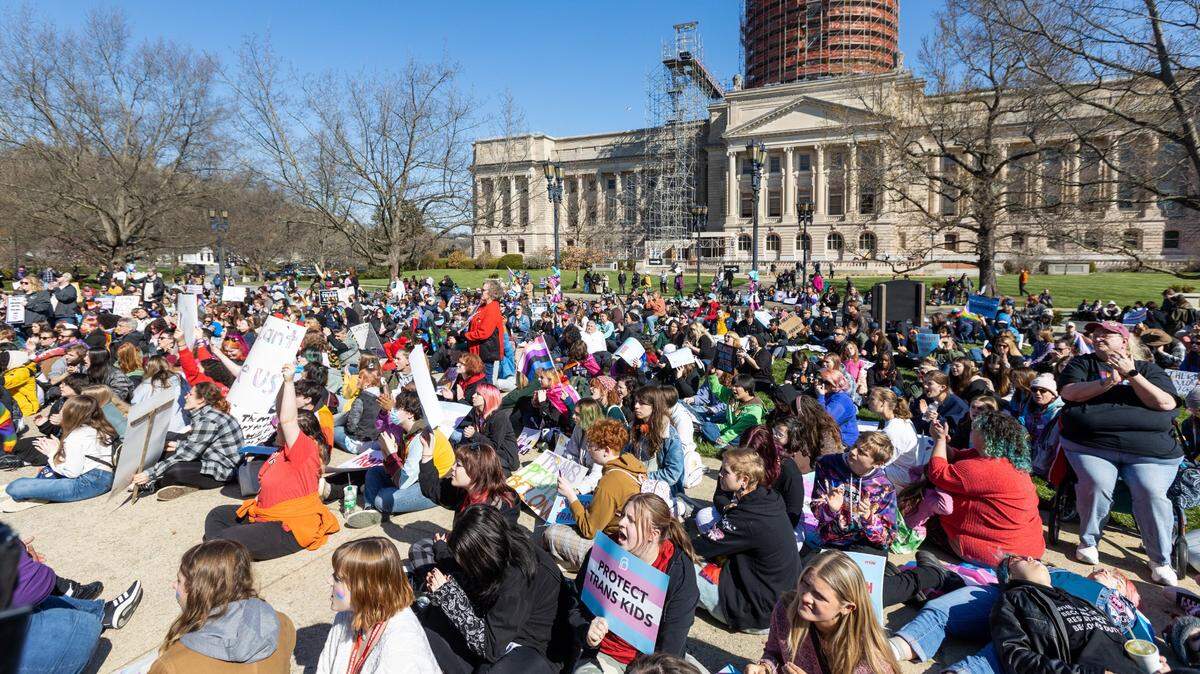
Most remarkably, current legislation in Kentucky, such as SB 150, demonstrates how politics is being used to harm marginalized youth. Among the many implications of the bill is the prohibition of instruction with the purpose of “students studying or exploring gender identity, gender expression, or sexual orientation.” Not only does this diminish opportunities for students to be educated about other identities, but with 77% of LGBTQ youth in Kentucky reporting having experienced discrimination according to The Trevor Project, the potential to encourage tolerance and support of all people alike is limited.
Moreover, when it comes to SB 150, in the 2023 General Assembly in March of this year, Gov. Beshear shared reasons why he vetoed the bill, among them that “SB 150 will endanger the children of Kentucky.” This statement may seem exaggerated, but the interpretative gaps in the bill have been major. The bill has not only put restraints on instructional materials, but book bans are also justified, according to my school district. With so many Kentucky laws aimed at youth causing political turmoil, now more than ever, we should learn about state politics and advocate for change.
A lot is at stake when it comes to the upcoming gubernatorial elections. With topics like public education being directly impacted by our government officials, we should be informed. Education is the basis of progress. Having healthy discussions about current state politics can greatly benefit youth by expanding their awareness.
Unfortunately, reporting by NPR about data from the Public Religion Research Institute and the Brookings Institution showed that 23% of respondents to the survey said they support political violence in some situations. That might seem low, but researchers noted it has grown in a short amount of time. Violence being showcased as a driving force for “some” political circumstances can create the idea that conflict is an unshakable product of politics, dissuading youth from participating in it.
Counteracting growing political polarization could include expanding civic education across the state. If students are not required to be taught about civics, their perception of politics may be distorted due to a lack of understanding. Furthermore, “studies have documented the link between media literacy and civic or political participation,” which makes scrutiny of sources and detection of bias much easier processes. This type of learning can be a motivation for young people to engage in the progress necessary to better our communities and benefit society.
As young people, many times we’re seen as too immature and inexperienced to participate in state politics. However, learning is a process, and if we are taught and given opportunities to be civically engaged from a young age, we can be better equipped to confront future issues. In addition, we’re impacted by political issues now. Being involved in Kentucky Student Voice Team’s Rose Revival campaign, a student-led public engagement initiative investigating whether Kentucky is meeting its constitutional promise to provide a quality education to its students, has allowed me to actively support public education. It has proven to me that with unity, drive, and strategy, youth can be leaders of change. We need more chances to do that in our state’s political issues.

Luisa Sanchez is a sophomore at Boyle County High School and a writer with Kentucky Student Voice Team’s Press Corps. This article does not necessarily represent the opinion of the KSVT organization.
This story was originally published November 1, 2023 at 10:39 AM.