
Thirty years after the Violence Against Women Act, we still have work to do | Opinion
Our nation recognizes Domestic Violence Awareness Month in October. The month began in 1981 with the Day of Unity, an effort of the National Coalition Against Domestic Violence.
More than a decade would pass before the Violence Against Women Act (VAWA) was established in 1994. This year marks the 30th anniversary of VAWA, the first comprehensive federal law to address domestic violence, sexual violence, and stalking.
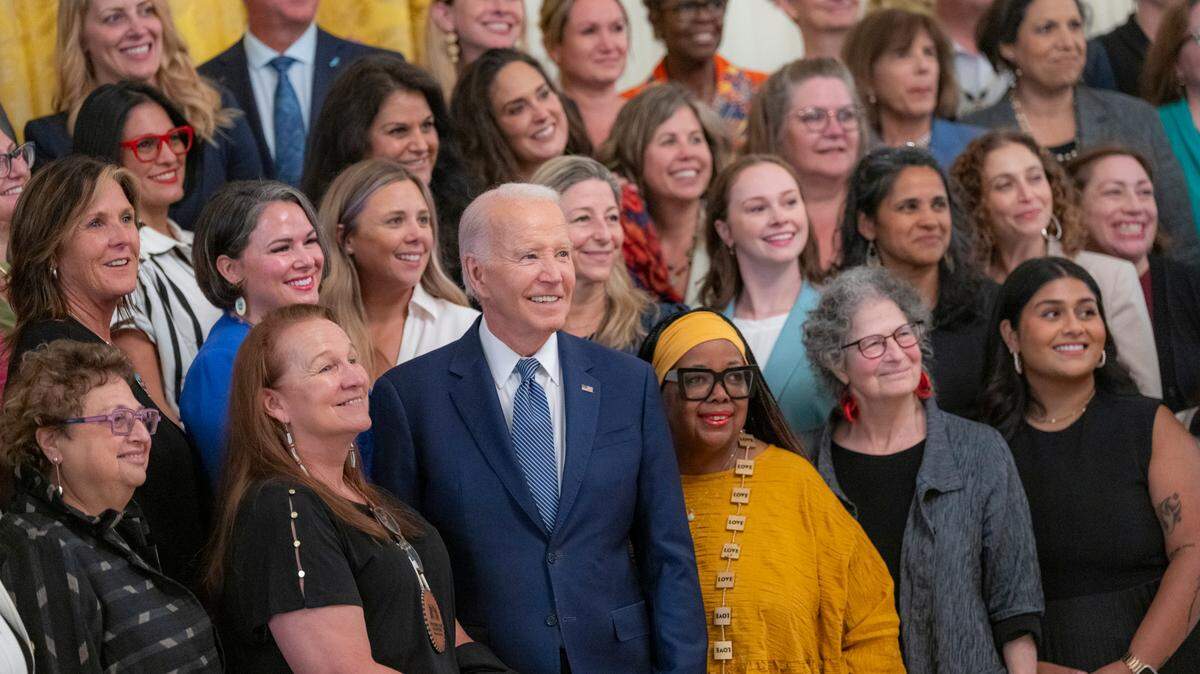
I was invited to Washington D.C. last month to share more about our economic justice efforts during a conference commemorating the legislation. The day before the panel discussion, I received an email from the White House. President Biden and Dr. Jill Biden were inviting me to participate in the VAWA anniversary ceremony and press conference.
The next afternoon, I was standing in the Diplomatic Reception Room with advocates from across the nation as we nervously awaited our cue to descend the stairs to the South Lawn. Representing our community was the honor of a lifetime. The ceremony was a powerful acknowledgment of VAWA’s beginnings, progress, and future.
Advocates new to the mission only know about our work in the context of VAWA. That is progress, but we must remember the beginnings to avoid repeating the past.
Before VAWA, police often used a “cool off” strategy to manage abusers’ behaviors. Victims had little legal recourse unless an officer witnessed the physical abuse happening. Protective orders, though available, were difficult to obtain. Victims could only file emergency protective orders during standard business hours, and criminal charges related to domestic violence were few and far between. If survivors were able to escape the abuser, little funding was available for support to rebuild their lives.
VAWA marked a turning point. Although Kentucky already required law enforcement training about domestic violence, the legislation expanded what the training should encompass. VAWA also recommended mandatory arrest laws for abusers and required community coordination with a local domestic violence program.
Courts were forced to take violations of protective orders seriously, and VAWA ensured those protections were recognized across state lines. Kentucky was chosen as the first-ever state project to improve the interstate enforcement of civil and criminal protective orders in domestic violence cases.
But change does not happen overnight. Even today, institutional resistance and social attitudes complicate the processes by which victims realize justice. VAWA reauthorizations have made improvements.
Changes in 2005 improved access to services for communities of color, immigrant women, and tribal communities. In 2013, protections were added to prohibit the loss of housing because of domestic violence. Expanded funding for services to support LGBTQ survivors and revisions to the definition of domestic violence to include economic and technological abuse were made official in 2022.
More progress is needed. Victims and survivors in Kentucky still face a maze of barriers. The recent murders at the Elizabethtown courthouse have prompted conversations about safety during the legal process and the increased risk for lethality when abusers have access to firearms.
A limited understanding of domestic violence as only physical abuse gives power to coercive control, a pattern of actions to frighten, threaten, oppress, and confuse victims. Too many protective orders in central Kentucky still exclude child support, requiring victims to assume full financial responsibility until a settlement is reached. That process can take months or longer, especially when the abuser weaponizes legal proceedings.
VAWA enacts federal policy, but activism at the state and local level makes it work.
I have been fortunate to grow in this work with the mentorship of advocates who helped shape Kentucky’s policies and services. Every story of positive change that I have witnessed during my 35-year career began with one person who was willing to speak up and call out injustice.
Your voice matters. Don’t just read this. Take action.
Does your workplace and faith space have a domestic violence policy? If not, the “It’s Time Lexington” campaign offers an online best-practice template. Make time to talk to young people in your life about healthy relationships. Love is respect, a project of the National Domestic Violence Hotline, is a good resource. I hope you will join me in wearing purple on October 17, a day dedicated to raising awareness and identifying yourself as an advocate for survivors.
Domestic violence is an issue of public safety. As a community that cares, it is our responsibility to meet the needs of victims and survivors until the violence ends.
Darlene Thomas is the Executive Director of GreenHouse17, a nonprofit organization that nurtures lives harmed by intimate partner abuse in 17 central Kentucky counties. The 24-hour Crisis Hotline: 800-544-2022GreenHouse17.org