
Amendment 2 brings ‘choice’ that would skew KY to racial, economic segregation | Opinion
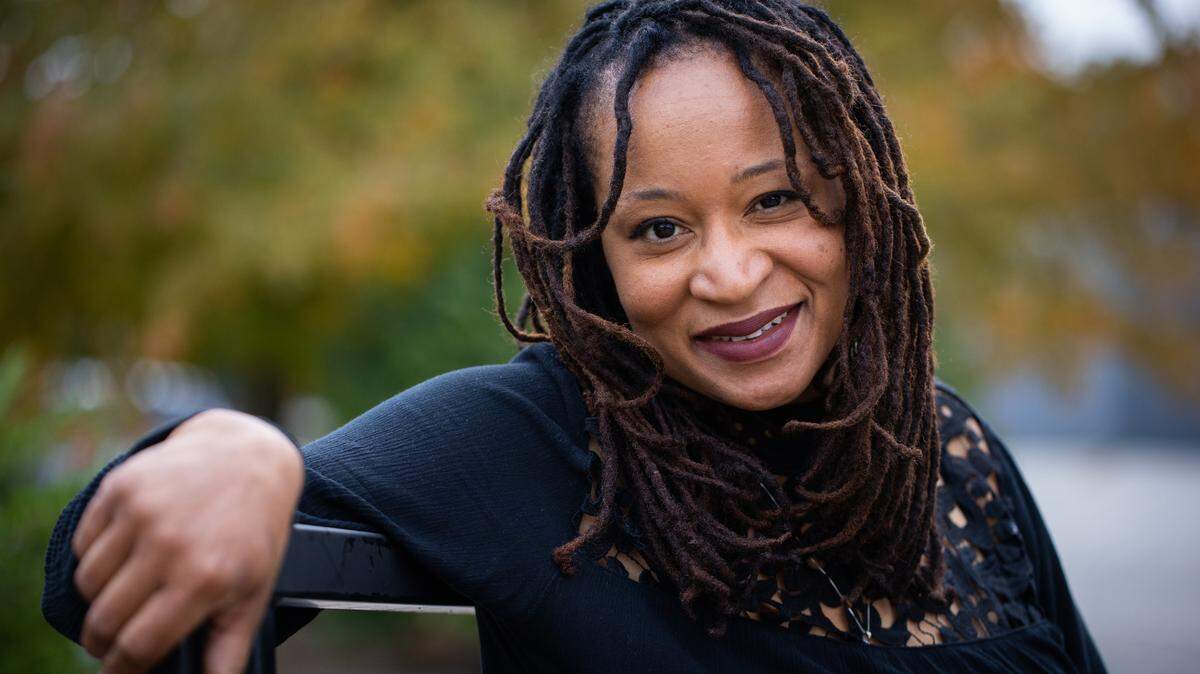
Next month, when Kentucky checks a box under Amendment Two, the Commonwealth will be voting on its future.
But it will also be voting on its past, whether to preserve a legacy that has left it the fourth most educationally integrated state in the nation.
I take this vote personally. As a four-year-old, I desegregated a private school in Bowling Green, enduring trauma that I still talk about four decades later. But I had the great fortune to graduate from Warren Central High, then the highest-population high school in the state, in 1988, exactly one year after school integration peaked in this country. (It’s declined every year since. We are now, statistically speaking, at levels this country saw during Brown vs. Board of Education.)
What it meant, back then, to go to Warren Central, is that I went to school with kids of all races and nationalities. But integration doesn’t simply mean racial diversity: I went to school with kids who drove Porsches, and kids who lived in Section 8 housing. When I graduated and went to Harvard, I found myself prepared for the world in a way most of my peers weren’t: I’d learned to relate to everyone, even when they couldn’t relate to me.
A ”yes” vote on Amendment Two promises to undo even the residue of all that. Amendment Two very sneakily presents itself as “educational choice,” but this choice, in other states, has already been shown to skew towards racial and socioeconomic segregation.
In neighboring Indiana, where the salary cap for a family to receive a voucher is $230,880, the average voucher award was $6,264, hardly enough to cover a private school tuition and its attendant expenses. In Arizona, a ProPublica report recently revealed that the poorer the zip code, the less often vouchers are used: in a zip code with a median annual household income of $46,700, only one child per one hundred used a voucher. That number rose to twenty-eight per one hundred children in a zip code with a median annual household income of $173,000. These numbers rinse clear the fact that school vouchers are simply taxpayer-funded subsidies for wealthy families. Many of Kentucky’s more rural districts don’t even have private schools. Tax dollars taken from all families in the Commonwealth, diverted to wealthy parents in Jefferson and Fayette Counties, would simply leave those rural districts entirely.
This loss is profound. It’s the loss of funding for special needs students, funding for sports programs and programs in the arts. Funding for programs that serve hungry families, and it’s lost programs for families who need childcare before and after school. “When you wage war on public schools,” said Garrison Keillor, “you’re attacking the mortar that holds the community together.” Truly, the growth of vouchers seeks to diminish the state of public education to the point of destruction.
In 1891, the people who founded this state decided that no tax monies of Kentucky citizens “shall be appropriated to any church, sectarian or denominational school.” Seeking to suspend the state constitution in order to insert Amendment Two unmoors the state from these wise intentions, which have stood a full 133 years. The very word “commonwealth” means a community formed to promote the shared interests of a common good, but diverting the tax money of Kentucky’s poorest, most rural parents to assist wealthy parents in Louisville and Lexington will issue a fatal blow to our state’s values around equality in education.
Amendment Two, in short, would widen already-growing divides in the state of Kentucky, and hinder education’s role in fostering a healthy, well-integrated populace who shares a common good. In 1792, when Kentucky was admitted to the nation, a token was issued. On that token, surrounding its fifteen stars, were the familiar words E. Pluribus Unum, Latin for “Out of many, one.”
Vote No, on Amendment Two, Kentucky. Preserve our unum along with our pluribus.
Jacinda Townsend is a seventh-generation Kentuckian, a novelist, and a professor at Brown University.