Richard Beliles demanded the best behavior of KY politicians. They didn’t thank him for it. | Opinion
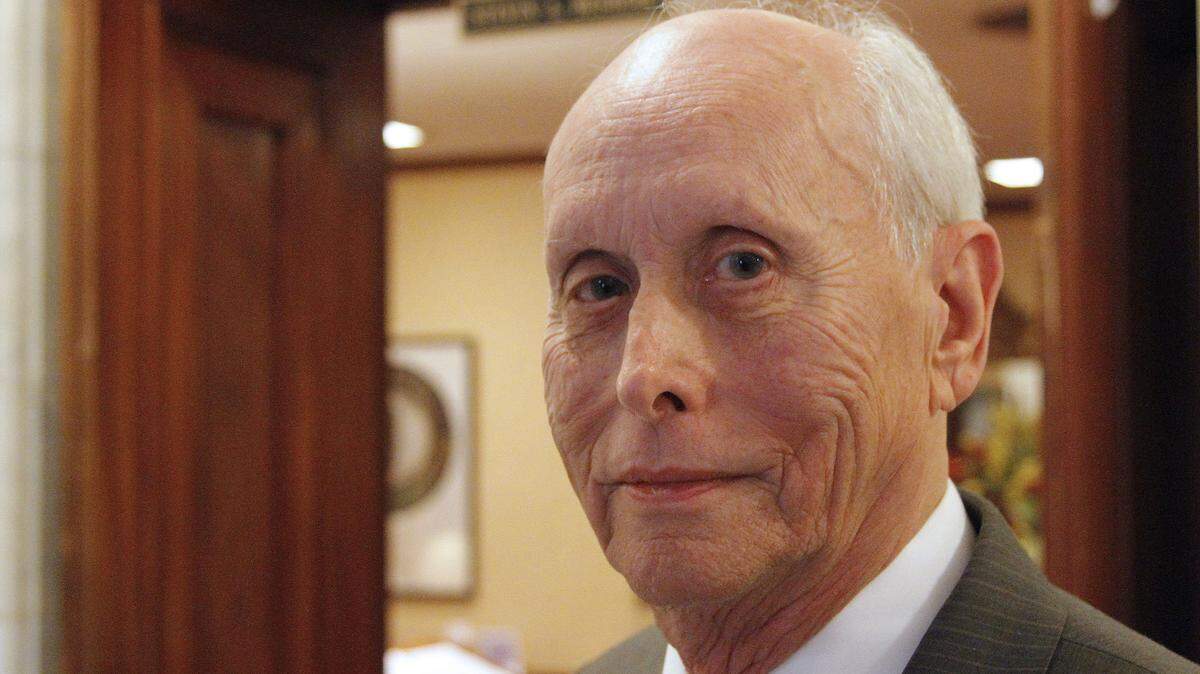
Richard Beliles finally left us, long after some Kentucky politicians wished he’d go away already.
Richard, who was 90, died Oct. 23 at a Louisville hospital. He was a kind and gentle man, a citizen-activist protesting injustice and crusading for honest government. Newspaper stories about shady backroom deals often quoted Richard somewhere around the fourth paragraph in the role of disapproving ethics watchdog.
This did not make him popular in Frankfort, a cynical town where governors and legislators sometimes appear to operate our state government like a barbecue takeout window for themselves and their cronies.
In 2012, for example, Richard sat in Democratic Gov. Steve Beshear’s office foyer once a week with a sign to draw attention to the environmentally destructive practice of mountaintop removal coal mining.
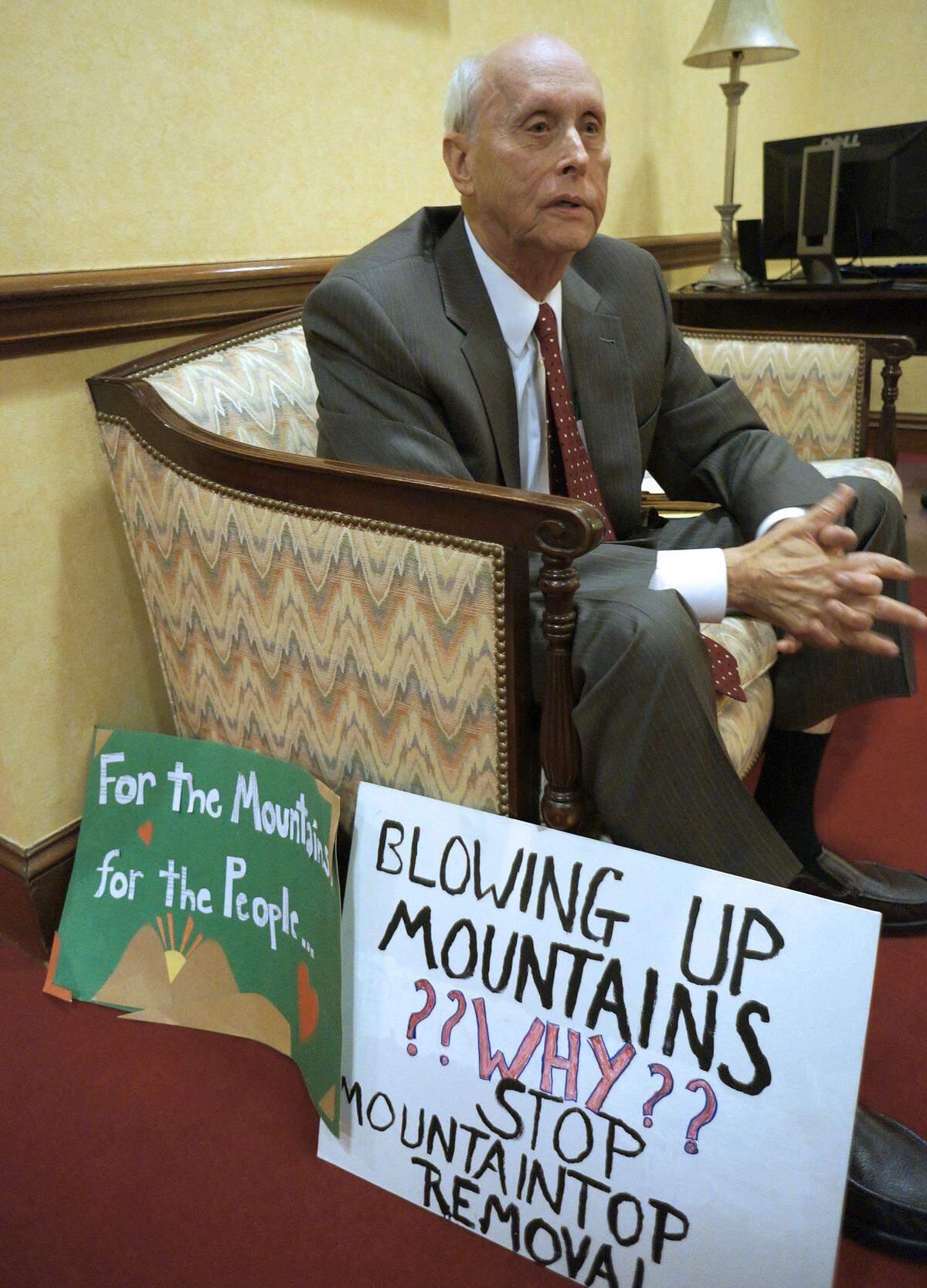
Beshear, the current governor’s father, tolerated Richard’s passive presence on the couch. But one morning, Republican Senate President David Williams walked past the governor’s office, saw Richard sitting there and suggested that he kill himself.
“He said, ‘Are you occupying the office?’ I said yes. He said, ‘Well, why don’t you set yourself on fire? Why don’t you immolate yourself?’ And then he left,” recalled Richard, who at the time was recovering from cancer treatment, in an interview a few days later. “It was a strange thing for David to say. It sort of shook me up.”
Through a spokeswoman at the time, Williams told the Herald-Leader he was only joking by suggesting the protest would be more effective with Richard ablaze.
Richard Vincent Beliles was a lawyer by profession, although many cases he handled were pro bono — “for the public good,” and unpaid.
The same was true for much of his life’s work.
In the 1950s and 1960s, Richard marched alongside other civil-rights activists in downtown Louisville to demand that public accommodations be open to everyone, regardless of skin color. In the 1970s, he oversaw federal poverty assistance programs as an aide to Louisville Mayor Frank Burke, a Democrat.
In the 1980s, Richard joined Common Cause, a reform-minded “good government” group that emerged in Washington around the time the Watergate scandal toppled Republican President Richard Nixon.
Before long, Richard was the group’s lobbyist and Kentucky state chairman in Frankfort. It was an unpaid post, though Common Cause claimed hundreds of members in Kentucky. He regularly drove to the Capitol to call for government ethics laws and fiscal transparency, so taxpayers could see how their money was spent.
He was largely ignored until FBI agents raided the Capitol in the closing hours of the 1992 legislative session. An undercover investigation, Operation BOPTROT, exposed 15 current or former lawmakers who sold their votes to lobbyists. Don Blandford, the gregarious, back-slapping House speaker, was among those sent to prison.
For a brief moment, Kentucky’s politicians were ashamed of their own conduct. Richard and others saw an opening to press reform proposals.
A new Legislative Ethics Commission would set limits on and monitor lawmakers’ behavior to prevent conflicts of interest. Also, following a particularly expensive couple of governor’s races involving wealthy donors, the General Assembly approved partial public financing of gubernatorial campaigns for candidates who agreed to limit spending to $600,000.
But as public memory of BOPTROP quickly faded, the politicians backslid.
The legislature gutted its own new ethics laws, eroding the ethics commission’s independence. Most of the ethics commissioners resigned in protest, as did the panel’s executive director.
Partial public financing in governor’s races was denounced as “welfare for politicians” and repealed.
“Do we feel duped!” Richard wrote in an unhappy 1996 newspaper opinion piece about the reversals.
That was unusually strong language for him. Later, he was more reflective.
“Most of what I push for doesn’t get passed, or if it does, it doesn’t stay passed,” he told the Herald-Leader. “But I think things do get better. Most people want an honest, responsive government.”
In more recent years, the only people tracking the behavior of Kentucky politicians seemed to be the dwindling ranks of statehouse reporters. They typically called Richard for comment on the latest lucrative project they found tucked into the state budget for someone special, or a tax break crafted for one particular insider or a six-figure case of nepotism.
Richard listened to the details of such boondoggles. Then he explained to reporters why — although he was certain the politician in question was, at heart, an honorable person — this appeared to be a wrongful act. This was not in the best interests of the people of Kentucky.
If necessary, Richard would file an ethics complaint with the appropriate agency.
“I’m hoping that I’m wrong, that he hasn’t done a darn thing wrong,” Beliles said after filing an ethics complaint against Democratic House Speaker Jody Richards in 1997 over a five-day trip that Richards took to a Costa Rican resort. It was paid for by a nonprofit funded by cigarette maker Phillip Morris, which lobbied the legislature.
The complaint was dismissed. Offense was taken, nonetheless.
“From our point of view, to be accused of something is almost like being convicted, at least in the eyes of the public,” the House speaker complained to the Herald-Leader at the time. “I couldn’t — I just honestly don’t know what I want to say about Richard.”
Richard spoke slowly and deliberately. He did not use insulting language or hyperbole. (He would not have lasted five minutes on Twitter.) Yet, after reporters ended their interviews with him, Richard would call back to check and be sure he hadn’t said anything overly inflammatory. He never had.
He was invaluable as a watchdog because he was bipartisan. You can always find a Democrat happy to criticize a Republican caught with his hand in the cookie jar, and vice-versa, but it’s rare that someone publicly demands the best behavior from everyone in politics.
Despite coming from a Democratic background himself — he even ran for Congress in 1988, getting clobbered by Republican Jim Bunning — Richard did not play favorites with the Democrats who ran Kentucky nearly in lockstep until recently, when the Republicans began running Kentucky nearly in lockstep.
More than once, Kentucky reporters who cited Richard in a state government news story were summoned to the desks of their editors. Why, the editors grumbled, do we keep quoting this “Richard Beliles, state chairman of Common Cause”? This is repetitive, they said. Can’t we use someone else as a credible ethics watchdog?
“No,” the reporters would reply. “There is no one else.”
Goodbye, Richard.
This story was originally published October 29, 2024 at 7:00 AM.