
Taxes are not your personal piggy bank. They’re for the public good, especially in education. | Opinion
.png "A graphic from the Lexington-Fayette Urban County Government showing where property tax dollar proceeds go.")
What are taxes for?
We live in a community, whether we like it or not. Most of us like it, most of the time. We enjoy clean and (relatively) well-maintained roads and sidewalks, public playgrounds, and the assistance provided by first responders. Some of us enjoy playing golf on public courses or enrolling our kids in dance classes offered by the parks departments. Some of us benefit from the regulation of securities markets or the government-backing of our mortgage companies.
But because we all benefit from life in a society, whether or not we take full advantage of some or all (or none) of these services, we all pay for them. Some of these benefits still require an additional payment from people seeking to use them (public golf courses and parks department dance classes have a fee, but it is much lower than their private counterparts), and not everyone sees the immediate benefits of a particular government service. You may never have needed to call the fire department to your home, nor taken a child to a local playground. But these community benefits and services represent a series of collective choices about what our community values.
As individual members of our communities, we do not directly choose which projects to fund, and which not to fund. We rely on elected officials to make choices about where to spend our community’s money, and we the voters exercise our oversight of those officials by re-upping their terms, or replacing them, when we think they haven’t made good choices. But none of these elements of civil society is possible without funding, and that funding comes from each of us in the form of our taxes.
U.S. Supreme Court Justice Oliver Wendell Holmes famously said “taxes are the price we pay for civilized society.” Without tax revenue, our community has no resources with which to fund its democratically identified priorities.
Public schools are at the very heart of the kind of community priority that should be funded by tax revenue. The epitome of a “public good,” whose benefits redound well beyond the immediate beneficiaries, public schools buoy a community in a myriad of ways. Even those residents of the community without children are likely to benefit from an increase in their home value, if the community’s schools are good. And a well-educated population makes life in a community better for everyone.
The Lexington Chamber of Commerce regularly flies a banner outside its headquarters advertising Lexington’s ranking as one of the most educated cities in the country. Recognizing that an educated community is one that thrives is a non-partisan observation that rightly generates support from both sides of the political aisle.
When we think of our taxes as our personal piggy banks, we risk underfunding or entirely defunding public services that make our whole community better. Amendment 2, would give taxpayers the ability to take tax dollars out of the public pool of funding to be spent instead on private schools, including religious schools. This is not how taxes work. By all means, we must hold our elected officials accountable for spending our tax dollars in a responsible and effective way. But to create a system that siphons our tax dollars away from our publicly provided services to pay for private services instead threatens to undo the entire system.
If I choose to join a private golf club instead of playing at Lakeside, I cannot take a tax credit for the amount of my dues, even though I am choosing to pay privately for what I could access publicly. For the same reason, we should not allow those opting out of the public school system to take their tax dollars with them. After all, as Holmes so astutely observed nearly a century ago, without taxes, we risk the very loss of civilization itself.
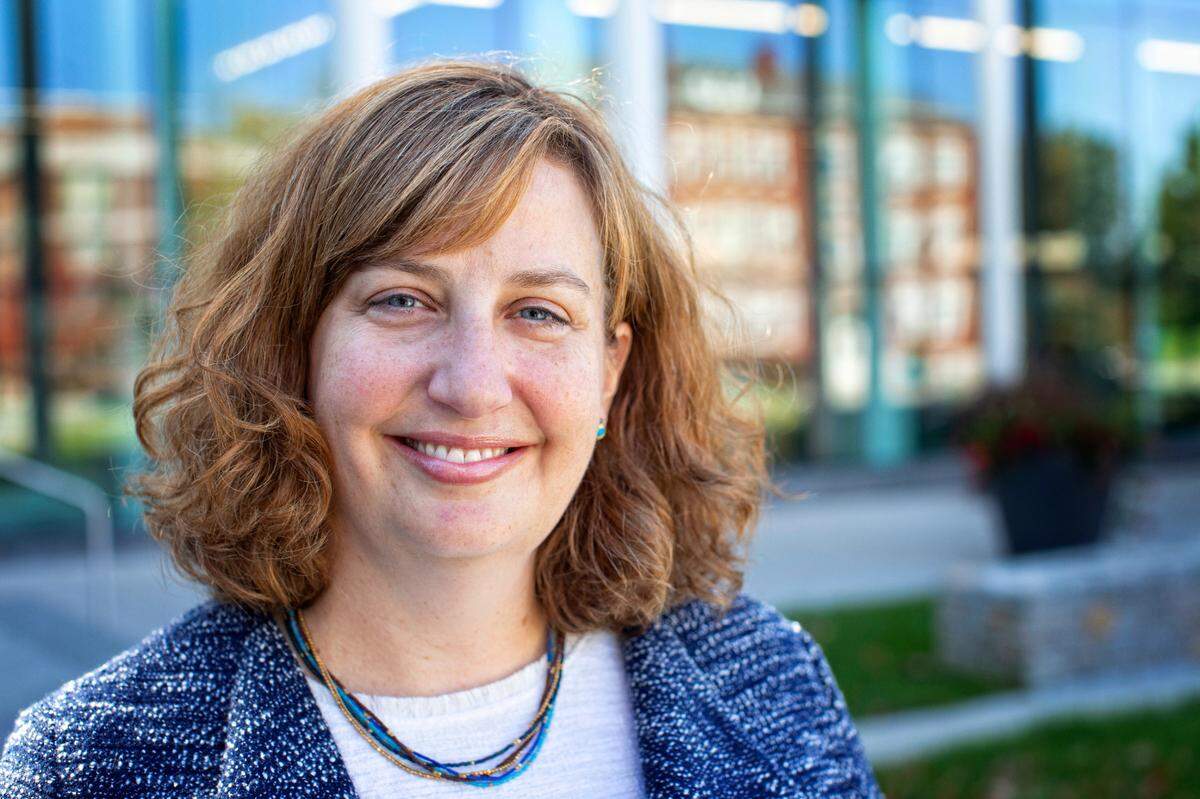
Jennifer Bird-Pollan is a Professor of Law and Alan S. Schenk Chair in Taxation at Wayne State University.