
Trump probably knows nothing about the Know Nothings, but it’s a good historical lesson | Opinion
Donald Trump, the last Republican president, evidently figures immigrant-bashing will help make him the next one.
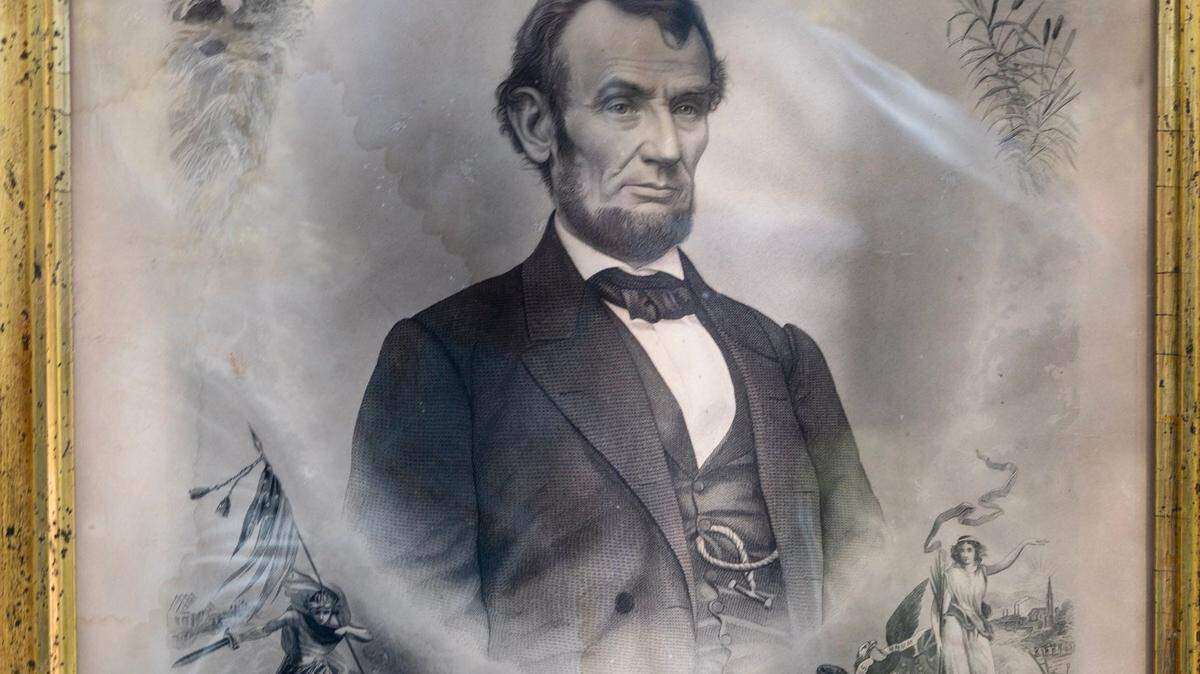
But five years before he became the first Republican president, Abraham Lincoln denounced nativism and xenophobia in no uncertain terms.
“I am not a Know-Nothing,” the future Great Emancipator declared in an 1855 letter to his friend, Joshua Speed of Louisville. “That is certain. How could I be? How can any one who abhors the oppression of Negroes, be in favor of degrading classes of white people?”
Officially the American Party, the Know-Nothings were white Protestants who claimed immigrants were enemies “to the very principles we embody in our laws,” endanger “all we hold most dear” and were “the chief source of crime in this country.”
Party members were better known as “Know-Nothings” because they were supposed to reply — like Sgt. Schultz on “Hogan’s Heroes” — “I know nothing” to any suspicious enquiry about the party.
The Know-Nothings especially vilified German and Irish Catholics, thousands of whom came to the country in the 1840s. Party members promised “Eternal hostility to Foreign and Roman Catholic influence!”
Trump demonizes immigrants of color. He outrageously lies non-stop, claiming they have “bad genes,” are “poisoning the blood of our country” and are guilty of crimes ranging from rape and murder to stealing and eating pet dogs and cats.
Trump falsely accuses President Joe Biden of allowing into the country “millions of people from jails, from prisons, from insane asylums, from mental institutions” plus “drug dealers.” Without a shred of proof, Trump says crime is down 72 percent in Venezuela “because they’re releasing all their criminals into our country because of his horrible president that we have.”
Know Nothings charged that the British were emptying the poorhouses in Ireland and shipping the destitute residents stateside.
Know Nothings also demanded that Irish paupers be hunted down, arrested and sent back to Erin. Trump promises to expel undocumented immigrants via “the largest deportation in the history of our country.”
While Trump’s anti-immigrant harangues would warm Know-Nothing hearts, he “probably has little knowledge of, or interest in, their bewildering beliefs,” suggested John Hennen, a retired Morehead State University historian.
Murray State University historian Brian Clardy also suspects Trump is clueless about his 19th-century nativist-xenophobic soulmates. Yet Trump, like the Know-Nothings, “represents a terrible undercurrent in American politics that never really goes away.”
Hennen said Trump, unwittingly or not, is echoing Know-Nothing dogma. “The Know Nothings ran candidates who insisted that immigrants were to blame for rampant crime in American cities, for undermining the wages of working WASPs, for the systemic economic changes that caused periodic depressions, for the disruption of traditional families and communities, the widening gulf between rich and poor, price inflation, and working-class unrest. According to historian Erika Lee, focusing the blame on immigrants for families’ economic hardship gave political demagogues handy scapegoats and, for many of those struggling, ‘had great appeal and perhaps felt like an emotional truth.’”
Anyway, on Nov. 5, Trump is expected to pocket Kentucky in an electoral blowout to rival the Know-Nothing romp of 1855. The American Party captured city governments in Louisville, Lexington and Covington in spring municipal elections. On Aug. 6, the state elected a Know-Nothing governor, Charles S. Morehead; Know-Nothings won majorities in both houses of the General Assembly, and the party’s candidates took six of the state’s 10 U.S. House seats, according to “The Kentucky Encyclopedia.” (Beyond Kentucky, several more Know-Nothings were elected to city, state and federal office in the mid-1850s.)
Even so, the Kentucky party began to collapse after election day when Know-Nothing mobs rampaged through immigrant neighborhoods in Louisville, murdering, beating, burning and looting. At least 19 men were killed, most of them immigrants from the German states and Ireland, the encyclopedia says. Widely condemned, the violence went down in history as “Bloody Monday.”
The national party soldiered on a while longer, running former president Millard Fillmore for president in 1856. The little noted, nor long remembered, Fillmore finished a distant third behind the winner, Democrat James Buchanan and runner up John C. Fremont, Republican.
Lincoln, who would succeed Buchanan, lamented to Speed, “Our progress in degeneracy appears to me to be pretty rapid. As a nation, we begin by declaring that ‘all men are created equal.’ We now practically read it ‘all men are created equal, except Negroes.’ When the Know-Nothings get control, it will read ‘all men are created equal, except Negroes, and foreigners, and Catholics.’
Speed’s friend concluded, “When it comes to this I should prefer emigrating to some country where they make no pretense of loving liberty--to Russia, for instance, where despotism can be taken pure and without the base alloy of hypocracy [sic].”
Berry Craig of Arlington is a professor emeritus of history at West Kentucky Community and Technical College in Paducah and a retiree member of the American Federation of Teachers, AFL-CIO, and the Kentucky Education Association.