
The ‘Day of Infamy’ still yields fascinating stories about Kentuckians | Opinion

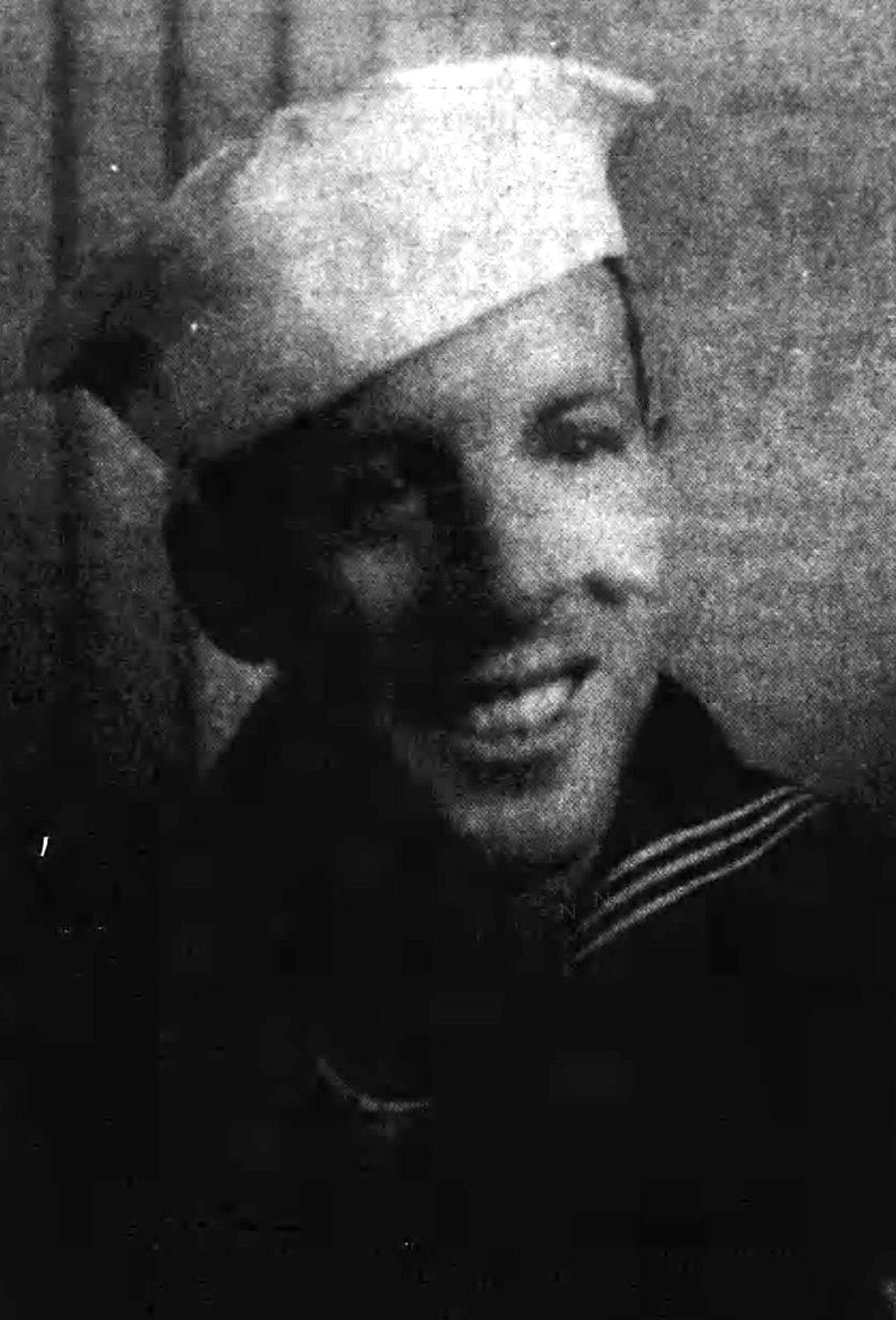
“How many people do you know who can say they’ve read their own obituary?” Jim Hamlin asked me, grinned and showed me his death notice from the “Harlan Daily Enterprise.”
The Navy said Hamlin died 83 years ago Dec. 7 when Japanese torpedo bombers sank his ship, the USS California, at Pearl Harbor. Close to 100 crewmen died; the Navy mistakenly counted Hamlin among them.
His father, Green Hamlin, received a telegram dated Dec. 16 that carried the dreaded news. “James Thomas Hamlin, fireman first class, U.S. Navy, was lost in action in the performance of his duty and in the service of his country.”
Harlan citizens gathered for a memorial service at Harlan Baptist Church. His obituary ran in the paper where he had been the sports editor before he volunteered for the Navy.
On New Year’s Eve, Green Hamlin’s grief turned to joy when he got a postcard from Jim, dated Dec. 8. “I am well. A letter will follow.’” The same day, a second telegram arrived advising that Jim, 28, was “now reported to be a survivor.” The Navy deeply regretted “the anxiety caused you by the previous message.”
The California, a massive battleship, was one of 21 vessels sunk or damaged by bombs and torpedoes in the surprise attack that plunged the U.S. into World War II. President Franklin D. Roosevelt famously said Dec. 7, 1941 “would live in infamy.” Hamlin’s ship was nicknamed “the Prune Barge,” because the state of California kept the crew amply supplied with the dried fruit.
A Sunday, Dec. 7 was supposed to be another day off for Hamlin, “liberty” in Navy lingo. He and some shipmates planned to return to Waikiki Beach, where they had enjoyed Saturday swimming and sunbathing.
Hamlin took time out to buy a $9.95 radio for Almyra Craig (no relation), his steady girl back in Lone Oak, a Paducah suburb. The clerk at the Montgomery-Ward store promised the Christmas present would be promptly mailed stateside.
After breakfast, Hamlin headed topside to read the “Honolulu Advertiser.” But the breeze made it hard for Hamlin to turn the pages of his paper, so he went below.
At 7:55 a.m., the ship’s air raid alarm sounded. “I thought it was a heck of a time to have an air raid drill,” he said. “But it didn’t take me long to realize it wasn’t a drill.”
The “California” was one of seven capital ships moored on “Battleship Row” next to Ford Island. The enemy sank five, including the “Arizona,” whose underwater remains are straddled by a gleaming white memorial to the 1,177 crewmen who were killed.
When Hamlin heard an abandon ship order, he leapt into the water, which was covered with leaking fuel oil that was on fire in places. He swam for a nearby lifeboat, but when a Japanese plane strafed it, he swam for Ford Island and found refuge in an airplane hangar that was jammed with sailors, soldiers, Marines and airmen.
“It seemed to dawn on everybody at the same time that this was a fine target and we all scattered,” he said. He spent the rest of the attack hunkered in a ditch.
The torpedoed “California” ultimately sank upright, its main deck and superstructure above water. Meanwhile, Hamlin and other sailors worked until almost midnight on Dec. 7 salvaging equipment and gear off the stricken ship.
Hamlin bedded down in the balcony of a Ford Island movie theater. Not until morning did he notice that his white uniform had been ruined in his swim to safety.
He rummaged through a big pile of clothes collected from all over and made himself a new uniform. It was not exactly regulation: Navy chambray work shirt and khaki trousers, a brown Marine shoe and a black Navy shoe.
After the “California” sank, he joined the crew of the U.S.S. “Chicago,” a heavy cruiser that steamed into Pearl Harbor after the attack, then left to hunt the Japanese fleet. Because he was absent, Navy authorities at Pearl Harbor thought he had gone down with the “California.”
He was on the “Chicago” when Japanese planes sank it in 1943. He spent the rest of the war on a transport ship, which landed Marines at Tarawa in 1943 and Saipan in 1944. The “California,” refloated and repaired like the “West Virginia” and “Nevada,” helped bombard Japanese strongpoints on Saipan.
The Saipan invasion was the first time he had seen his old ship since the Pearl Harbor attack. “Go get ‘em, Prune Barge!” Hamlin yelled through tears.
Hamlin left the Navy in 1946 and ended up in Lone Oak, where he and Almyra reared three sons. Almyra died in 1997 at age 81. Jim was 86 when he died two years later. They rest for eternity next to each other in Paducah’s Mount Kenton Cemetery, where Vice President Alben Barkley is buried.
Hamlin said he didn’t hold a grudge against the Japanese though they sank two ships from under him. “They were just following orders like we were,” he said. “I don’t hate them, and I hope they don’t hate me either.”
Berry Craig of Arlington, Ky. is a professor emeritus of history at West Kentucky Community and Technical College in Paducah and the author of “Kentuckians and Pearl Harbor: Stories from the Day of Infamy.”