
As world politics transform, a Lexington writer thinks about what we can learn from WWII | Opinion
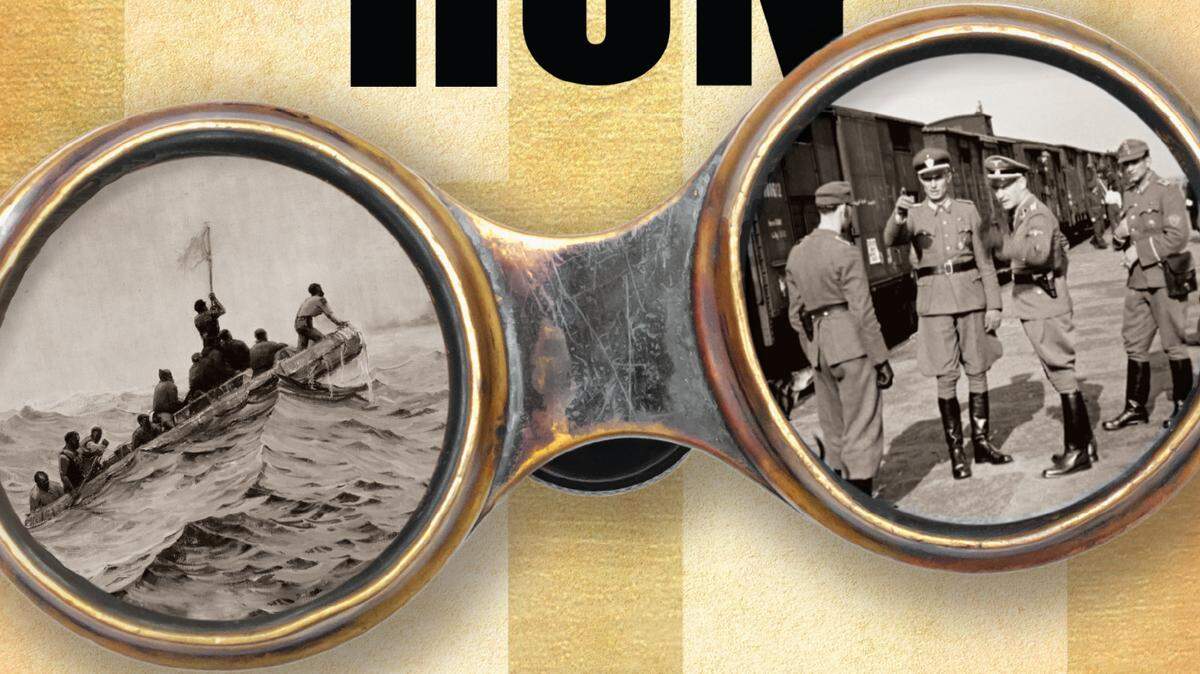
I’ve written three novels about World War II and, as a result, have spent a distressing amount of time in the company of fascists and their sleep-walking enablers.
Now, as we approach the 80th anniversary of the end of the war in Europe on May 8, I am sickened by how many people seem to have forgotten the horrors of those times.
But during my research, I have taken solace in discovering often little-known brave souls whose acts of resistance contributed as much as the Allied armies to freeing the world from the dystopian Nazi nightmare.
I want to share a few of their inspiring stories because we must never forget their courage. As a quote often attributed–probably incorrectly–to Edmund Burke says, “The only thing necessary for the triumph of evil is that good men do nothing.”
This is especially relevant as the United States and the world are once again grappling with questions about immigrants, intolerance, and the rise of authoritarian regimes.
I’ll focus on the Netherlands because it was such a paradox. It was a safe haven for Jews fleeing the Inquisition and Hitler and the only occupied country whose workers staged a nationwide strike to protest the treatment of Jews.
Yet, the Netherlands was also the deadliest country outside of Germany for Jews. The fascist government eagerly participated in the Nazi atrocities and even used bounty hunters to capture Jews. By some estimates, the Nazis and Dutch fascists murdered 75 percent of the 140,000 Jews living there before the war.
Amid all that carnage, several heroes arose. One of the most remarkable was largely unknown until her memoirs were published posthumously in 2015.
Jacoba van Tongeren, codenamed “Miss 2000,” was the only woman founder and leader of a resistance group in the war. The trained nurse and social worker created the secret Group 2000 in 1941 to aid people in hiding, including Jews, resistance fighters, and young men subject to forced labor in Germany.
The 150 members of her group, known to each other only by numbers, provided thousands of people with false identity papers, hiding places, and coupons for rationed food.
Van Tongeren personally risked torture and death to smuggle as many as 5,000 coupons at a time across the country in a specially designed vest. Thus, her nickname: Bonnenkoningin (Coupon Queen).
Another Dutch hero was Tineke Buchter, an Amsterdam medical student who, along with her mother and grandmother, hid more than 100 Jews in their home during the occupation. Although the house was raided eight times, and Buchter was arrested nine times and often brutally beaten, she never revealed the secret hiding place behind a fake wall in the attic.
These resistance activities required money for food, clothes, transportation, and false papers. The master at raising funds was Walraven (Wally) van Hall, known as the “Resistance Banker.”
The former merchant marine and Wall Street banker raised more than 50 million guilders by stealing bonds from safety deposit boxes and replacing them with forgeries that the Dutch government-in-exile agreed to redeem after the war. (To put that amount in perspective, someone on welfare received 60 guilders a month.)
Unlike Van Tongeren and Buchter, he did not survive the war.
Not all resisters were part of an organization. Some acted alone, like the teenage ballerina who called herself Edda van Heemstra because her real name sounded too British. She performed illegally at zwarte avonden — ”black evenings” in private homes with blacked-out windows–to raise money for those sheltering Jews. After the war, she reclaimed her real name: Audrey Hepburn.
I take heart from the many courageous people who could have stayed on the sidelines but chose to risk their lives for others instead.
That attitude was best summed up, I think, by Polish Holocaust survivor Marian Turski.
The recently deceased Turski, who co-founded Warsaw’s Jewish history museum, often said the Eleventh Commandment of the Bible should be: “Thou shalt not be indifferent.”
We should all take those words to heart.
.png "JohnWinnMiller photo copy (1).png")
Lexington native John Winn Miller is a former award-winning investigative reporter, foreign correspondent, newspaper editor and publisher, screenwriter, and novelist.
Miller will hold a book signing and conversation about his new novel RESCUE RUN with former Herald-Leader columnist Tom Eblen on March 6 at Joseph-Beth Booksellers at 7 p.m.
This story was originally published February 25, 2025 at 10:32 AM.