
Let’s say yes to creative renewable energy solutions in Fayette County | Opinion
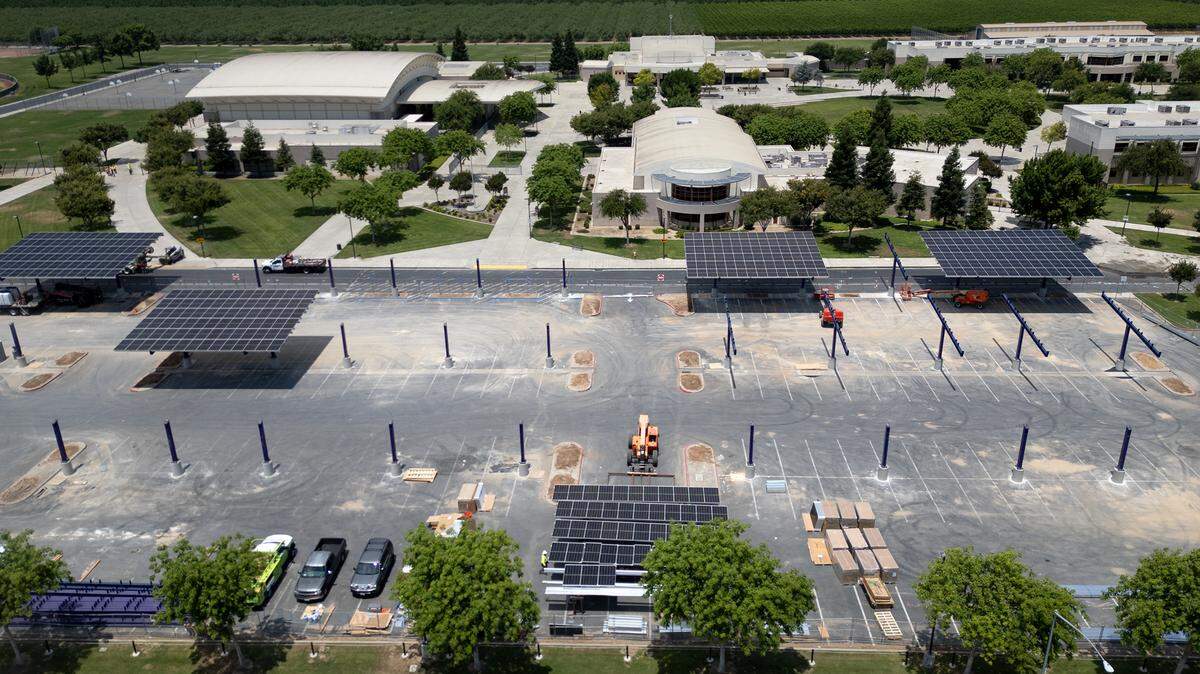
Fayette County has a unique opportunity to lead the way in our region and in our nation when it comes to smart solar, because we are unique. Lexington-Fayette County is home to 682 farms and is the 2nd leading county in annual agricultural sales, which together create a multi-billion dollar economic impact — all of this while being home to the state’s second-largest urban city.
If Lexington can successfully implement a smart solar model that reduces its carbon footprint while simultaneously preserving productive farmland, other smaller Kentucky municipalities can follow suit.
The LFUCG study of feasibility for solar on the Haley Pike capped landfill is an exciting and innovative example of turning land which has already been stripped of its environmental value into a site that could create renewable energy to benefit Lexingtonians.
Capped landfills are not farmable, nor are they appropriate for residential use. Much like other smart solar proposals utilizing brownfields to generate solar energy, this proposal does nothing to harm our soil, our farms, or our agricultural economy, while more efficiently using existing land.
As Lexington moves forward with its goal of being net-zero by 2050, as set out in the 2045 Comprehensive Plan, pursuing opportunities like the Haley Pike landfill, studying how existing Lexington businesses are creating their own renewable energy, and learning from other communities’ programs across the country are key to a bright future.
New Jersey, which has a state-mandated 100% clean energy goal by 2050, has championed a community solar program that, at its core, is focused on equity and environmental justice. They prioritize using existing warehouses, parking lots, industrial areas, and brownfields to accommodate large scale solar arrays with energy and cost savings that directly benefit low income community members.
Further, they’ve adopted policies which require any newly constructed warehouses over 100,000 sq ft to be “solar ready”, ensuring that rooftops can be used to support renewable energy infrastructure.
Hallway Feeds already did something similar right here in Lexington, installing solar arrays on 20,000 sq ft of rooftop and a 1.5-acre floodplain lot next to its downtown property. This energy production model was economically efficient enough for a locally owned business whose bottom line is an important priority, meaning it’s a model that can be replicated.
If we are serious about supporting renewable energy, that also means our business and government partners should begin thinking about solar installations on top of parking garages, over parking lots, in industrial parks, and more. These are smart ways to advance our solar grid output in a big way — helping to achieve our climate goals while also keeping farmland available for agricultural enterprises that support our economy and our landscape.
We applaud Mayor Gorton’s efforts to study an innovative alternative with the Haley Pike Landfill. If we are willing to creatively look for solutions, we can have both renewable energy and our iconic farmland. Let’s work together to do so.

Brittany Roethemeier is executive director of the Fayette Alliance, a land-use advocacy organization.