
Trump just makes up tariff policy as he goes along, and it hurts Kentucky | Opinion
President Trump and his disciple, Rep. Andy Barr, KY-6, thought they knew all about international trade, but it seems that they’re learning as they go along.
Trump keeps imposing tariffs, then authorizing exceptions to some of them, including smart phones, personal computers and other electronics, when he finds out whom they will hurt.
His worldwide tariff onslaught has so far been uniformly awful for Kentucky and the United States — higher consumer prices; the U.S. economy and the stock market hurtling downward, foreign governments retaliating with tariffs against U.S. goods.
Kentucky relies more on international trade than any other state, according to an April 14 report by the National Association of Realtors.
“Kentucky’s economy is the most reliant on global trade of any state, with imports accounting for 32 percent of gross domestic product in the Bluegrass State, and exports making up 16 percent,” the report said.
Trump imposed a 25 percent tariff on auto imports and presumed that would compel foreign car companies to move production to the United States. It might compel them to move production, but few if any will move it to the U.S.
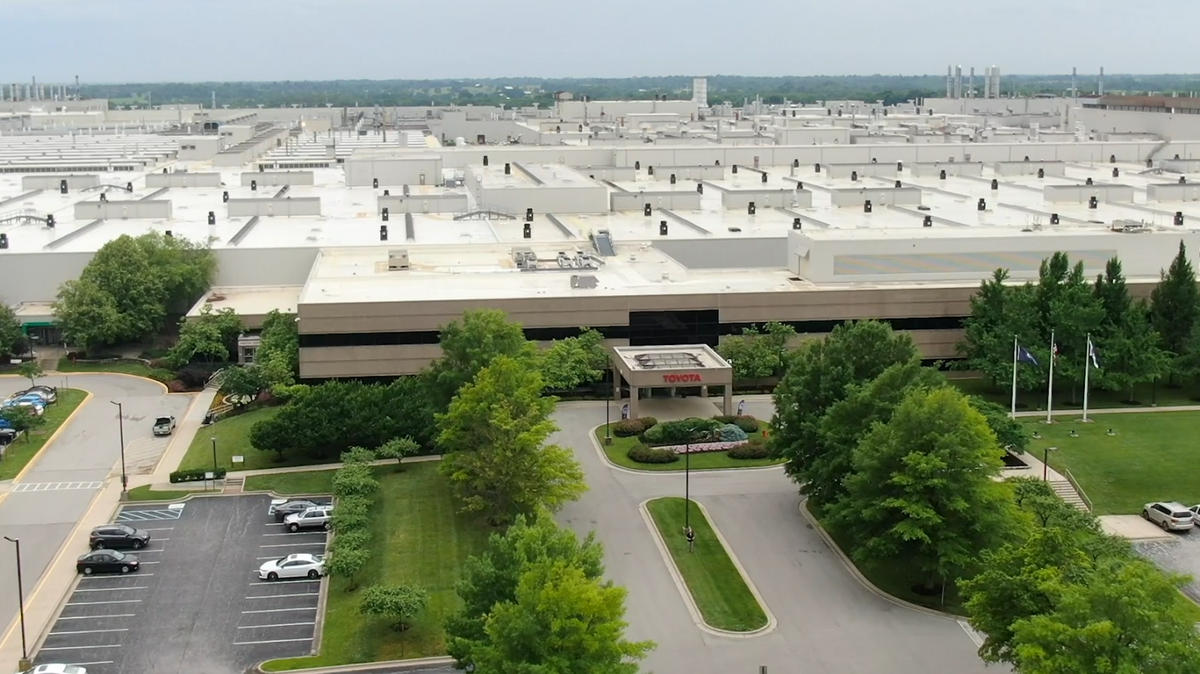
When Trump found out that the car tariff also applied to parts that domestic automakers need, he softened the blow by allowing for partial reimbursement of the parts tariff for two years. After that, he said, “I want them to make their parts here.” The Toyota plant in Georgetown, which employs almost 10,000 people, imports some parts from Japan, but relies mostly on domestic suppliers.
Kentucky’s bourbon industry, which exported $43 million to Canada in 2023, is suffering a double whammy; Canada imposed a 25 percent retaliatory tariff on whiskey from Kentucky and many Canadian retailers have removed Kentucky bourbon from their shelves just to stick it to Trump, not only for the tariffs, but also because Trump wants to make Canada the 51st state.
Kentucky is a major soybean-growing state. Farmers of that commodity are also taking it on the chin, thanks to Trump’s tariff assault on China. He imposed a 145 percent tariff on all Chinese imports. China, which has long been the recipient of more than half of U.S. soybean exports, retaliated with a 115 percent tariff on U.S. soybeans. During Trump’s first term, China turned to Brazil for soybeans in order to avoid the U.S. tariff.
As for the current go-round, China bought 72,800 tons of American soybeans during the week ending April 10, and only 1,800 tons during the week ending April 17, according to the U.S. Agriculture Department. Brazil is now China’s biggest soybean supplier and the U.S. soybean industry has lost its biggest market and may never get it back.
Barr, who is running for Mitch McConnell’s Senate seat, wants Trump’s endorsement. He tweeted on April 2 that “the President’s policy will lead to more, not less, market access and free trade with Canada and many other nations. Reciprocity means America will no longer be ripped off. I stand with President Trump 100%.”
Who is ripping America off he didn’t say, but he and Trump apparently think that any country that has a trade surplus with the United States is guilty.
Kentucky’s two Republican senators, Mitch McConnell and Rand Paul, along with the Kentucky Chamber of Commerce, oppose Trump’s tariffs. “The imposition of tariffs . . . will only raise prices for American families and upend supply chains,” the Kentucky Chamber said in a statement.
”Tariffs don’t punish foreign governments,” Paul posted on X, formerly Twitter. “They punish American families. When we tax imports, we raise the price of everything—from groceries to smartphones to washing machines to prescription drugs.”
Trump blames former President Joe Biden for the sinking economy. Just be patient, he says. Boom times are right around the corner.
John Brinkley, who resides in Lexington, wrote a column on trade for Forbes for six years and served as the speechwriter for the U.S. Trade Representative during the Obama administration.