
Lexington council members need to iron out problems in new development rules | Opinion
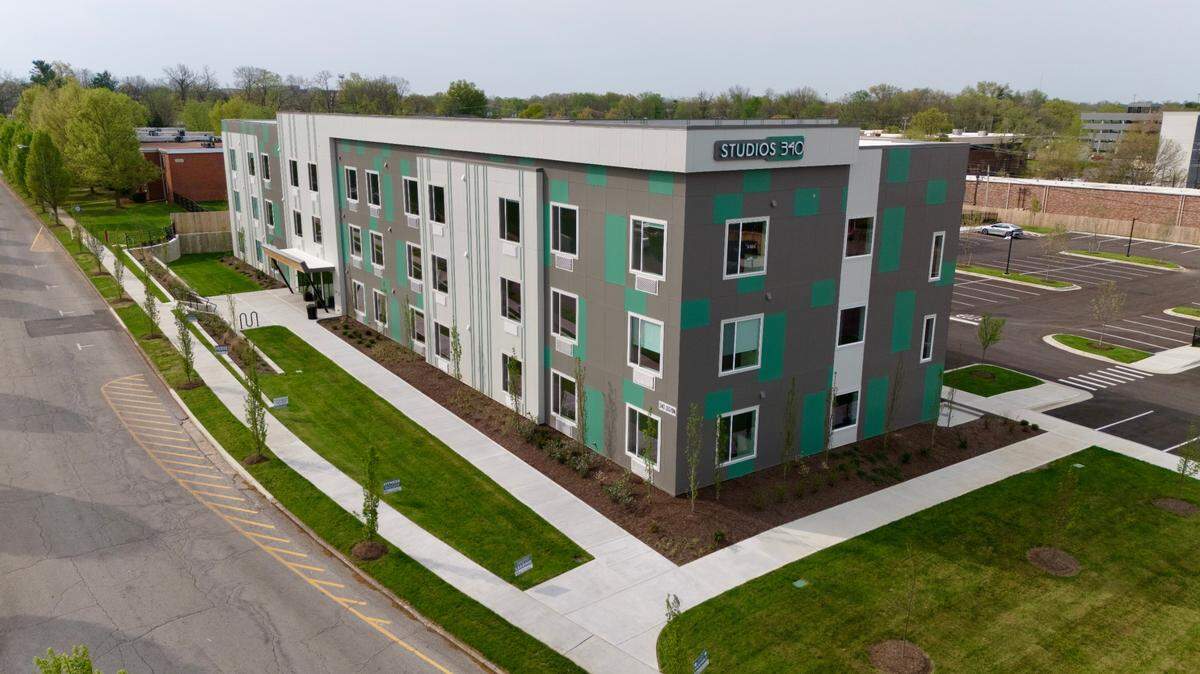
In Lexington, developers submit development plans for approval to the Division of Planning before construction may begin. The 2024 Kentucky General Assembly in Frankfort approved a new law that changes how the approval process will work.
Unfortunately the Division of Planning and Urban County Government legal staff has concluded the new law means the public should not participate in the approval process for final development plans. The approach is clearly undemocratic and does not give the public an opportunity to weigh in on final development plans and whether newly chosen development standards are adequate.
Public engagement has had a positive impact on Lexington. The Fayette County Neighborhood Council provided the U.S. Environmental Protection Agency with information on overflowing manholes and the location of sewage in basements. That helped lead to an EPA mandate that new development could not connect to sanitary sewer lines in Fayette County without capacity for more sewage. That, in turn, led to a massive project to repair Lexington’s old, overflowing sewer system.
We opposed an ordinance change that would have allowed large permanent signs in residential front yards. More importantly we have argued successfully on more than one occasion to not allow digital signage. Extensive research shows a measurable increase in distracted driving and accidents in digital sign locations.
Recently we argued that distance and density standards needed to be placed on short term rental properties. Lexington faces a housing crisis and a lack of affordable housing. Short term rentals without reasonable standards had started to over commercialize downtown neighborhoods, increase housing costs, and take residential housing off the market.
We have been accused of being tree huggers, and that would be accurate. We have tried to overcome Lexington’s long history of allowing development to replace minority neighborhoods. We favor many of the concepts in Lexington’s 2045 Comprehensive Plan but believe that standards need to be different for infill areas and new development. We sympathize with university and historic neighborhoods.
All of that being said, Lexington’s Planning Commission passed a new ordinance to comply with the new state law and sent it to the Urban County Council for final approval. However, the Commission did something very unusual: it sent notice to the Council requesting that Council Members find a way to include public participation in the assessment of final development plans.
We need it if we are to have reasonable and enforceable development standards. We urge the Council to pass the ordinance and support the Planning Commission to allow public engagement in the approval of final development plans.
This is only the beginning of a process. The public will be able to engage and participate in hearings involving preliminary development plans. However, preliminary plans are conceptual, and final development plans rarely, if ever, are as desirable as presented in hearings on preliminary plans. The problem is how to avoid a “bait and switch” that allows a preliminary development plan to change significantly leading to a less desirable final development. Additionally, no one will fully know or be able to prioritize problems in the new ordinance until its passage and use. The new state law takes effect on July 1 so passage is imperative.

Walt Gaffield is president of the Fayette County Neighborhood Council, Inc.